
US Considers New Semiconductor Tariffs Impacting Consumer Electronics
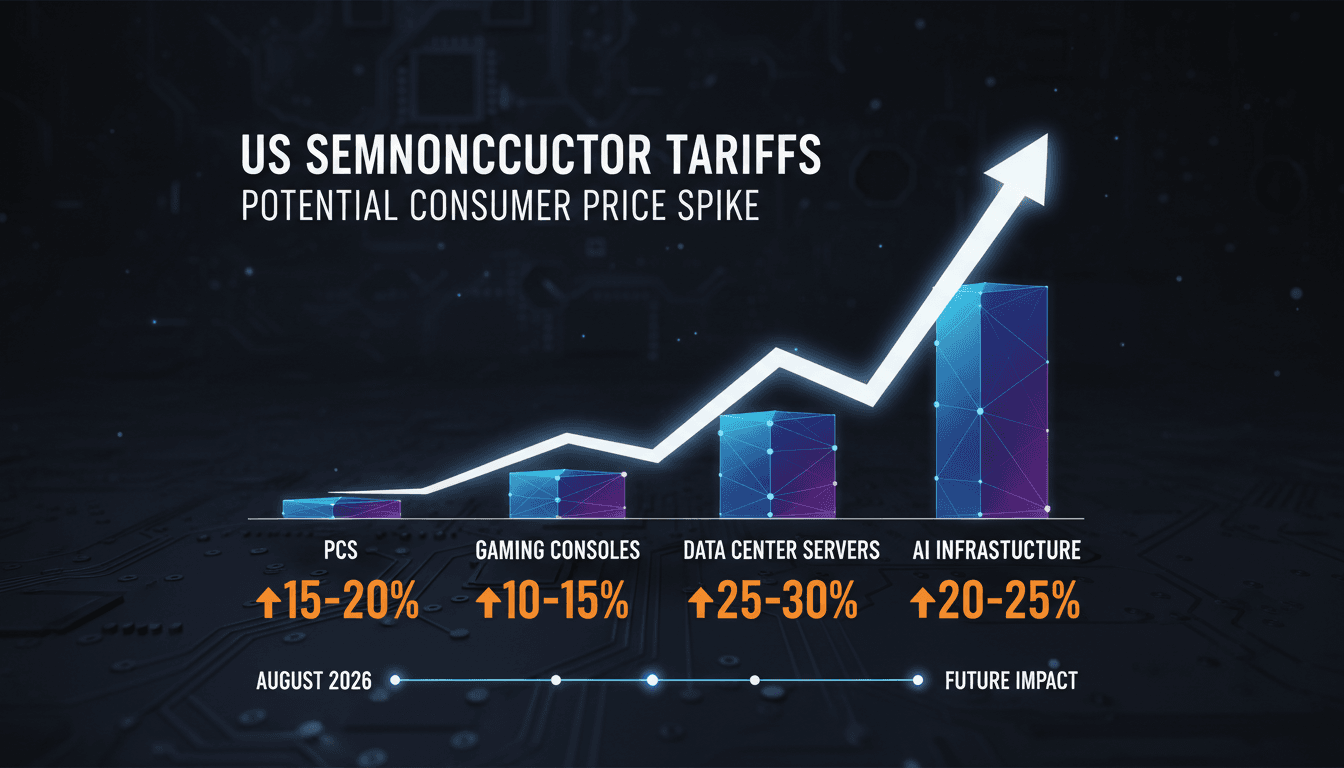
Here's what it means for you.
If you rely on consumer tech or data services, expect rising prices and potential delays in product availability.
Why it matters
These tariffs could significantly impact the cost structure of consumer electronics and AI infrastructure, affecting your purchasing decisions.
What happened (in 30 seconds)
- US officials are considering new semiconductor tariffs as of August 27, 2026, targeting both raw chips and finished electronics.
- Commerce Secretary Howard Lutnick is advocating for linking tariff exemptions to US manufacturing investments.
- Tech lobbyists warn that these tariffs could lead to higher consumer prices and hinder the growth of AI technologies.
The context you actually need
- Previous tariffs under the Trump administration aimed to boost US manufacturing but faced legal challenges and exemptions for certain electronics.
- Global memory shortages have already driven up prices for PCs and components, complicating the market landscape.
- Major investments from companies like TSMC and Apple in US facilities are underway, but these require time to scale and may not alleviate immediate price pressures.
What's really happening
On August 27, 2026, reports emerged that the Trump administration is weighing expanded semiconductor tariffs, potentially affecting a wide range of products, including laptops, gaming consoles, and data center servers. This proposal is part of a broader strategy to incentivize domestic manufacturing, a move that has been a hallmark of the Trump administration's trade policy. Commerce Secretary Howard Lutnick is at the forefront of this initiative, suggesting that any duty-free import allowances should be contingent upon manufacturers committing to US production investments.
The backdrop to this proposal is a complex interplay of ongoing global memory shortages and rising demand for consumer electronics and AI infrastructure. The tech industry has been grappling with supply chain disruptions, which have already led to significant price hikes. By imposing tariffs, the administration aims to encourage companies to shift production back to the US, thereby reducing reliance on overseas fabrication. However, tech lobbyists argue that the proposed allowances are insufficient and the timelines too short, warning that such measures could undermine US leadership in AI and technology.
The potential economic impact is substantial. According to estimates from the Computer and Communications Industry Association, taxing semiconductors and related products could lead to an annual GDP loss of approximately $90 billion. This figure underscores the stakes involved, as higher costs could be passed on to consumers, affecting everything from gaming consoles to enterprise-level data centers.
Negotiations are ongoing, and the specifics of the tariff proposal remain fluid, with the possibility of exemptions or revisions. The administration's previous experiences with tariffs have shown that costs often trickle down to consumers, raising concerns about affordability and accessibility in the tech market. As the situation evolves, the implications for both consumers and the tech industry will become clearer.
Who feels it first (and how)
- Consumers: Higher prices for PCs, gaming consoles, and other electronics.
- Tech companies: Increased production costs and potential delays in product launches.
- Data centers: Disrupted expansion plans and higher operational costs.
What to watch next
- Finalization of tariff details: Understanding the specifics will clarify the immediate impact on pricing and availability.
- Industry responses: Watch for how tech companies adapt their strategies in light of these proposed tariffs.
- Market trends: Keep an eye on consumer behavior and spending in tech sectors as prices potentially rise.
The administration is considering new semiconductor tariffs.
Prices for consumer electronics will increase if tariffs are implemented.
The final structure of the tariffs and any potential exemptions.
Frequently Asked Questions
- Why it matters?
- These tariffs could significantly impact the cost structure of consumer electronics and AI infrastructure, affecting your purchasing decisions.
- What happened (in 30 seconds)?
- US officials are considering new semiconductor tariffs as of August 27, 2026, targeting both raw chips and finished electronics. Commerce Secretary Howard Lutnick is advocating for linking tariff exemptions to US manufacturing investments. Tech lobbyists warn that these tariffs could lead to higher consumer prices and hinder the growth of AI technologies.
- What's really happening?
- On August 27, 2026, reports emerged that the Trump administration is weighing expanded semiconductor tariffs, potentially affecting a wide range of products, including laptops, gaming consoles, and data center servers. This proposal is part of a broader strategy to incentivize domestic manufacturing, a move that has been a hallmark of the Trump administration's trade policy. Commerce Secretary Howard Lutnick is at the forefront of this initiative, suggesting that any duty-free import allowances
- Who feels it first (and how)?
- Consumers: Higher prices for PCs, gaming consoles, and other electronics. Tech companies: Increased production costs and potential delays in product launches. Data centers: Disrupted expansion plans and higher operational costs.
- What to watch next?
- Finalization of tariff details: Understanding the specifics will clarify the immediate impact on pricing and availability. Industry responses: Watch for how tech companies adapt their strategies in light of these proposed tariffs. Market trends: Keep an eye on consumer behavior and spending in tech sectors as prices potentially rise.
Tech news, hardware, and AI tools coverage.
"PC/tech site increasingly covering AI hardware and apps."
— A47 Editor
New US tariffs threaten to make PCs, game consoles, and data centers more expensive, again
The U.S. government is reportedly considering a new round of tariffs on semiconductors, which could lead to increased prices for PCs, game consoles, and data centers. This move is seen as an effort to bolster domestic chip manufacturing amid ongoing ...
Global business headlines with AI angles.
"General business outlet that frequently covers AI."
— A47 Editor
The Trump Administration Is Reportedly Considering New Tariffs On Semiconductors Despite Warnings From Tech Companies
The Trump administration is reportedly considering new tariffs on semiconductors and related products, such as laptops and gaming consoles, despite warnings from tech companies about potential negative impacts on supply chains and pricing. This decis...
Curated tech headlines including AI stories.
"Influential aggregator surfacing the day’s top tech/AI links."
— A47 Editor
Sources: the Trump administration is weighing sweeping new tariffs on chips and other products like laptops and consoles, despite warnings from tech companies (Politico)
The Trump administration is reportedly considering imposing new tariffs on semiconductors and related products, including laptops and gaming consoles, despite pushback from tech companies concerned about the impact on supply chains and prices. This p...