
ATF Confirms Major Cybersecurity Incident Linked to Qilin Ransomware Group
Here's what it means for you.
If you work in cybersecurity or government, this incident underscores the persistent vulnerabilities in critical infrastructure.
Why it matters
This breach highlights the ongoing threat of ransomware to government agencies and the potential implications for national security.
What happened (in 30 seconds)
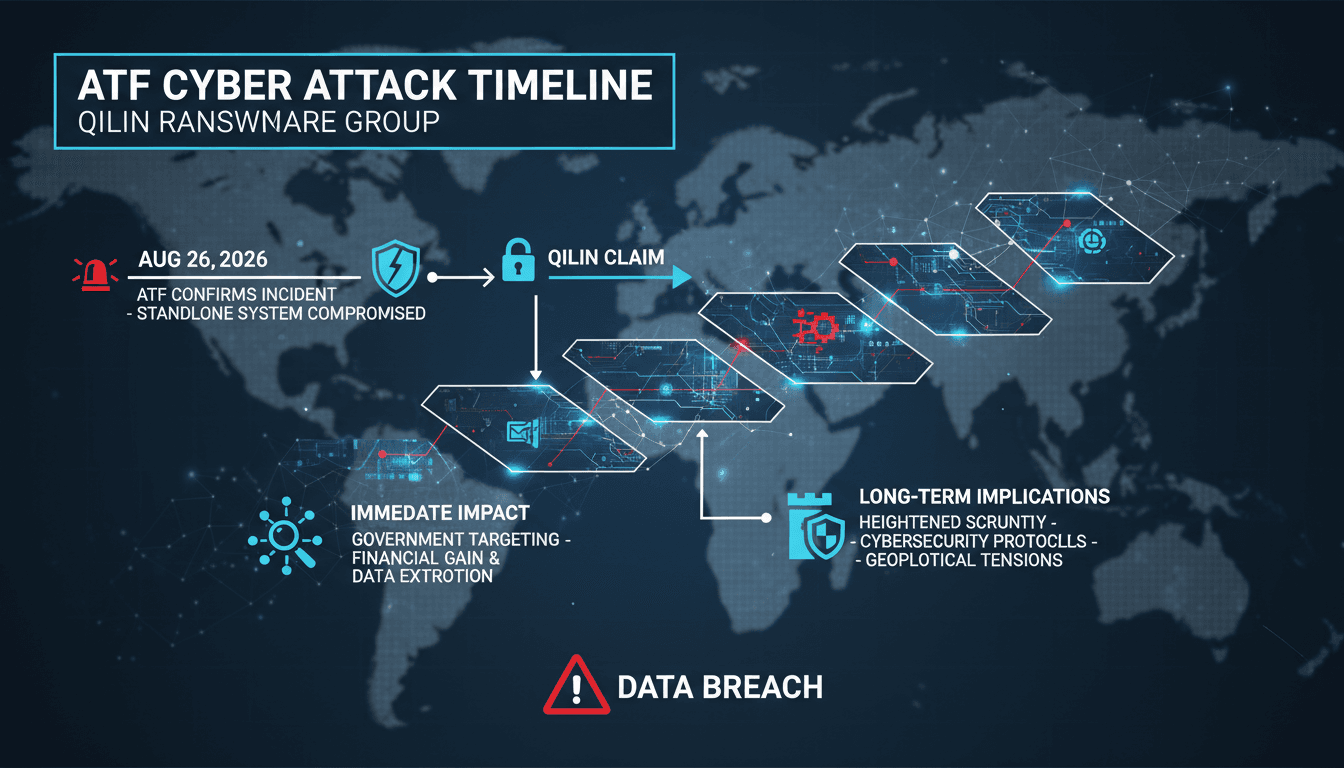
- On August 26, 2026, the ATF confirmed a major cybersecurity incident linked to the Qilin ransomware group.
- The breach involved a standalone system containing sensitive investigation data but did not affect core operational capabilities.
- ATF has initiated an investigation and coordinated with the DOJ, ensuring no disruption to its missions.
The context you actually need
- Ransomware attacks on government entities have surged, targeting sensitive data for financial gain and extortion.
- Qilin, a Russia-linked group, has been active since at least 2024, previously attacking entities like the Synnovis pathology lab in the UK.
- The ATF manages critical data related to firearms trafficking and organized crime, making it a high-value target amid geopolitical tensions.
What's really happening
On August 26, 2026, the ATF confirmed a significant cybersecurity incident after the Qilin ransomware group claimed responsibility for a breach. This incident was designated a "major incident" by the Department of Justice, triggering a series of protocols aimed at mitigating potential fallout. The breach specifically affected a standalone system that housed sensitive data on investigation targets, but crucially, it did not compromise the agency's enterprise network or operational capabilities.
The ATF acted swiftly, disconnecting the affected system from its network and engaging forensic experts to assess the situation. Notifications were made to the DOJ, and the agency emphasized that its core functions remained unaffected. This incident is part of a broader trend where ransomware groups increasingly target government and critical infrastructure entities, exploiting vulnerabilities for financial gain and data extortion.
Qilin's operations are particularly concerning due to their links to Russian-speaking cyber actors, which raises questions about the geopolitical implications of such attacks. The ATF's data includes sensitive information related to firearms trafficking and organized crime, making it a prime target for cybercriminals. The agency's prompt response and the isolation of the affected system demonstrate a commitment to maintaining operational integrity, but the incident underscores the persistent vulnerabilities that exist within government cybersecurity frameworks.
As investigations continue, the lack of evidence provided by Qilin regarding the stolen data complicates the situation. The absence of samples or specifics on the data claimed to be accessed leaves room for speculation about the actual impact of the breach. Moreover, the ongoing operations of Qilin without further claims or data releases suggest that the group remains active and potentially emboldened by this incident.
This situation serves as a reminder of the evolving landscape of cyber threats, particularly as ransomware groups become more sophisticated and brazen in their attacks on high-value targets. The ATF's experience may prompt other agencies to reevaluate their cybersecurity measures and response protocols, especially in light of the increasing frequency of such incidents.
Who feels it first (and how)
- Cybersecurity professionals: Increased scrutiny on security measures and protocols.
- Government agencies: Potential for heightened regulations and oversight on cybersecurity practices.
- Law enforcement: Ongoing concerns about the integrity of sensitive data and operational capabilities.
What to watch next
- Future ransomware claims: Monitor for any additional claims from Qilin or other groups targeting government entities, as this could indicate a trend.
- Cybersecurity policy changes: Watch for potential legislative or regulatory responses aimed at strengthening cybersecurity measures across government agencies.
- Investigative outcomes: Keep an eye on the results of the ATF and DOJ investigations, which may reveal new vulnerabilities or lead to improved security protocols.
The ATF confirmed a breach of a standalone system with no impact on core operations.
Increased focus on cybersecurity measures within government agencies following this incident.
The full extent of the data accessed by Qilin and the potential long-term implications for national security.
Frequently Asked Questions
- Why it matters?
- This breach highlights the ongoing threat of ransomware to government agencies and the potential implications for national security.
- What happened (in 30 seconds)?
- On August 26, 2026, the ATF confirmed a major cybersecurity incident linked to the Qilin ransomware group. The breach involved a standalone system containing sensitive investigation data but did not affect core operational capabilities. ATF has initiated an investigation and coordinated with the DOJ, ensuring no disruption to its missions.
- What's really happening?
- On August 26, 2026, the ATF confirmed a significant cybersecurity incident after the Qilin ransomware group claimed responsibility for a breach. This incident was designated a "major incident" by the Department of Justice, triggering a series of protocols aimed at mitigating potential fallout. The breach specifically affected a standalone system that housed sensitive data on investigation targets, but crucially, it did not compromise the agency's enterprise network or operational capabilities.
- Who feels it first (and how)?
- Cybersecurity professionals: Increased scrutiny on security measures and protocols. Government agencies: Potential for heightened regulations and oversight on cybersecurity practices. Law enforcement: Ongoing concerns about the integrity of sensitive data and operational capabilities.
- What to watch next?
- Future ransomware claims: Monitor for any additional claims from Qilin or other groups targeting government entities, as this could indicate a trend. Cybersecurity policy changes: Watch for potential legislative or regulatory responses aimed at strengthening cybersecurity measures across government agencies. Investigative outcomes: Keep an eye on the results of the ATF and DOJ investigations, which may reveal new vulnerabilities or lead to improved security protocols.
Consumer tech news, reviews, and buying guides for gadgets and electronics.
"TechRadar is known for comprehensive buying advice, hardware reviews, and consumer tech news targeted at mainstream audiences."
— A47 Editor
US government alcohol and firearms agency ATF declares ‘major incident’ after ransomware gang claims cyberattack
The US government's alcohol and firearms agency, the ATF, has declared a 'major incident' following a cyberattack claimed by a ransomware gang. The hackers reportedly gained access to a standalone system containing sensitive information related to on...
Startup news with frequent AI coverage.
"Covers launches, funding, and product updates in AI."
— A47 Editor
ATF declares ‘major incident’ as ransomware gang claims hack
The Bureau of Alcohol, Tobacco, Firearms and Explosives (ATF) has declared a 'major incident' following a cybersecurity breach attributed to a ransomware gang, marking a significant escalation in the agency's cybersecurity challenges. This notificati...
Conservative-leaning coverage of current events.
"Fox News is a highly influential conservative news outlet known for right-leaning political commentary and coverage."
— A47 Editor
ATF investigates ‘major’ cybersecurity incident as ransomware group claims attack
The Bureau of Alcohol, Tobacco, Firearms and Explosives (ATF) is currently investigating a significant cybersecurity incident that has been classified as a 'major incident' by officials from the Justice Department. The ransomware group Qilin has clai...