
DeepMind Completes First Double-Blind Evaluation of AI Model
Here's what it means for you.
As AI systems become more integral to business operations, understanding their evaluation integrity is crucial for maintaining trust and compliance.
Why it matters
This pilot represents a significant step towards establishing trustworthy benchmarks in AI, which could influence regulatory standards and market practices globally.
What happened (in 30 seconds)
- Google DeepMind completed the first double-blind evaluation of its Gemini 2.5 Flash-Lite model on August 27, 2026.
- The evaluation was conducted in a cryptographically sealed environment to prevent benchmark contamination and protect sensitive data.
- Collaborators included the Singapore AI Safety Institute, AVERI, OpenMined, and MLCommons, highlighting a collective effort to enhance AI safety assessments.
The context you actually need
- Benchmark contamination has historically undermined the validity of AI evaluations, raising concerns about the reliability of results.
- Closed evaluations protect proprietary information but limit independent scrutiny, creating a tension between transparency and confidentiality.
- Prior experiments in 2024 explored double-blind techniques, but this pilot advances the methodology to proprietary models amid rising demands for trustworthy assessments.
What's really happening
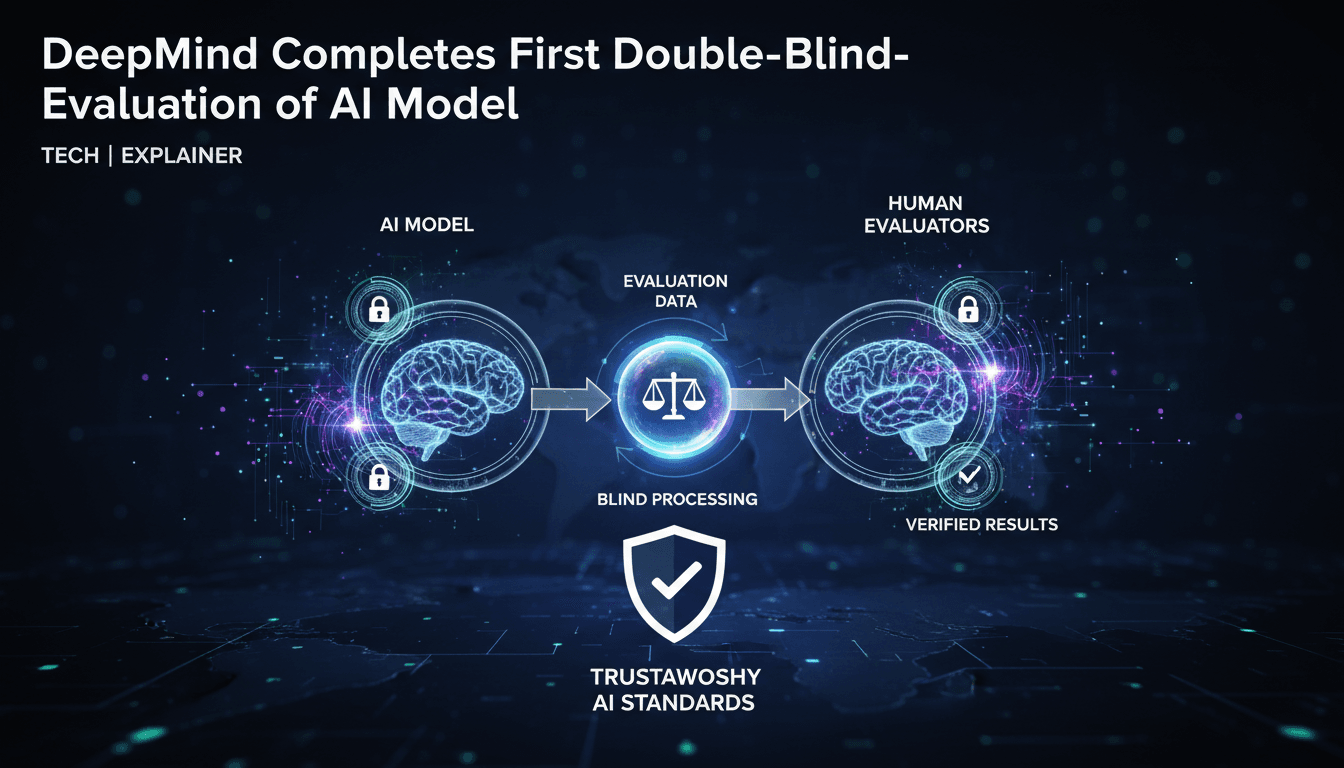
On August 27, 2026, Google DeepMind announced the completion of a pioneering pilot that utilized Confidential Space enclaves on NVIDIA H100 GPUs for the evaluation of its Gemini 2.5 Flash-Lite model. This initiative was a response to the growing concerns surrounding the integrity of AI evaluations, particularly as AI systems become more complex and influential across various sectors.
The pilot was designed to address the longstanding issue of benchmark contamination, where evaluation questions could inadvertently leak into training data, thus compromising the validity of the results. By employing a double-blind methodology, both the evaluators and the model were shielded from potential biases or influences that could skew the outcomes. This was achieved through a cryptographically sealed computing environment, which ensured that model weights and evaluation prompts remained confidential throughout the process.
The evaluation involved two distinct exercises using previously unseen prompts, with aggregate results returned without exposing sensitive data. This approach not only safeguarded proprietary information but also aimed to enhance the credibility of AI evaluations by ensuring that the results could be trusted by external stakeholders. The use of OpenMined's PySyft for coordination and hardware-backed encryption throughout the evaluation further reinforced the security and integrity of the process.
The implications of this pilot extend beyond just DeepMind and its Gemini model. As AI technologies proliferate, the demand for reliable and transparent evaluation frameworks is likely to grow. This pilot could set a precedent for how AI models are assessed in the future, influencing both regulatory standards and market practices. Companies and organizations that rely on AI systems will need to consider the implications of these evaluations on their operations, particularly in terms of compliance and risk management.
Moreover, the collaboration with organizations like the Singapore AI Safety Institute and MLCommons underscores a collective recognition of the need for robust AI safety measures. As the industry moves towards more stringent evaluation standards, businesses may need to adapt their practices to align with these emerging frameworks, ensuring that their AI systems are not only effective but also trustworthy.
Who feels it first (and how)
- AI Developers: They will need to adapt to new evaluation standards and methodologies.
- Regulatory Bodies: Increased scrutiny on AI evaluations may lead to new compliance requirements.
- Businesses using AI: Companies will need to ensure their AI systems meet emerging benchmarks to maintain trust and avoid regulatory pitfalls.
- Investors in AI: They may reassess the value of AI companies based on their evaluation integrity and compliance with new standards.
What to watch next
- Emerging regulatory frameworks: Watch for new guidelines or regulations that may arise from this pilot, influencing how AI evaluations are conducted globally.
- Industry adoption of double-blind evaluations: Monitor whether other AI companies adopt similar methodologies, which could reshape the competitive landscape.
- Public response to AI safety measures: Pay attention to how consumers and businesses react to enhanced evaluation standards, as this could impact market trust and adoption rates.
The pilot was successfully completed on August 27, 2026.
The pilot will influence future AI evaluation standards and practices across the industry.
The specific results of the evaluation and their implications for the broader AI landscape remain undisclosed.
Frequently Asked Questions
- Why it matters?
- This pilot represents a significant step towards establishing trustworthy benchmarks in AI, which could influence regulatory standards and market practices globally.
- What happened (in 30 seconds)?
- Google DeepMind completed the first double-blind evaluation of its Gemini 2.5 Flash-Lite model on August 27, 2026. The evaluation was conducted in a cryptographically sealed environment to prevent benchmark contamination and protect sensitive data. Collaborators included the Singapore AI Safety Institute, AVERI, OpenMined, and MLCommons, highlighting a collective effort to enhance AI safety assessments.
- What's really happening?
- On August 27, 2026, Google DeepMind announced the completion of a pioneering pilot that utilized Confidential Space enclaves on NVIDIA H100 GPUs for the evaluation of its Gemini 2.5 Flash-Lite model. This initiative was a response to the growing concerns surrounding the integrity of AI evaluations, particularly as AI systems become more complex and influential across various sectors. The pilot was designed to address the longstanding issue of benchmark contamination, where evaluation questions
- Who feels it first (and how)?
- AI Developers: They will need to adapt to new evaluation standards and methodologies. Regulatory Bodies: Increased scrutiny on AI evaluations may lead to new compliance requirements. Businesses using AI: Companies will need to ensure their AI systems meet emerging benchmarks to maintain trust and avoid regulatory pitfalls. Investors in AI: They may reassess the value of AI companies based on their evaluation integrity and compliance with new standards.
- What to watch next?
- Emerging regulatory frameworks: Watch for new guidelines or regulations that may arise from this pilot, influencing how AI evaluations are conducted globally. Industry adoption of double-blind evaluations: Monitor whether other AI companies adopt similar methodologies, which could reshape the competitive landscape. Public response to AI safety measures: Pay attention to how consumers and businesses react to enhanced evaluation standards, as this could impact market trust and adoption rates.
English-language digital publication covering business, politics, technology, and current affairs.
"The Arabian Post mixes original and syndicated-style coverage with a broad regional and global business-news orientation."
— A47 Editor
DeepMind tests Gemini inside sealed evaluation system
Google DeepMind has conducted a groundbreaking double-blind evaluation of its Gemini 2.5 Flash-Lite AI model, ensuring that both developers and evaluators remain unaware of each other's confidential information. This pilot aims to mitigate benchmark ...
News and guidance for IT pros on AI adoption.
"Enterprise-focused tips, explainers, and news for professionals."
— A47 Editor
Google DeepMind Seals Gemini Test to Protect AI Benchmarks
Google DeepMind has successfully conducted tests on its Gemini 2.5 Flash Lite model, utilizing a cryptographic wall to safeguard confidential AI benchmarks and proprietary model weights. This initiative is part of the company's ongoing efforts to enh...
Daily AI news: models, tools, and policy.
"Independent outlet tracking the fast pace of AI."
— A47 Editor
Google Deepmind's AI Co-Scientist now plans experiments, runs lab equipment, and writes scientific papers
Google DeepMind has advanced its AI Co-Scientist, transforming it from a hypothesis generator into a fully integrated research system capable of planning experiments, operating lab equipment, and authoring scientific papers across various disciplines...
Daily AI news: models, tools, and policy.
"Independent outlet tracking the fast pace of AI."
— A47 Editor
AI benchmarks have a trust problem and Google wants to fix it
Google DeepMind is conducting a double-blind evaluation of its Gemini Flash Lite AI model in collaboration with the Singapore AI Safety Institute, aiming to establish tamper-proof benchmarks for AI assessments. This innovative approach employs crypto...
Curated tech headlines including AI stories.
"Influential aggregator surfacing the day’s top tech/AI links."
— A47 Editor
Google launches a pilot of double-blind AI evaluations, keeping external evaluations in a cryptographic "box" to stop benchmark contamination and protect IP (Google DeepMind)
Google DeepMind has initiated a pilot program for double-blind AI evaluations, utilizing cryptographic methods to safeguard external evaluations and intellectual property. This innovative approach aims to prevent benchmark contamination and enhance t...