
BepiColombo spacecraft successfully separates from Mercury Transfer Module ahead of 2026 orbit insertion
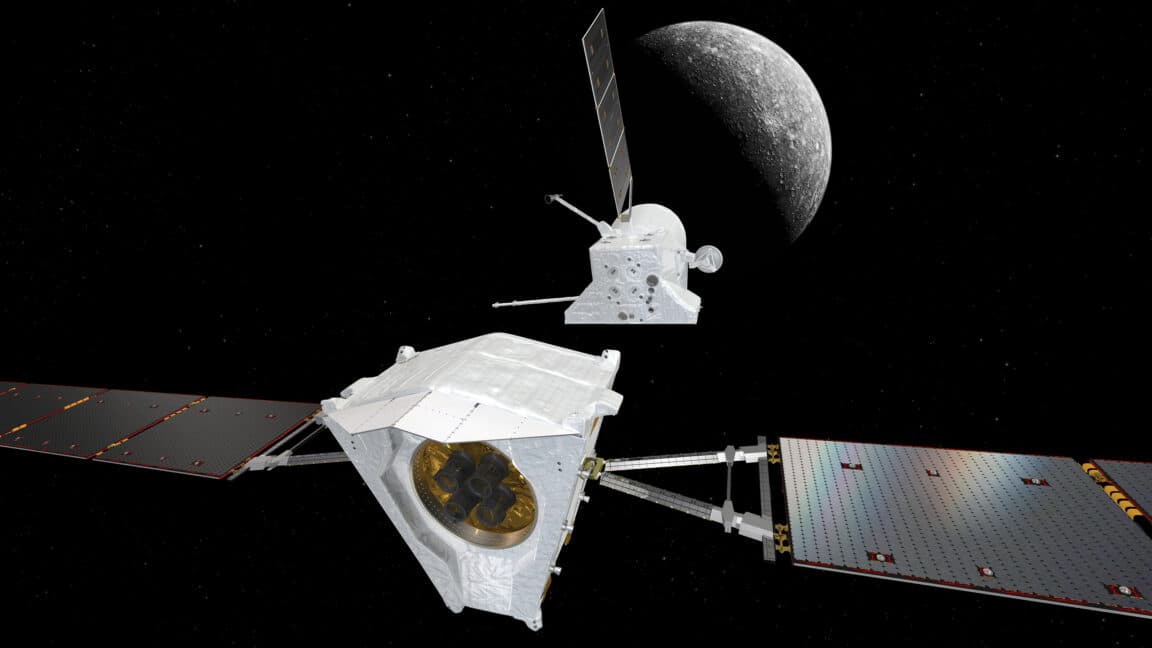
Here's what it means for you.
The BepiColombo mission enhances our understanding of planetary formation, which could inform future space exploration and technology.
What happened
On September 3, 2026, the BepiColombo spacecraft successfully separated from its Mercury Transfer Module, marking the start of its final approach to Mercury.
The Context
- International collaboration: This mission is a joint effort between the European Space Agency (ESA), Japan Aerospace Exploration Agency (JAXA), and NASA, showcasing global teamwork in space exploration.
- Historical significance: BepiColombo follows in the footsteps of previous missions like MESSENGER, aiming to deepen our knowledge of Mercury's origins and environment.
- Technical achievement: The spacecraft has traveled approximately 6 billion miles (10 billion kilometers) since its launch in 2018, utilizing advanced ion propulsion and gravity assists.
The Number
— This distance underscores the extensive journey and technological prowess involved in reaching Mercury, highlighting the complexities of deep-space missions.
Takeaway
As BepiColombo approaches Mercury, expect groundbreaking insights into the planet's formation and its role in the Solar System.
In-depth reporting on tech, policy, and science including AI.
"Respected analysis for technically savvy readers, including AI topics."
— A47 Editor
After 8 years, Europe's BepiColombo mission is on final approach to Mercury
After nearly eight years of travel, Europe's BepiColombo mission is approaching Mercury, aiming to uncover the planet's origins and characteristics. This mission involves two spacecraft that have been on a long journey to study Mercury's surface and ...
In-depth coverage of hardware, software, science, and policy.
"Ars Technica provides expert technology news, hardware reviews, and analysis for a technically savvy audience."
— A47 Editor
After 8 years, Europe's BepiColombo mission is on final approach to Mercury
After nearly eight years of travel, Europe's BepiColombo mission is approaching Mercury, aiming to uncover the planet's origins and characteristics. This mission involves two spacecraft that have been on a long journey to study Mercury's surface and ...
Space science news, astronomy updates, and spaceflight developments.
"Space.com delivers space science news, astronomy updates, and spaceflight developments with engaging coverage."
— A47 Editor
2 spacecraft will soon reach Mercury after 8 years in space. Here's what BepiColombo can do
After an eight-year journey through space, the BepiColombo mission is set to reach Mercury, where it will deploy two spacecraft to explore the planet's mysteries. This mission, a collaboration between the European Space Agency and the Japan Aerospace...
Space science news, astronomy updates, and spaceflight developments.
"Space.com delivers space science news, astronomy updates, and spaceflight developments with engaging coverage."
— A47 Editor
'A new mission starting today': 8 years after launch, BepiColombo begins Mercury arrival
The BepiColombo spacecraft has commenced its arrival at Mercury after nearly eight years of travel through the inner solar system, marking a significant milestone in its mission.
Science and technology stories including AI.
"Longstanding science magazine with thoughtful AI coverage."
— A47 Editor
The spacecraft BepiColombo is finally nearing Mercury after 8 years in space
The spacecraft BepiColombo has successfully completed a critical maneuver, deploying its two science orbiters and marking the beginning of the final phases of its journey to Mercury after eight years in space. This significant milestone was reported ...
Scientific research, technology, environment, and society.
"Scientific American is one of the oldest and most authoritative science magazines, known for deep dives into science, technology, and society."
— A47 Editor
The spacecraft BepiColombo is finally nearing Mercury after 8 years in space
The spacecraft BepiColombo has successfully completed a critical maneuver, deploying its two science orbiters and marking the beginning of the final phases of its journey to Mercury after eight years in space. This significant milestone was reported ...