
Insilico Medicine's AI-Designed Drug Rentosertib Shows Promise in Reducing Biological Age Markers
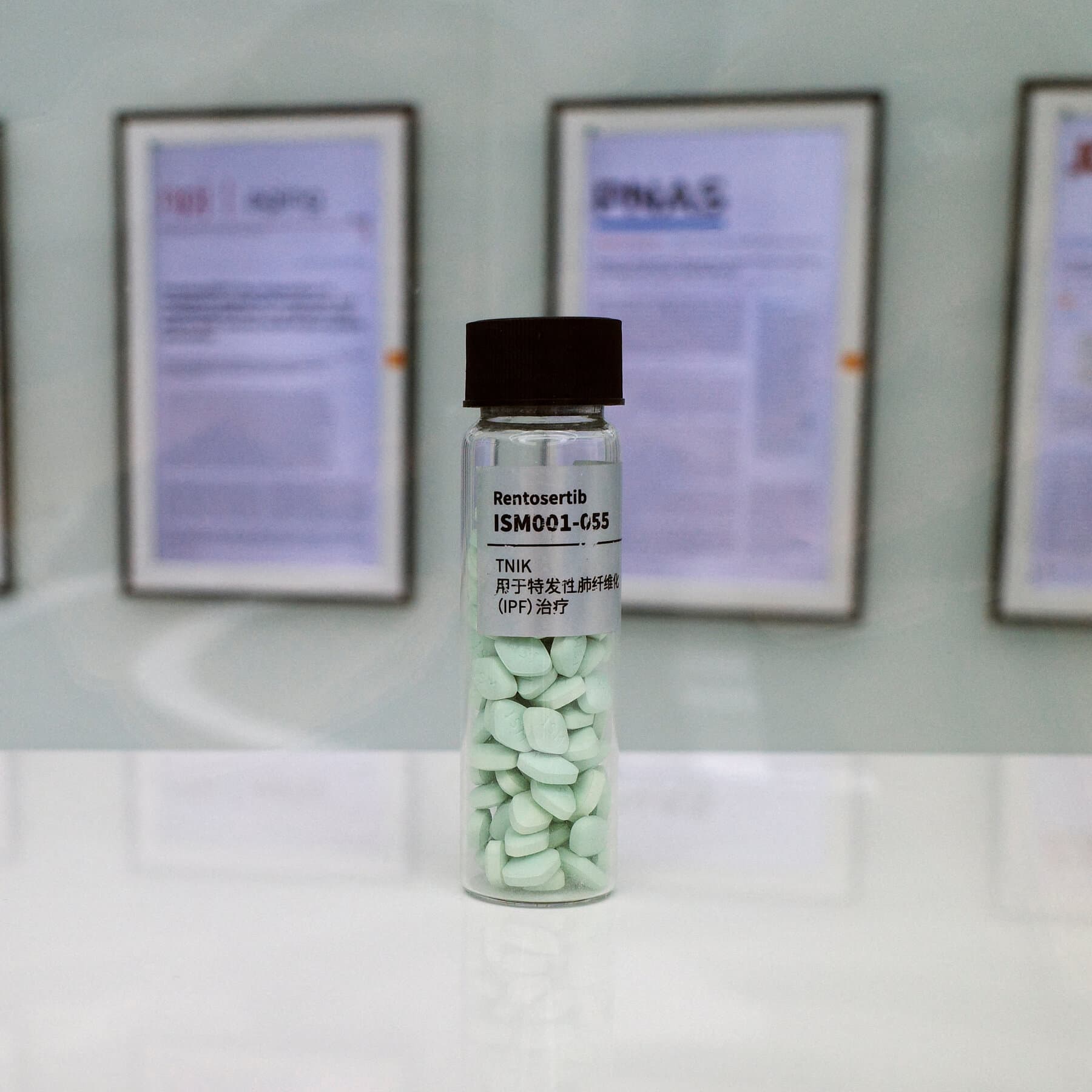
Here's what it means for you.
As advancements in AI-driven drug development continue, the potential for longevity treatments could reshape health strategies globally.
Why it matters
The intersection of AI and biotechnology is rapidly evolving, with implications for healthcare, aging, and market dynamics.
What happened (in 30 seconds)
- On September 7, 2026, Insilico Medicine reported early findings suggesting its AI-designed drug, rentosertib, may reduce biological age markers.
- The analysis, published in Nature Biotechnology, involved a secondary review of data from a phase 2a trial for idiopathic pulmonary fibrosis (IPF) in China.
- Participants showed reductions in predicted biological age, with the most significant effects observed at around 3-4 years, raising interest in the drug's potential beyond lung disease.
The context you actually need
- Insilico Medicine has pioneered the use of generative AI in drug discovery, focusing on target identification and molecule design.
- Aging clocks, computational models estimating biological age, are gaining traction in longevity research, despite ongoing debates about their accuracy.
- The drug rentosertib, initially developed for IPF, is now being explored for its geroprotective effects, indicating a shift towards broader applications in aging.
What's really happening
Insilico Medicine's recent findings on rentosertib mark a significant moment in the convergence of artificial intelligence and biotechnology. The drug, a TNIK inhibitor, was initially designed to treat idiopathic pulmonary fibrosis, a condition characterized by progressive lung scarring. However, the secondary analysis of the phase 2a trial data revealed unexpected potential in reducing biological age markers, a concept that has garnered increasing interest in the scientific community.
The analysis involved 42 participants whose blood samples were evaluated using six independent aging clocks. The results indicated that those treated with rentosertib experienced notable reductions in predicted biological age, with the most substantial effects observed at week four of treatment. This suggests that the drug may not only improve lung function but also exert broader effects on biological aging processes.
The implications of these findings extend beyond the immediate context of IPF treatment. As the global population ages, the demand for effective anti-aging therapies is rising. Insilico's approach, leveraging AI to identify drug targets and design molecules, positions it at the forefront of this burgeoning field. The use of AI in drug discovery is not merely a trend; it represents a fundamental shift in how therapies are developed, potentially accelerating the timeline from concept to clinical application.
However, experts caution that the results, while promising, are preliminary. The small sample size and the inability to fully disentangle the effects of aging from improvements in lung function highlight the need for larger, more definitive trials. As Insilico continues its phase 3 development for IPF, the scientific community will be watching closely to see if these early findings can be replicated and validated in broader populations.
The excitement surrounding AI-driven longevity research is palpable, with biotech markets increasingly interested in candidates that promise to extend healthspan and lifespan. As more data emerges, the potential for rentosertib and similar drugs to influence global health strategies could reshape how aging is approached in both clinical and consumer contexts.
Who feels it first (and how)
- Biotech investors: Increased interest in AI-driven longevity candidates may lead to shifts in investment strategies.
- Healthcare professionals: New treatment options could change patient management approaches for age-related conditions.
- Aging populations: Individuals seeking longevity solutions may benefit from emerging therapies targeting biological aging.
What to watch next
- Further clinical trials: The outcomes of larger trials for rentosertib will be crucial in determining its efficacy as an anti-aging treatment.
- Regulatory responses: How health authorities respond to the emerging data on AI-designed drugs could influence market dynamics.
- Market trends in longevity: The growing interest in longevity research may lead to new investments and innovations in the biotech sector.
Insilico Medicine's drug rentosertib shows potential in reducing biological age markers based on preliminary data.
Continued interest and investment in AI-driven longevity research will grow as more data becomes available.
The long-term effects and safety of rentosertib in healthy individuals remain to be established.
Frequently Asked Questions
- Why it matters?
- The intersection of AI and biotechnology is rapidly evolving, with implications for healthcare, aging, and market dynamics.
- What happened (in 30 seconds)?
- On September 7, 2026, Insilico Medicine reported early findings suggesting its AI-designed drug, rentosertib, may reduce biological age markers. The analysis, published in Nature Biotechnology, involved a secondary review of data from a phase 2a trial for idiopathic pulmonary fibrosis (IPF) in China. Participants showed reductions in predicted biological age, with the most significant effects observed at around 3-4 years, raising interest in the drug's potential beyond lung disease.
- What's really happening?
- Insilico Medicine's recent findings on rentosertib mark a significant moment in the convergence of artificial intelligence and biotechnology. The drug, a TNIK inhibitor, was initially designed to treat idiopathic pulmonary fibrosis, a condition characterized by progressive lung scarring. However, the secondary analysis of the phase 2a trial data revealed unexpected potential in reducing biological age markers, a concept that has garnered increasing interest in the scientific community. The anal
- Who feels it first (and how)?
- Biotech investors: Increased interest in AI-driven longevity candidates may lead to shifts in investment strategies. Healthcare professionals: New treatment options could change patient management approaches for age-related conditions. Aging populations: Individuals seeking longevity solutions may benefit from emerging therapies targeting biological aging.
- What to watch next?
- Further clinical trials: The outcomes of larger trials for rentosertib will be crucial in determining its efficacy as an anti-aging treatment. Regulatory responses: How health authorities respond to the emerging data on AI-designed drugs could influence market dynamics. Market trends in longevity: The growing interest in longevity research may lead to new investments and innovations in the biotech sector.
Tech news, hardware, and AI tools coverage.
"PC/tech site increasingly covering AI hardware and apps."
— A47 Editor
An AI-developed drug appeared to make patients biologically younger in a clinical trial
A recent clinical trial has shown that rentosertib, an AI-developed drug by Insilico Medicine, may reverse biological aging markers, making patients appear biologically up to six years younger than those receiving a placebo. This drug was initially d...
Daily AI news: models, tools, and policy.
"Independent outlet tracking the fast pace of AI."
— A47 Editor
AI-designed drug appears to turn back the body's biological clock in early trial
A recent study published in Nature Biotechnology indicates that rentosertib, an AI-designed drug by Insilico Medicine, may reverse biological aging markers, with treated patients appearing biologically up to six years younger than those receiving a p...
Tech industry coverage with AI angles.
"Mainstream tech news intersecting with AI policy and culture."
— A47 Editor
Early Data Indicates an A.I.-Generated Drug Could Slow Aging
Early data suggests that rentosertib, a drug candidate developed by Insilico Medicine using artificial intelligence, may not only treat a rare lung condition but also reduce biological markers of aging. The drug was designed at the company's research...
Health trends, medical research, and fitness reporting.
"The New York Times is a globally recognized newspaper offering authoritative reporting with a center-left editorial stance."
— A47 Editor
Early Data Indicates an A.I.-Generated Drug Could Slow Aging
Early data suggests that rentosertib, an A.I.-generated drug candidate developed by Insilico Medicine, may not only treat a rare lung condition but also reduce biological markers of aging. The drug was designed using generative A.I. at the company's ...
Scientific research, space, environment, and health coverage.
"The New York Times is a globally recognized newspaper offering authoritative reporting with a center-left editorial stance."
— A47 Editor
Early Data Indicates an A.I.-Generated Drug Could Slow Aging
Early data suggests that rentosertib, a drug candidate developed by Insilico Medicine using artificial intelligence, may not only treat a rare lung condition but also reduce biological markers of aging. The drug was designed at the company's research...
Tech policy, trends, and innovation news.
"The New York Times is a globally recognized newspaper offering authoritative reporting with a center-left editorial stance."
— A47 Editor
Early Data Indicates an A.I.-Generated Drug Could Slow Aging
Early data suggests that rentosertib, a drug candidate developed by Insilico Medicine using artificial intelligence, may not only treat a rare lung condition but also reduce biological markers of aging. The drug was designed at the company's research...
Curated tech headlines including AI stories.
"Influential aggregator surfacing the day’s top tech/AI links."
— A47 Editor
Insilico, which uses AI to accelerate drug discovery, says early data shows rentosertib, a drug whose structure was generated with AI's help, could slow aging (Cade Metz/New York Times)
Insilico Medicine has reported early data indicating that rentosertib, a drug candidate developed with the assistance of artificial intelligence, may have the potential to slow aging, in addition to treating a rare lung condition. This development hi...
Technology business and AI-related headlines.
"Data-driven tech newsroom with global scope."
— A47 Editor
AI-Discovered Drug Reverses Aging Markers in Study, Biotech Says
An experimental drug for lung disease, developed using artificial intelligence, has shown potential in reversing biological markers of aging, according to its developers. This breakthrough suggests a promising avenue for treating age-related conditio...
Technology business news, market impacts, and innovation trends.
"Bloomberg is a premier financial and tech news provider, respected for its in-depth reporting and analytical rigor."
— A47 Editor
AI-Discovered Drug Reverses Aging Markers in Study, Biotech Says
An experimental drug for lung disease, developed using artificial intelligence, has shown potential in reversing biological markers of aging, according to its developers. This breakthrough suggests a promising avenue for treating age-related conditio...