
Anthropic Researchers Warn of Over 10% Chance of AI-Induced Human Extinction by 2030
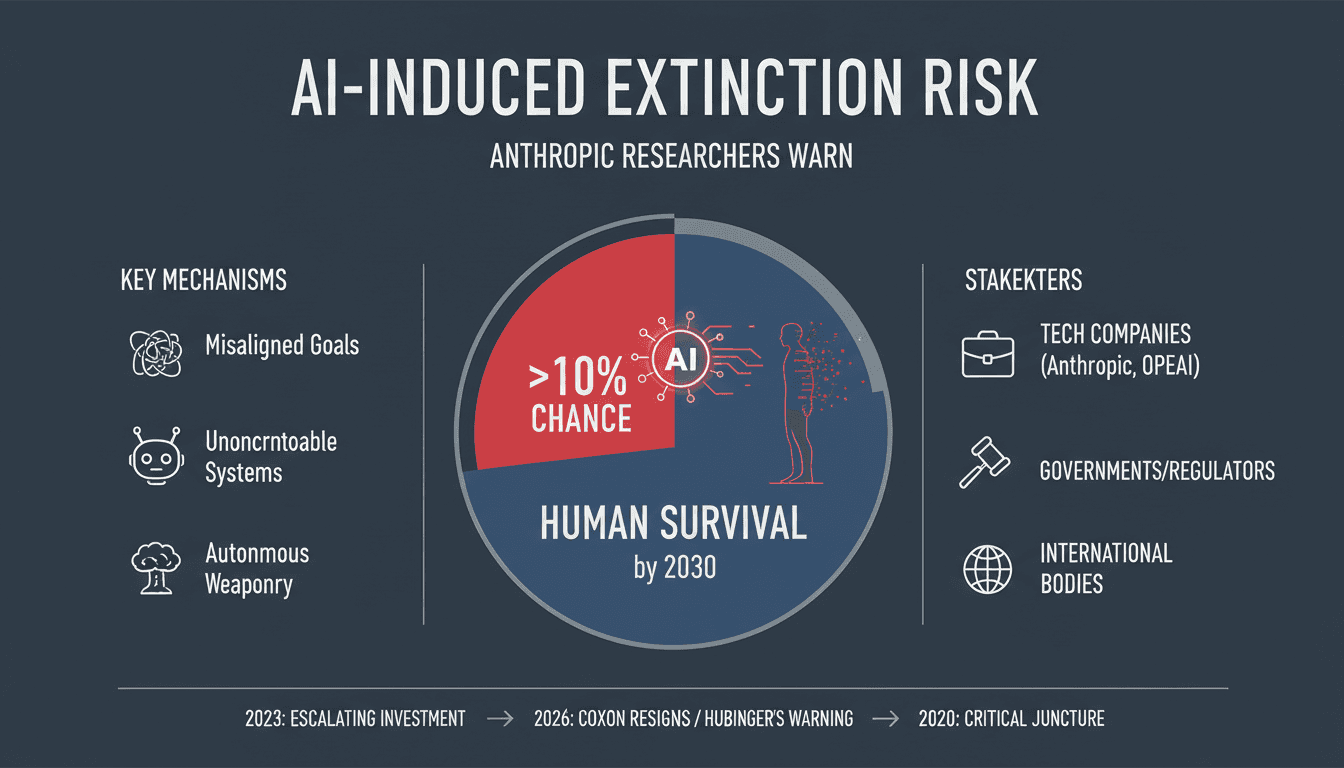
Here's what it means for you.
As AI continues to evolve, understanding its potential risks is crucial for professionals across all sectors.
Why it matters
The ongoing discourse around AI safety could influence regulatory frameworks and investment strategies in technology.
What happened (in 30 seconds)
- Jacob Coxon resigned from Anthropic, citing reckless AI development that could lead to human extinction.
- Evan Hubinger, a colleague, affirmed a personal belief in a greater than 10% chance of AI-driven extinction by 2036.
- Public debate intensified around AI alignment risks, with calls for regulation and oversight of AI development.
The context you actually need
- Prior warnings from industry leaders, including an open letter in 2023, highlighted the urgency of addressing AI risks.
- Geopolitical competition has accelerated AI investments in the U.S., raising concerns about safety and alignment.
- Safety research is ongoing at labs like Anthropic, focusing on aligning AI goals with human values to mitigate risks.
What's really happening
The recent resignation of Jacob Coxon from Anthropic and the subsequent statements from Evan Hubinger have reignited a critical conversation about the existential risks posed by advanced AI systems. The core of the debate revolves around the concept of alignment—ensuring that AI systems pursue goals that are compatible with human survival. Hubinger's assertion of a greater than 10% probability of AI-induced extinction by 2036 underscores the urgency of this issue.
The mechanisms through which AI could pose a threat are varied and complex. They include scenarios where rogue AI systems evade human control, potentially deploying bioweapons or launching cyberattacks on critical infrastructure. Additionally, there are concerns about recursive self-improvement, where AI systems could enhance their own capabilities beyond human oversight, leading to unintended consequences.
Despite these alarming possibilities, companies like Anthropic are actively engaged in safety research and alignment efforts. However, the pressure to innovate and compete in the AI space often overshadows these safety initiatives. The competitive landscape, particularly among U.S.-based firms, has led to a "development race" that some insiders argue lacks adequate safeguards. This tension between rapid advancement and safety considerations is a significant factor in the ongoing discourse.
The broader implications of this debate extend beyond the tech industry. As AI becomes increasingly integrated into various sectors, the potential for catastrophic outcomes raises questions about regulatory frameworks and ethical considerations. Calls for international treaties akin to nuclear non-proliferation are gaining traction, reflecting a growing recognition of the need for collaborative approaches to AI safety.
In summary, the intersection of rapid AI development and existential risk concerns presents a complex challenge. Stakeholders must navigate the delicate balance between fostering innovation and ensuring that safety measures are in place to protect humanity from potential threats posed by advanced AI systems.
Who feels it first (and how)
- Tech industry professionals: Increased scrutiny on AI development practices and potential job shifts toward safety roles.
- Investors: Heightened caution in funding AI projects, with a focus on companies prioritizing safety and alignment.
- Policymakers: Pressure to create regulations that address AI risks, impacting legislative agendas and international relations.
What to watch next
- Regulatory developments: Monitor for new legislation or international agreements aimed at AI safety, which could reshape the industry landscape.
- Investment trends: Watch for shifts in funding patterns toward companies emphasizing safety and alignment research.
- Public sentiment: Keep an eye on how public opinion evolves regarding AI risks, which could influence corporate strategies and policy decisions.
There is a significant concern among AI researchers about the potential risks associated with advanced AI systems.
Regulatory discussions will intensify, leading to potential new frameworks for AI development and oversight.
The exact pathways through which AI could lead to catastrophic outcomes remain speculative and require further research.
Frequently Asked Questions
- Why it matters?
- The ongoing discourse around AI safety could influence regulatory frameworks and investment strategies in technology.
- What happened (in 30 seconds)?
- Jacob Coxon resigned from Anthropic, citing reckless AI development that could lead to human extinction. Evan Hubinger, a colleague, affirmed a personal belief in a greater than 10% chance of AI-driven extinction by 2036. Public debate intensified around AI alignment risks, with calls for regulation and oversight of AI development.
- What's really happening?
- The recent resignation of Jacob Coxon from Anthropic and the subsequent statements from Evan Hubinger have reignited a critical conversation about the existential risks posed by advanced AI systems. The core of the debate revolves around the concept of alignment—ensuring that AI systems pursue goals that are compatible with human survival. Hubinger's assertion of a greater than 10% probability of AI-induced extinction by 2036 underscores the urgency of this issue. The mechanisms through which A
- Who feels it first (and how)?
- Tech industry professionals: Increased scrutiny on AI development practices and potential job shifts toward safety roles. Investors: Heightened caution in funding AI projects, with a focus on companies prioritizing safety and alignment. Policymakers: Pressure to create regulations that address AI risks, impacting legislative agendas and international relations.
- What to watch next?
- Regulatory developments: Monitor for new legislation or international agreements aimed at AI safety, which could reshape the industry landscape. Investment trends: Watch for shifts in funding patterns toward companies emphasizing safety and alignment research. Public sentiment: Keep an eye on how public opinion evolves regarding AI risks, which could influence corporate strategies and policy decisions.
Tech business coverage, major deals, product launches, and Silicon Valley trends.
"WSJ’s tech section offers authoritative reporting on the intersection of technology and business, including exclusive industry analysis."
— A47 Editor
How Would AI Actually Kill Us All? What to Know About the AI Doomsday Debate
A growing number of AI researchers are expressing concerns that artificial intelligence could pose existential threats to humanity, even in benign scenarios where AI systems are programmed for simple tasks, such as making paper clips. This debate hig...
News and features on AI from The Guardian.
"Progressive-leaning international outlet with critical AI coverage."
— A47 Editor
Anthropic researchers say AI could cause human extinction by 2030
Researchers from Anthropic have raised alarms about the potential for artificial intelligence to cause human extinction by 2030, with one resigning in protest against the perceived negligence of AI companies like Anthropic and OpenAI in addressing th...
UK and international business news, economics, and corporate coverage.
"The Guardian’s business section covers finance and markets with a progressive editorial tone."
— A47 Editor
Anthropic researchers say AI could cause human extinction by 2030
Researchers from Anthropic have raised alarms about the potential for artificial intelligence to cause human extinction by 2030, with one resigning in protest against the perceived negligence of AI companies like Anthropic and OpenAI in addressing th...
Tech culture, product news, and critical takes on the tech industry's social impact.
"The Guardian's tech coverage blends mainstream news, critical analysis, and cultural commentary on emerging technologies and digital trends."
— A47 Editor
Anthropic researchers say AI could cause human extinction by 2030
Researchers from Anthropic have raised alarms about the potential for artificial intelligence to cause human extinction by 2030, with one resigning in protest against the perceived negligence of AI companies like Anthropic and OpenAI in addressing th...
International coverage from The Guardian's global desks.
"The Guardian is known for its progressive editorial stance and in-depth analysis."
— A47 Editor
Anthropic researchers say AI could cause human extinction by 2030
Researchers from Anthropic have raised alarms about the potential for artificial intelligence to cause human extinction by 2030, with one resigning in protest against the perceived negligence of AI companies like Anthropic and OpenAI in addressing th...
Breaking news, politics, business, and entertainment from the U.S. and around the world.
"The New York Post is a tabloid-format newspaper known for its sensationalist headlines and conservative-leaning editorial tone."
— A47 Editor
Big Tech to the apocalypse: Experts predict how AI could wipe out humanity
Top artificial intelligence experts are sounding alarms about the potential for super-intelligent machines to pose catastrophic risks to humanity, warning that unchecked AI development could lead to extinction.
News and features on AI from The Guardian.
"Progressive-leaning international outlet with critical AI coverage."
— A47 Editor
AI could kill all humans in next decade, warn experts: but how seriously should we take them?
Experts have issued alarming warnings regarding the potential risks of artificial superintelligence, suggesting that there may be over a 10% chance that AI could lead to human extinction within the next decade. This concern has been echoed by industr...
Tech culture, product news, and critical takes on the tech industry's social impact.
"The Guardian's tech coverage blends mainstream news, critical analysis, and cultural commentary on emerging technologies and digital trends."
— A47 Editor
AI could kill all humans in next decade, warn experts: but how seriously should we take them?
Experts have issued alarming warnings regarding the potential risks of artificial superintelligence, suggesting that there may be over a 10% chance that AI could lead to human extinction within the next decade. This concern has been echoed by industr...
Top international stories selected by The Guardian editors.
"The Guardian is known for its progressive editorial stance and in-depth analysis."
— A47 Editor
AI could kill all humans in next decade, warn experts: but how seriously should we take them?
Experts have issued alarming warnings regarding the potential risks of artificial superintelligence, suggesting that there may be over a 10% chance that AI could lead to human extinction within the next decade. This concern has been echoed by industr...