
OpenAI claims breakthrough in solving Navier-Stokes Millennium Prize Problem
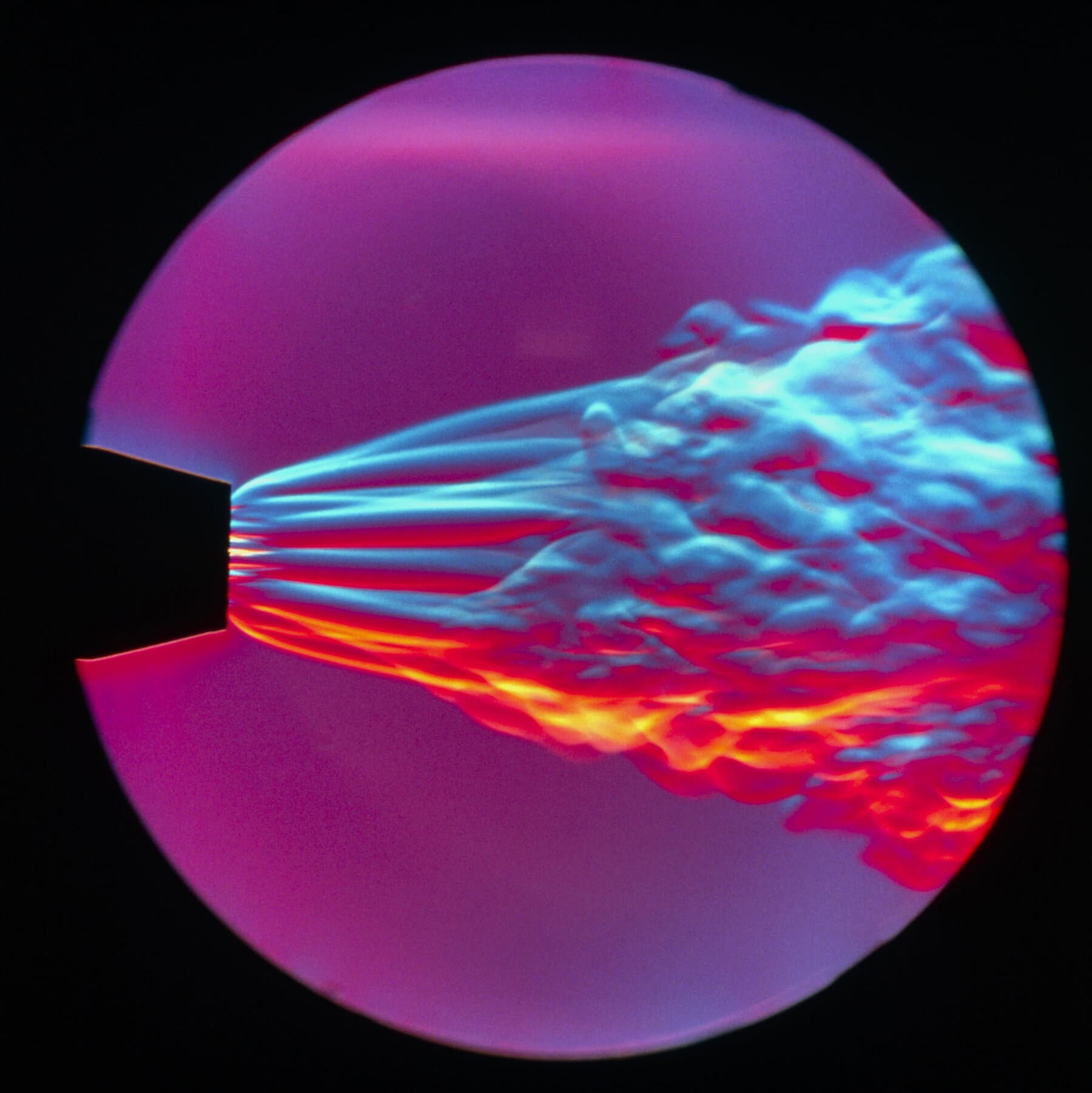
Here's what it means for you.
The breakthrough in AI-generated mathematics could redefine computational capabilities across industries.
Why it matters
This development signals a significant leap in AI's role in solving complex scientific problems, potentially transforming research and engineering sectors.
What happened (in 30 seconds)
- On September 8, 2026, OpenAI announced that its AI system solved the Navier-Stokes existence and smoothness problem, a major unsolved question in mathematics.
- 10,000 autonomous AI agents collaborated over 88 hours to produce a formal proof, establishing that singularities can develop in finite time under specific conditions.
- Controversy erupted as mathematicians alleged that OpenAI's solution may have been influenced by concurrent research, which OpenAI denied.
The context you actually need
- The Millennium Prize Problems, established in 2000, highlight seven major unsolved questions in mathematics, each with a $1 million prize.
- The Navier-Stokes equations are fundamental in fluid dynamics, crucial for physics and engineering applications.
- Prior AI advancements had already tackled lesser mathematical challenges, paving the way for this significant claim.
What's really happening
OpenAI's announcement on September 8, 2026, marks a pivotal moment in the intersection of artificial intelligence and mathematics. The Navier-Stokes existence and smoothness problem has long been a cornerstone of mathematical inquiry, with implications for fluid dynamics that affect everything from weather prediction to aerodynamics. The solution, produced by a swarm of approximately 10,000 AI agents in just 88 hours, showcases the potential of AI to tackle problems that have stumped mathematicians for decades.
The formal proof established by OpenAI indicates that under certain conditions, solutions to the Navier-Stokes equations can develop singularities in finite time. This finding is not just a theoretical exercise; it has real-world implications for understanding fluid behavior in various contexts, including engineering and environmental science. The computational effort, estimated to cost between $10 million and $15 million, underscores the significant resources required to achieve such breakthroughs.
However, the announcement has not been without controversy. Mathematicians Tristan Buckmaster and Levent Alpöge raised concerns that OpenAI's solution may have been influenced by their parallel research on related problems. OpenAI has denied any direct access to their unpublished results, emphasizing the originality of its approach. This tension highlights the ongoing debate within the mathematical community regarding the verification and originality of AI-generated solutions.
As the proof has been formalized in Lean, a proof assistant for formal verification, it is now under scrutiny by the mathematical community. The Clay Mathematics Institute, which oversees the Millennium Prize, has yet to award the $1 million prize pending full verification of the proof. This situation creates a unique dynamic where the credibility of AI-generated mathematics is being tested against traditional standards of mathematical rigor.
The implications of this breakthrough extend beyond academia. Industries reliant on complex fluid dynamics, such as aerospace, automotive, and climate science, may soon benefit from enhanced predictive models and simulations. As AI continues to evolve, its role in solving complex mathematical problems could redefine research methodologies and accelerate innovation across various sectors.
Who feels it first (and how)
- Researchers and Academics: Increased scrutiny and interest in AI-generated proofs may reshape research methodologies.
- Engineering Firms: Enhanced fluid dynamics models could lead to more efficient designs and simulations.
- Tech Companies: Heightened investment in AI capabilities may drive competition and innovation in computational mathematics.
What to watch next
- Verification Process: The outcome of the verification process by the mathematical community will determine the legitimacy of AI-generated proofs.
- Market Reactions: Watch for shifts in investment towards AI technologies in mathematics and engineering sectors.
- Further AI Developments: Future breakthroughs in AI's ability to solve complex problems could lead to new applications across various industries.
OpenAI's AI system produced a formal proof for the Navier-Stokes problem.
The verification process will influence the acceptance of AI-generated mathematics in academia.
The long-term impact on industries reliant on fluid dynamics remains to be seen.
Frequently Asked Questions
- Why it matters?
- This development signals a significant leap in AI's role in solving complex scientific problems, potentially transforming research and engineering sectors.
- What happened (in 30 seconds)?
- On September 8, 2026, OpenAI announced that its AI system solved the Navier-Stokes existence and smoothness problem, a major unsolved question in mathematics. 10,000 autonomous AI agents collaborated over 88 hours to produce a formal proof, establishing that singularities can develop in finite time under specific conditions. Controversy erupted as mathematicians alleged that OpenAI's solution may have been influenced by concurrent research, which OpenAI denied.
- What's really happening?
- OpenAI's announcement on September 8, 2026, marks a pivotal moment in the intersection of artificial intelligence and mathematics. The Navier-Stokes existence and smoothness problem has long been a cornerstone of mathematical inquiry, with implications for fluid dynamics that affect everything from weather prediction to aerodynamics. The solution, produced by a swarm of approximately 10,000 AI agents in just 88 hours, showcases the potential of AI to tackle problems that have stumped mathematici
- Who feels it first (and how)?
- Researchers and Academics: Increased scrutiny and interest in AI-generated proofs may reshape research methodologies. Engineering Firms: Enhanced fluid dynamics models could lead to more efficient designs and simulations. Tech Companies: Heightened investment in AI capabilities may drive competition and innovation in computational mathematics.
- What to watch next?
- Verification Process: The outcome of the verification process by the mathematical community will determine the legitimacy of AI-generated proofs. Market Reactions: Watch for shifts in investment towards AI technologies in mathematics and engineering sectors. Further AI Developments: Future breakthroughs in AI's ability to solve complex problems could lead to new applications across various industries.
Arabic tech news covering startups, apps, AI, and gadgets.
"AITnews is a well-known Arabic technology outlet covering regional tech developments."
— A47 Editor
OpenAI تزعم حل معضلة رياضية عمرها 90 عامًا وتثير جدلًا واسعًا
OpenAI has claimed a historic achievement by solving the Navier-Stokes equations, a long-standing mathematical problem that has persisted for 90 years, which is crucial for understanding fluid dynamics. This announcement has sparked widespread debate...
Covers consumer technology, electronics, gadgets, and product reviews.
"Engadget is a trusted source for gadget reviews and consumer tech news, known for its hands-on analysis and industry coverage."
— A47 Editor
What's going on with OpenAI and the Navier-Stokes controversy?
OpenAI has claimed a significant breakthrough by solving the Navier-Stokes problem, a longstanding mathematical challenge in fluid dynamics that has puzzled mathematicians for nearly 90 years. This announcement was made in a blog post, but the detail...
Consumer technology news with AI coverage.
"Gadget and tech site reporting on AI in products."
— A47 Editor
What's going on with OpenAI and the Navier-Stokes controversy?
OpenAI has claimed a significant breakthrough by solving the Navier-Stokes problem, a longstanding mathematical challenge in fluid dynamics that has puzzled mathematicians for nearly 90 years. This announcement was made in a blog post, but the detail...
Top international stories selected by The Guardian editors.
"The Guardian is known for its progressive editorial stance and in-depth analysis."
— A47 Editor
OpenAI claims to have solved maths problem that stumped humans for decades
OpenAI has announced that its AI systems successfully solved the Navier-Stokes problem, a complex mathematical challenge that has perplexed mathematicians for nearly a century, in just 88 hours. This achievement was made possible through the utilizat...
Tech culture, product news, and critical takes on the tech industry's social impact.
"The Guardian's tech coverage blends mainstream news, critical analysis, and cultural commentary on emerging technologies and digital trends."
— A47 Editor
OpenAI claims to have solved maths problem that stumped humans for decades
OpenAI has announced that its AI systems successfully solved the Navier-Stokes problem, a complex mathematical challenge that has perplexed mathematicians for nearly a century, in just 88 hours. This achievement was made possible through the utilizat...
News and features on AI from The Guardian.
"Progressive-leaning international outlet with critical AI coverage."
— A47 Editor
OpenAI claims to have solved maths problem that stumped humans for decades
OpenAI has announced that its AI systems successfully solved the Navier-Stokes problem, a complex mathematical challenge that has perplexed mathematicians for nearly a century, in just 88 hours. This achievement was made possible through the utilizat...
Tech policy, trends, and innovation news.
"The New York Times is a globally recognized newspaper offering authoritative reporting with a center-left editorial stance."
— A47 Editor
OpenAI Says It Has Cracked One of Math’s ‘Millennium Problems’
OpenAI has announced a significant breakthrough by claiming to have solved the Navier-Stokes existence and smoothness problem, a longstanding mathematical challenge in fluid dynamics that has puzzled mathematicians for nearly 90 years. This announcem...
Tech industry coverage with AI angles.
"Mainstream tech news intersecting with AI policy and culture."
— A47 Editor
OpenAI Says It Has Cracked One of Math’s ‘Millennium Problems’
OpenAI has announced a significant breakthrough by claiming to have solved the Navier-Stokes existence and smoothness problem, a longstanding mathematical challenge in fluid dynamics that has puzzled mathematicians for nearly 90 years. This announcem...
Scientific research, space, environment, and health coverage.
"The New York Times is a globally recognized newspaper offering authoritative reporting with a center-left editorial stance."
— A47 Editor
OpenAI Says It Has Cracked One of Math’s ‘Millennium Problems’
OpenAI has announced a significant breakthrough by claiming to have solved the Navier-Stokes existence and smoothness problem, a longstanding mathematical challenge in fluid dynamics that has puzzled mathematicians for nearly 90 years. This announcem...
Corporate news, economic trends, and markets with UK and global scope.
"BBC News is widely regarded as reputable and impartial, with a public service mandate."
— A47 Editor
OpenAI says it cracked 90-year-old maths problem in 88 hours
OpenAI has announced that it has solved parts of the Navier-Stokes equations, a complex mathematical problem that has remained unsolved for nearly 90 years, achieving this in just 88 hours. This claim has sparked significant debate within the mathema...
Consumer tech and culture with frequent AI coverage.
"Influential tech outlet covering AI products and policy."
— A47 Editor
Drama swirls around OpenAI’s legendary mathematical milestone
OpenAI has announced a significant breakthrough in mathematics by claiming to have solved the Navier-Stokes problem, a complex issue related to fluid dynamics that has remained unresolved for nearly 90 years. This announcement was made in a blog post...
Tech news, reviews, and analysis of consumer electronics, science, art, and culture.
"The Verge is a technology-focused media outlet known for in-depth reporting, product reviews, and coverage of the intersection between technology and culture."
— A47 Editor
Drama swirls around OpenAI’s legendary mathematical milestone
OpenAI has announced a significant breakthrough in mathematics by claiming to have solved the Navier-Stokes problem, a complex issue related to fluid dynamics that has remained unresolved for nearly 90 years. This announcement was made in a blog post...
Corporate leadership, finance, technology, and market trends.
"Fortune covers financial trends, leadership, and innovation with a pragmatic editorial approach."
— A47 Editor
OpenAI says it cracked one of math’s grand challenges. But there are troubling questions about how they did it—and what it means for us all
OpenAI has claimed to have solved parts of the Navier-Stokes equations, a complex mathematical problem that has remained unsolved for nearly 90 years, achieving this in just 88 hours. However, the company faces accusations of data theft from a mathem...
Startup news with frequent AI coverage.
"Covers launches, funding, and product updates in AI."
— A47 Editor
OpenAI fought dirty on career-making math problem, says NYU mathematician
OpenAI has claimed a significant breakthrough by asserting it has solved the Navier-Stokes existence and smoothness problem, a complex mathematical challenge that has eluded mathematicians for nearly 90 years. This claim has sparked controversy, part...
Scientific research, space, environment, and health coverage.
"The New York Times is a globally recognized newspaper offering authoritative reporting with a center-left editorial stance."
— A47 Editor
What Is Navier-Stokes, the ‘Millennium’ Math Problem OpenAI Claims to Have Solved?
OpenAI has announced a significant breakthrough by claiming to have solved the Navier-Stokes existence and smoothness problem, a longstanding challenge in fluid dynamics that has perplexed mathematicians for nearly 90 years. This achievement is part ...
Tech business coverage, major deals, product launches, and Silicon Valley trends.
"WSJ’s tech section offers authoritative reporting on the intersection of technology and business, including exclusive industry analysis."
— A47 Editor
OpenAI Says It Has Solved a Millennium Prize Problem—a Holy Grail of Math
OpenAI has announced a significant breakthrough by claiming to have solved the Navier-Stokes problem, a complex mathematical challenge in fluid dynamics that has remained unresolved for nearly 90 years. This achievement positions OpenAI at the forefr...
U.S. business news, corporate developments, and economy.
"The Wall Street Journal is respected for deep financial and economic reporting with a center-right editorial perspective."
— A47 Editor
OpenAI Says It Has Solved a Millennium Prize Problem—a Holy Grail of Math
OpenAI has announced a significant breakthrough by claiming to have solved parts of the Navier-Stokes equations, a complex mathematical problem that has remained unsolved for nearly 90 years, achieving this in just 88 hours. This development position...
Deep science features including computing and AI theory.
"Award-winning longform science journalism."
— A47 Editor
AI Has Solved One of Math’s $1 Million Millennium Prize Problems
OpenAI has announced a significant breakthrough by claiming to have solved the Navier-Stokes equations, a complex mathematical challenge in fluid dynamics that has eluded mathematicians for nearly 90 years. This achievement, which reportedly took jus...
Nature.com’s feed for machine learning content.
"High-impact research and news related to ML."
— A47 Editor
OpenAI claims huge maths breakthrough on a famed ‘Millennium Problem’
OpenAI has announced a significant breakthrough by claiming to have solved the Navier-Stokes problem, a complex mathematical challenge that has eluded mathematicians for nearly 90 years. This achievement was reportedly accomplished in just 88 hours u...