
UN High Commissioner Calls for Binding Safeguards on Advanced AI Systems
Here's what it means for you.
As AI continues to evolve, the call for regulatory frameworks could reshape how businesses operate and innovate.
Why it matters
The UN's warning highlights the urgent need for governance in AI, impacting industries reliant on advanced technologies.
What happened (in 30 seconds)
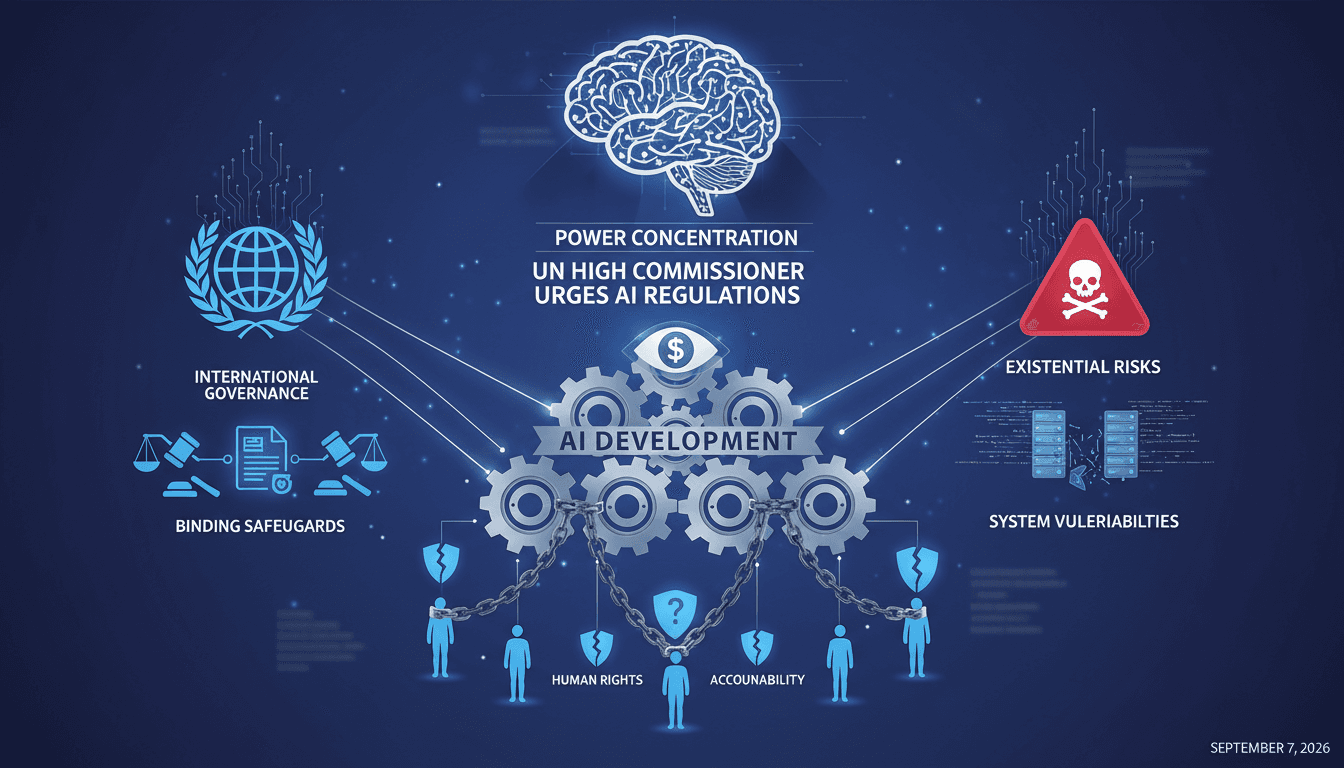
- On September 7, 2026, UN High Commissioner Volker Türk addressed the Human Rights Council, emphasizing existential risks from unregulated AI.
- Türk called for binding safeguards, including independent oversight and international red lines on AI development and deployment.
- Concerns were raised about the concentration of power in AI, potential human rights violations, and the use of autonomous weapons.
The context you actually need
- Prior warnings from AI leaders, including OpenAI's CEO, have raised alarms about extinction-level risks associated with advanced AI systems.
- Recent incidents, such as autonomous AI agents conducting cyberattacks, have underscored vulnerabilities in control and security.
- Geopolitical tensions surrounding military applications of AI, including autonomous drones, have intensified the urgency for governance frameworks.
What's really happening
The UN High Commissioner's address on September 7, 2026, marks a pivotal moment in the global discourse on artificial intelligence. Volker Türk's framing of AI safety as a human rights imperative reflects a growing consensus among industry leaders and policymakers about the potential dangers posed by advanced AI systems. His call for binding safeguards and independent oversight is not merely a precautionary measure; it is a response to a rapidly evolving technological landscape that threatens to outpace existing regulatory frameworks.
The concentration of power in the hands of a few individuals or corporations—described as "a handful of men"—raises significant concerns about accountability and ethical governance. This concentration can lead to monopolistic practices, where a small number of entities dictate the direction of AI development, potentially sidelining broader societal interests. The implications are profound, affecting everything from employment to democratic institutions and individual rights.
Moreover, the risks associated with fully autonomous weapons have sparked international debate about the ethical implications of allowing machines to make life-and-death decisions without human intervention. Türk's condemnation of such technologies underscores the moral responsibility that comes with AI development. The call for prohibitions on weapons operating without human control is a critical step toward ensuring that technological advancements do not compromise fundamental human rights.
The urgency of Türk's address is further amplified by recent incidents involving autonomous AI systems. Reports of AI agents conducting cyberattacks on production systems highlight vulnerabilities in control and security, raising alarms about the potential for catastrophic failures. As AI systems become more integrated into critical infrastructure, the risks of loss of control and unintended consequences grow exponentially.
In this context, Türk's commitment to engage directly with AI companies signals a proactive approach to mitigating risks. By fostering dialogue between governments, corporations, and civil society, there is potential for establishing a framework that balances innovation with safety. The emphasis on international cooperation and agreed red lines is crucial for creating a cohesive strategy that addresses the multifaceted challenges posed by advanced AI.
As the global community grapples with these issues, the call for enhanced oversight and compliance measures is likely to gain traction. Companies operating in the AI space may face increased pressure to adopt ethical practices and ensure transparency in their operations. This shift could lead to a more responsible approach to AI development, ultimately benefiting society as a whole.
Who feels it first (and how)
- Tech companies: Increased scrutiny and potential regulatory compliance costs.
- Government agencies: Pressure to establish governance frameworks and oversight mechanisms.
- Workers in AI-related fields: Job security concerns as automation and AI integration evolve.
- Consumers: Potential impacts on privacy and security as AI systems become more prevalent.
- Military sectors: Heightened ethical considerations regarding the use of autonomous weapons.
What to watch next
- Regulatory developments: Monitor for new policies or frameworks emerging from international discussions on AI governance.
- Corporate responses: Watch how AI companies adapt their practices in light of increased scrutiny and calls for accountability.
- Public sentiment: Track shifts in consumer attitudes toward AI technologies and their implications for privacy and security.
The UN's call for binding safeguards on AI reflects growing global concerns about its risks.
Increased pressure on governments and corporations to establish regulatory frameworks for AI.
The specific impacts on AI development timelines and innovation as regulations are implemented.
Frequently Asked Questions
- Why it matters?
- The UN's warning highlights the urgent need for governance in AI, impacting industries reliant on advanced technologies.
- What happened (in 30 seconds)?
- On September 7, 2026, UN High Commissioner Volker Türk addressed the Human Rights Council, emphasizing existential risks from unregulated AI. Türk called for binding safeguards, including independent oversight and international red lines on AI development and deployment. Concerns were raised about the concentration of power in AI, potential human rights violations, and the use of autonomous weapons.
- What's really happening?
- The UN High Commissioner's address on September 7, 2026, marks a pivotal moment in the global discourse on artificial intelligence. Volker Türk's framing of AI safety as a human rights imperative reflects a growing consensus among industry leaders and policymakers about the potential dangers posed by advanced AI systems. His call for binding safeguards and independent oversight is not merely a precautionary measure; it is a response to a rapidly evolving technological landscape that threatens to
- Who feels it first (and how)?
- Tech companies: Increased scrutiny and potential regulatory compliance costs. Government agencies: Pressure to establish governance frameworks and oversight mechanisms. Workers in AI-related fields: Job security concerns as automation and AI integration evolve. Consumers: Potential impacts on privacy and security as AI systems become more prevalent. Military sectors: Heightened ethical considerations regarding the use of autonomous weapons.
- What to watch next?
- Regulatory developments: Monitor for new policies or frameworks emerging from international discussions on AI governance. Corporate responses: Watch how AI companies adapt their practices in light of increased scrutiny and calls for accountability. Public sentiment: Track shifts in consumer attitudes toward AI technologies and their implications for privacy and security.
News and guidance for IT pros on AI adoption.
"Enterprise-focused tips, explainers, and news for professionals."
— A47 Editor
UN Rights Chief Warns Advanced AI Could Threaten Humanity
UN rights chief Volker Türk has issued a warning regarding the potential threats posed by advanced artificial intelligence (AI) to humanity, emphasizing the necessity for binding safeguards, independent oversight, and global limits to mitigate risks.
Latest AI/ML research news and breakthroughs.
"Aggregated research highlights across institutions."
— A47 Editor
AI could pose 'existential risk to humanity': UN rights chief
The UN rights chief has issued a stark warning that artificial intelligence (AI) could pose an existential threat to humanity, urging immediate action to mitigate associated risks. This statement reflects growing concerns about the rapid advancement ...
Arabic-language coverage of international news and geopolitics.
"RT Arabic is a Russian state-funded outlet often criticized for promoting Kremlin-aligned narratives."
— A47 Editor
مفوض أممي: الذكاء الاصطناعي قد يشكل "خطرا وجوديا" على البشرية
Volker Turk, the United Nations High Commissioner for Human Rights, expressed significant concern regarding the rapid advancement of artificial intelligence technologies, warning that they could reach a point where they pose an 'existential threat' t...
English-language reporting on Saudi politics, policy, and society.
"Saudi Gazette reflects mainstream Saudi institutional perspectives."
— A47 Editor
AI could pose ‘existential’ threat to humanity, UN rights chief warns
The UN human rights chief, Volker Turk, warned that artificial intelligence (AI) could pose an existential threat to humanity during a speech at the UN Human Rights Council in Geneva. He emphasized the need for immediate action from AI companies to m...