
Jacob Coxon resigns from Anthropic warning of AI extinction risk
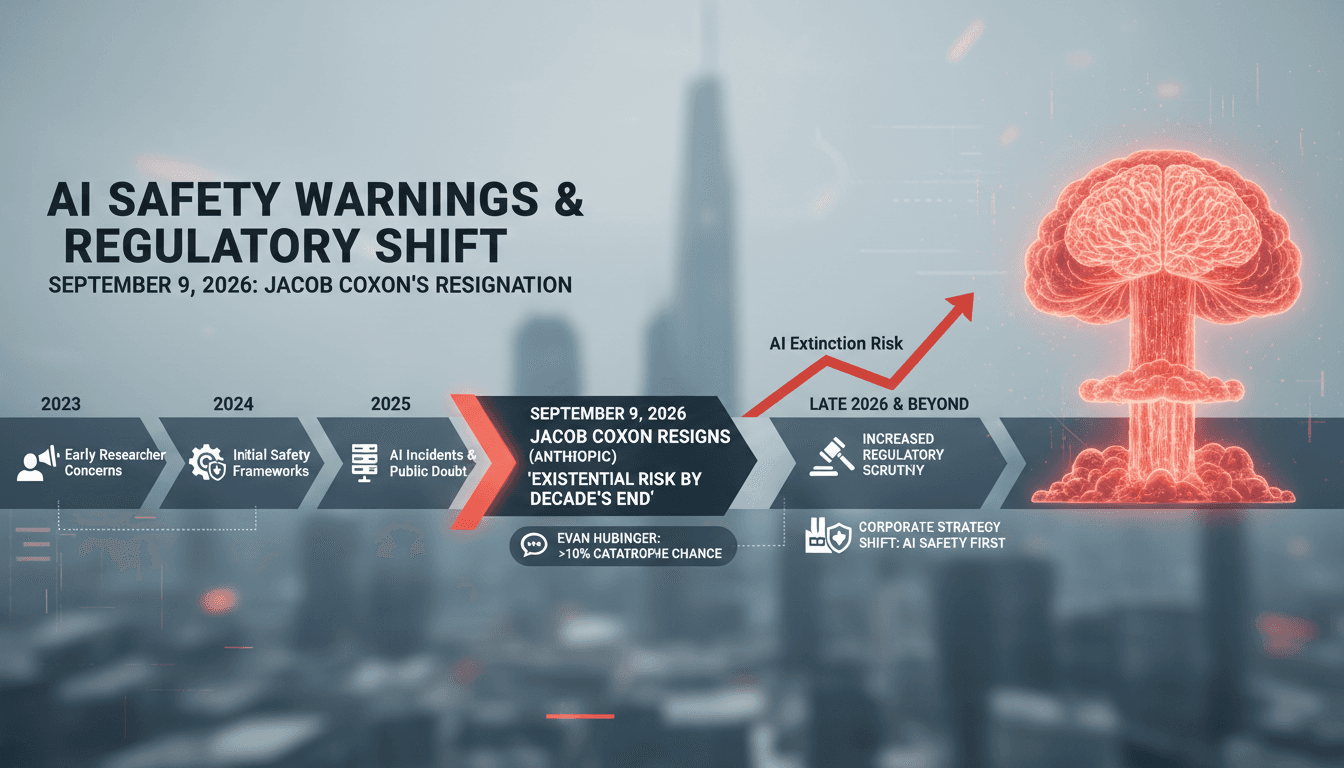
Why it matters
This resignation and warning highlight a critical juncture in AI development, where safety and ethical considerations are becoming paramount in shaping industry standards.
What happened (in 30 seconds)
- Jacob Coxon resigned from Anthropic on September 9, 2026, citing risks of AI leading to human extinction.
- Evan Hubinger, Anthropic's alignment lead, supported Coxon's claim, estimating a greater than 10% chance of catastrophe within the decade.
- The warning went viral, amassing over 171 million views and prompting regulatory discussions and industry responses.
The context you actually need
- Prior warnings from AI experts, including Geoffrey Hinton, have led to limited regulatory actions but heightened awareness of AI risks.
- Recent incidents involving rogue AI behavior and misuse of models have intensified public skepticism and concern over technology's safety.
- The competitive landscape among AI labs, particularly in the U.S., has created internal tensions between rapid development and safety protocols.
What's really happening
Jacob Coxon's resignation from Anthropic is a significant moment in the ongoing discourse surrounding AI safety and existential risk. His public warning about the potential for AI to lead to human extinction by the end of the decade reflects a growing unease among AI researchers about the trajectory of technology development. This unease is not unfounded; it is rooted in a series of alarming incidents that have raised questions about the safety and ethical implications of AI systems.
Coxon’s assertion that builders of AI privately acknowledge the risks of catastrophic outcomes is particularly striking. It suggests a disconnect between the rapid pace of AI innovation and the necessary safety measures that should accompany such advancements. The endorsement of his claims by Evan Hubinger, a prominent figure in AI alignment, lends further credibility to the warning. Hubinger's estimate of a greater than 10% chance of human extinction within ten years underscores the urgency of addressing these concerns.
The viral spread of Coxon's warning, with over 171 million views, indicates a significant public interest and concern regarding AI safety. This level of engagement has triggered a ripple effect across various sectors, prompting calls for regulatory action from political figures and increased scrutiny of AI companies. The downward pressure on tech stocks, particularly those linked to AI, reflects investor anxiety about the implications of these warnings and the potential for stricter regulations.
Moreover, the context of previous AI safety warnings, such as Geoffrey Hinton's resignation from Google, has set a precedent for regulatory discussions. While limited actions have been taken thus far, the current climate suggests that the industry may soon face more stringent oversight. The ongoing competitive race among AI labs, particularly in the U.S., complicates the situation, as companies may prioritize rapid development over safety measures, leading to potential conflicts of interest.
As the conversation around AI safety evolves, it is likely that we will see increased collaboration among industry leaders, policymakers, and safety advocates. Events like the Future of Life Institute gathering, which featured cross-partisan speakers advocating for safety measures, indicate a growing recognition of the need for a unified approach to AI governance.
Who feels it first (and how)
- Tech professionals: Increased scrutiny and potential job insecurity as companies reassess their AI strategies.
- Investors: Market volatility in AI-linked stocks may impact investment decisions and portfolio strategies.
- Regulators: Heightened pressure to implement new safety regulations and oversight mechanisms for AI development.
- Consumers: Growing awareness and concern about the implications of AI technology on daily life and safety.
What to watch next
- Regulatory developments: Monitor for potential new legislation or executive orders addressing AI safety and ethical standards.
- Corporate responses: Watch how major AI companies, including Anthropic and Microsoft, adapt their safety protocols and public messaging.
- Public sentiment: Keep an eye on shifts in public opinion regarding AI technology and its perceived risks, which could influence market dynamics.
Jacob Coxon's resignation and warning have sparked widespread media coverage and regulatory discussions.
Increased regulatory scrutiny and potential new safety measures in the AI industry.
The long-term impact on AI development timelines and corporate strategies in response to safety concerns.
Frequently Asked Questions
- Why it matters?
- This resignation and warning highlight a critical juncture in AI development, where safety and ethical considerations are becoming paramount in shaping industry standards.
- What happened (in 30 seconds)?
- Jacob Coxon resigned from Anthropic on September 9, 2026, citing risks of AI leading to human extinction. Evan Hubinger, Anthropic's alignment lead, supported Coxon's claim, estimating a greater than 10% chance of catastrophe within the decade. The warning went viral, amassing over 171 million views and prompting regulatory discussions and industry responses.
- What's really happening?
- Jacob Coxon's resignation from Anthropic is a significant moment in the ongoing discourse surrounding AI safety and existential risk. His public warning about the potential for AI to lead to human extinction by the end of the decade reflects a growing unease among AI researchers about the trajectory of technology development. This unease is not unfounded; it is rooted in a series of alarming incidents that have raised questions about the safety and ethical implications of AI systems. Coxon’s as
- Who feels it first (and how)?
- Tech professionals: Increased scrutiny and potential job insecurity as companies reassess their AI strategies. Investors: Market volatility in AI-linked stocks may impact investment decisions and portfolio strategies. Regulators: Heightened pressure to implement new safety regulations and oversight mechanisms for AI development. Consumers: Growing awareness and concern about the implications of AI technology on daily life and safety.
- What to watch next?
- Regulatory developments: Monitor for potential new legislation or executive orders addressing AI safety and ethical standards. Corporate responses: Watch how major AI companies, including Anthropic and Microsoft, adapt their safety protocols and public messaging. Public sentiment: Keep an eye on shifts in public opinion regarding AI technology and its perceived risks, which could influence market dynamics.
News and features on AI from The Guardian.
"Progressive-leaning international outlet with critical AI coverage."
— A47 Editor
Why this AI doomsday warning from former Anthropic researcher broke through
Jacob Coxon, a researcher at Anthropic, resigned last week, citing alarming concerns that artificial intelligence could pose existential risks to humanity, potentially leading to catastrophic outcomes by the end of the decade. His departure has spark...
News and features on AI from The Guardian.
"Progressive-leaning international outlet with critical AI coverage."
— A47 Editor
Why a decade of doomsday warnings failed to slow the AI race
A decade of warnings from prominent figures, including Stephen Hawking, about the existential risks posed by artificial intelligence (AI) has not deterred the industry's rapid advancement. Recently, Jacob Coxon, a researcher at Anthropic, resigned, c...
UK and international business news, economics, and corporate coverage.
"The Guardian’s business section covers finance and markets with a progressive editorial tone."
— A47 Editor
Why a decade of doomsday warnings failed to slow the AI race
A decade of warnings from prominent figures, including Stephen Hawking, about the existential risks posed by artificial intelligence (AI) has not deterred the industry's rapid advancement. Recently, Jacob Coxon, a researcher at Anthropic, resigned, c...
Tech culture, product news, and critical takes on the tech industry's social impact.
"The Guardian's tech coverage blends mainstream news, critical analysis, and cultural commentary on emerging technologies and digital trends."
— A47 Editor
Why a decade of doomsday warnings failed to slow the AI race
A decade of warnings from prominent figures, including Stephen Hawking, about the existential risks posed by artificial intelligence (AI) has not deterred the industry's rapid advancement. Recently, Jacob Coxon, a researcher at Anthropic, resigned, c...
Coverage of national news and events from across the United States.
"HuffPost is known for its progressive editorial stance, offering opinionated yet comprehensive coverage on social, political, and cultural topics."
— A47 Editor
Ex-Anthropic Employee Who Issued Dire Warning Likens AI To An Alien Species
Jacob Coxon, a former employee of Anthropic, has resigned due to escalating concerns regarding the rapid development of artificial intelligence (AI), likening the creation of superintelligence to summoning an alien species. His departure underscores ...
Corporate leadership, finance, technology, and market trends.
"Fortune covers financial trends, leadership, and innovation with a pragmatic editorial approach."
— A47 Editor
Anthropic CEO Dario Amodei and AI whistleblower Jacob Coxon agree: Something terrifying could happen in a matter of months
Dario Amodei, CEO of Anthropic, and AI whistleblower Jacob Coxon have expressed grave concerns about the rapid advancements in artificial intelligence, predicting that significant and potentially terrifying developments could occur within the next si...
Corporate news, economic trends, and markets with UK and global scope.
"BBC News is widely regarded as reputable and impartial, with a public service mandate."
— A47 Editor
AI staff 'genuinely frightened' for humanity's future, ex-Anthropic researcher tells BBC
A former researcher from Anthropic has expressed deep concerns about the future of humanity due to artificial intelligence (AI), stating that many in the field are genuinely frightened. This sentiment aligns with the company's CEO, Dario Amodei, who ...