
Revolut Exposes Customer Data to Scammers Impersonating Government Agency
Why it matters
This incident underscores vulnerabilities in digital banking systems and the growing sophistication of cybercriminals.
What happened (in 30 seconds)
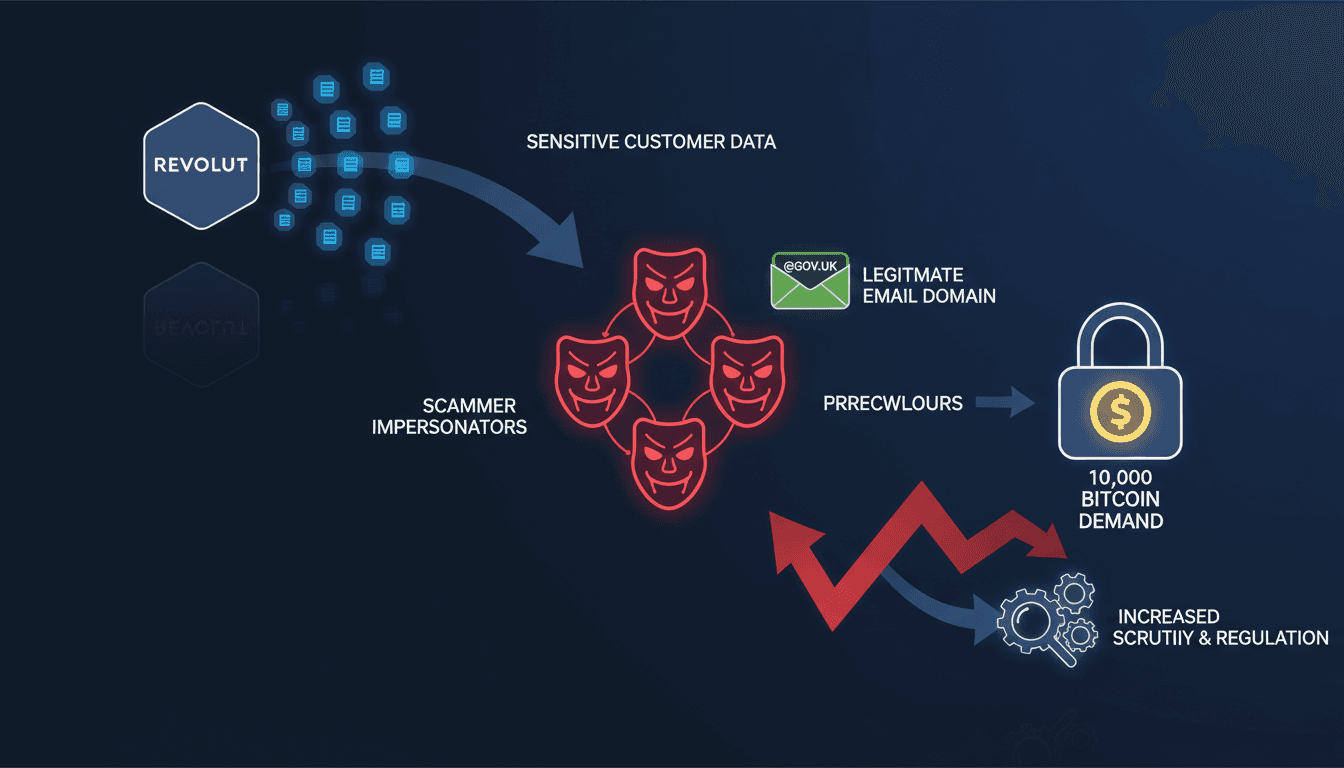
- In September 2026, Revolut disclosed sensitive customer data to scammers impersonating a government agency.
- The scammers used a legitimate email domain to submit fraudulent information requests, leading to the exposure of personal and financial data.
- A ransom of 10,000 Bitcoin was demanded by the perpetrators following the data breach.
The context you actually need
- Revolut is a leading digital bank valued as Europe’s most valuable startup, processing sensitive customer identity verification data regularly.
- Scammers exploited a legitimate government email domain, bypassing typical verification processes and tricking Revolut into compliance.
- Approximately 680 customers were affected, including 27 Turkish nationals, highlighting the potential for targeted attacks on specific demographics.
What's really happening
The Revolut incident illustrates a significant breach of trust in digital banking, where customer data is expected to be safeguarded against unauthorized access. The scammers' use of a legitimate government email domain with valid authentication credentials represents a sophisticated form of social engineering, which has become increasingly prevalent in recent years. This tactic exploits the inherent trust that organizations place in official communications, allowing criminals to bypass standard security protocols.
Revolut, like many fintech companies, routinely processes sensitive personal data as part of its compliance with regulatory requirements. This includes identity verification data such as passports and selfies. The incident raises critical questions about the robustness of verification processes in place at financial institutions. While Revolut acted in good faith, believing the requests to be legitimate, this breach highlights the need for enhanced scrutiny and verification measures, particularly when handling sensitive customer information.
The aftermath of the incident has seen Revolut take immediate action by blocking the fraudulent email address and notifying law enforcement and regulatory bodies. However, the demand for a ransom of 10,000 Bitcoin indicates the potential financial implications for the company and its customers. If the ransom is paid, it could set a dangerous precedent, encouraging further attacks on not just Revolut but the broader fintech sector.
Moreover, the incident could have ripple effects on customer trust in digital banking services. As customers become more aware of the risks associated with data breaches, they may reconsider their reliance on digital banks, potentially leading to a shift in market dynamics. Financial institutions may need to invest more heavily in cybersecurity measures and customer education to mitigate these risks and restore confidence.
The Revolut case also serves as a reminder of the interconnectedness of global financial systems. With a customer base that spans multiple countries, the implications of this breach could extend beyond the UK, affecting customers in various jurisdictions. This incident may prompt regulators worldwide to reevaluate their cybersecurity frameworks and the responsibilities of financial institutions in protecting customer data.
Who feels it first (and how)
- Digital banking customers: Increased anxiety about data security and potential identity theft.
- Fintech companies: Heightened scrutiny and pressure to enhance cybersecurity measures.
- Regulatory bodies: Potential for new regulations or guidelines to address vulnerabilities in data protection.
What to watch next
- Regulatory responses: Watch for any new guidelines or regulations from financial authorities aimed at improving data security in the fintech sector.
- Market reactions: Monitor how this incident affects Revolut's customer base and overall market valuation in the coming months.
- Cybersecurity investments: Look for increased investments in cybersecurity technologies and training within the fintech industry as companies respond to this incident.
Revolut disclosed customer data to scammers posing as a government agency.
Increased regulatory scrutiny and potential new guidelines for data protection in the fintech sector.
The long-term impact on customer trust and market dynamics in the digital banking space.
Frequently Asked Questions
- Why it matters?
- This incident underscores vulnerabilities in digital banking systems and the growing sophistication of cybercriminals.
- What happened (in 30 seconds)?
- In September 2026, Revolut disclosed sensitive customer data to scammers impersonating a government agency. The scammers used a legitimate email domain to submit fraudulent information requests, leading to the exposure of personal and financial data. A ransom of 10,000 Bitcoin was demanded by the perpetrators following the data breach.
- What's really happening?
- The Revolut incident illustrates a significant breach of trust in digital banking, where customer data is expected to be safeguarded against unauthorized access. The scammers' use of a legitimate government email domain with valid authentication credentials represents a sophisticated form of social engineering, which has become increasingly prevalent in recent years. This tactic exploits the inherent trust that organizations place in official communications, allowing criminals to bypass standard
- Who feels it first (and how)?
- Digital banking customers: Increased anxiety about data security and potential identity theft. Fintech companies: Heightened scrutiny and pressure to enhance cybersecurity measures. Regulatory bodies: Potential for new regulations or guidelines to address vulnerabilities in data protection.
- What to watch next?
- Regulatory responses: Watch for any new guidelines or regulations from financial authorities aimed at improving data security in the fintech sector. Market reactions: Monitor how this incident affects Revolut's customer base and overall market valuation in the coming months. Cybersecurity investments: Look for increased investments in cybersecurity technologies and training within the fintech industry as companies respond to this incident.
U.S. business news, corporate developments, and economy.
"The Wall Street Journal is respected for deep financial and economic reporting with a center-right editorial perspective."
— A47 Editor
Europe’s Most Valuable Startup Gave Data to a Scammer. Now It Faces a Shakedown.
Digital bank Revolut has come under scrutiny after inadvertently providing sensitive customer data to an individual impersonating a government agency. This incident has raised significant concerns regarding data security and the protocols in place fo...
Tech business coverage, major deals, product launches, and Silicon Valley trends.
"WSJ’s tech section offers authoritative reporting on the intersection of technology and business, including exclusive industry analysis."
— A47 Editor
Europe’s Most Valuable Startup Gave Data to a Scammer. Now It Faces a Shakedown.
Digital bank Revolut has come under scrutiny after it inadvertently provided sensitive customer data to individuals impersonating a government agency, resulting in a significant security breach. The data included identity information, contact details...
Real-time updates, analysis, and reports on the blockchain and cryptocurrency sectors.
"Crypto News delivers real-time updates, analysis, and reports on the blockchain and cryptocurrency sectors."
— A47 Editor
Revolut faces UK probe after 680 customers exposed
Revolut has notified 680 customers of a significant data breach after scammers exploited a fraudulent government email account to obtain sensitive information, including passports, addresses, bank details, and Bitcoin records. This incident has raise...
Consumer tech news, reviews, and buying guides for gadgets and electronics.
"TechRadar is known for comprehensive buying advice, hardware reviews, and consumer tech news targeted at mainstream audiences."
— A47 Editor
Revolut sent identity data, contact details, and documents to hackers posing as a government agency
Revolut has reportedly sent sensitive identity data, contact details, and documents to hackers who posed as a government agency, leading to a significant security breach. The company is now facing a substantial ransom demand to keep this information ...