
Xi Jinping Proposes BRICS AI Open-Source Community and Global Governance Framework
Why it matters
This initiative signals a shift towards a more inclusive global AI governance model, potentially impacting international tech standards and cooperation.
What happened (in 30 seconds)
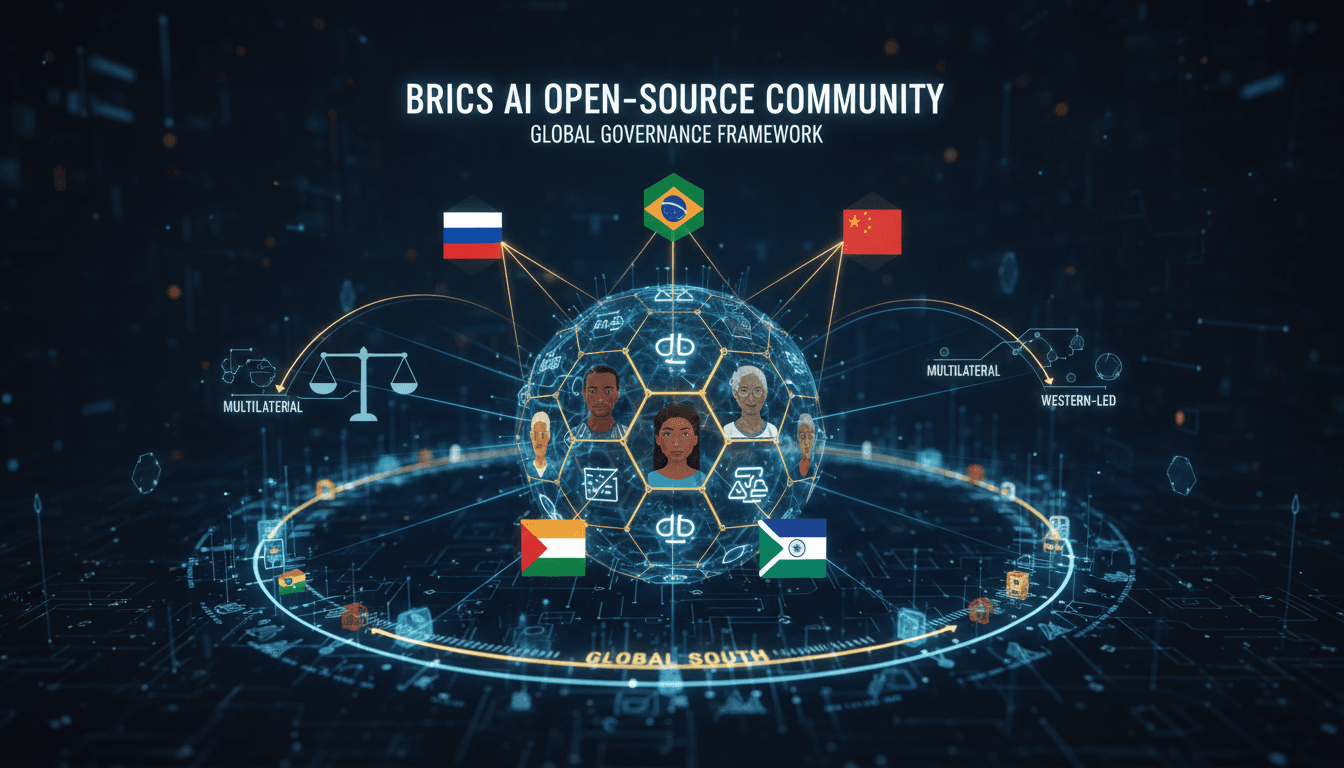
- Xi Jinping announced a BRICS AI open-source community at the 2026 BRICS Summit in New Delhi.
- China pledged to provide 5,000 AI training opportunities for developing countries over the next five years.
- The initiative aims to establish a consensus-based global AI governance framework, countering Western-led models.
The context you actually need
- US-China AI rivalry is escalating, with contrasting approaches to AI development and safety concerns.
- BRICS expansion emphasizes cooperation among Global South nations, positioning them as key players in the AI landscape.
- China's previous commitments to AI governance and capacity-building initiatives set the stage for this new proposal.
What's really happening
At the 18th BRICS Summit, Xi Jinping's announcement of a BRICS AI open-source community is a strategic move to position China as a leader in the global AI landscape, particularly among developing nations. This initiative is not just about technology; it reflects a broader geopolitical strategy aimed at countering the influence of the United States in the tech sector.
China's emphasis on open-source collaboration and a consensus-based governance framework is designed to appeal to countries that may feel marginalized by Western-led initiatives. By proposing to provide 5,000 AI training opportunities over five years, China is not only fostering goodwill but also creating a network of dependency and collaboration that could enhance its influence in these regions.
The backdrop of this initiative is critical. The US has been vocal about its leadership in AI, with tech leaders advocating for a slowdown in AI development due to safety concerns. In contrast, Xi's remarks reject such caution, framing it as fear-mongering. This divergence highlights the contrasting philosophies of the two superpowers: the US prioritizes safety and regulation, while China promotes rapid development and open collaboration.
The establishment of an open-source community could lead to the creation of shared AI models that benefit emerging economies, potentially leveling the playing field in technology access and innovation. This could also lead to a new wave of AI applications tailored to local needs, particularly in sectors like logistics, finance, and smart city infrastructure.
Moreover, the focus on multilateralism and the UN as a central governance body indicates a shift towards a more collaborative approach to global challenges. This could redefine how AI is governed internationally, moving away from unilateral frameworks that have dominated thus far.
As the BRICS nations rally around this initiative, the implications for global tech standards and practices could be profound. If successful, this could lead to a new paradigm in AI development that prioritizes inclusivity and shared benefits, contrasting sharply with the competitive and often exclusionary practices seen in the West.
Who feels it first (and how)
- Tech companies in emerging markets may gain access to new AI tools and training, enhancing their capabilities.
- Governments in Global South nations could leverage AI for development projects, improving public services and infrastructure.
- Investors in AI startups may see new opportunities arising from collaborative projects and open-source models.
What to watch next
- Implementation of training programs: Monitor how quickly and effectively China rolls out the promised 5,000 AI training opportunities, as this will indicate the initiative's traction.
- Responses from other BRICS nations: Watch for how Brazil, Russia, India, and South Africa react to and engage with this initiative, as their participation will be crucial for its success.
- Global AI governance discussions: Keep an eye on international forums and UN discussions regarding AI governance frameworks, as they may shift towards more inclusive models.
China is leading the initiative to establish a BRICS AI open-source community.
Other BRICS nations will engage with this initiative, potentially leading to collaborative projects.
The long-term impact on global AI governance and the response from Western nations remains uncertain.
Frequently Asked Questions
- Why it matters?
- This initiative signals a shift towards a more inclusive global AI governance model, potentially impacting international tech standards and cooperation.
- What happened (in 30 seconds)?
- Xi Jinping announced a BRICS AI open-source community at the 2026 BRICS Summit in New Delhi. China pledged to provide 5,000 AI training opportunities for developing countries over the next five years. The initiative aims to establish a consensus-based global AI governance framework, countering Western-led models.
- What's really happening?
- At the 18th BRICS Summit, Xi Jinping's announcement of a BRICS AI open-source community is a strategic move to position China as a leader in the global AI landscape, particularly among developing nations. This initiative is not just about technology; it reflects a broader geopolitical strategy aimed at countering the influence of the United States in the tech sector. China's emphasis on open-source collaboration and a consensus-based governance framework is designed to appeal to countries that
- Who feels it first (and how)?
- Tech companies in emerging markets may gain access to new AI tools and training, enhancing their capabilities. Governments in Global South nations could leverage AI for development projects, improving public services and infrastructure. Investors in AI startups may see new opportunities arising from collaborative projects and open-source models.
- What to watch next?
- Implementation of training programs: Monitor how quickly and effectively China rolls out the promised 5,000 AI training opportunities, as this will indicate the initiative's traction. Responses from other BRICS nations: Watch for how Brazil, Russia, India, and South Africa react to and engage with this initiative, as their participation will be crucial for its success. Global AI governance discussions: Keep an eye on international forums and UN discussions regarding AI governance frameworks,
Curated tech headlines including AI stories.
"Influential aggregator surfacing the day’s top tech/AI links."
— A47 Editor
Xi Jinping calls for a "consensus-based global AI governance framework" and says China will pioneer the establishment of a BRICS AI open-source community (Joanna Ossinger/CNBC)
Chinese President Xi Jinping has called for a consensus-based global AI governance framework and announced China's intention to lead the establishment of a BRICS AI open-source community, aiming to enhance collaboration among developing nations in ar...
Macro commentary, policy analysis, growth/inflation themes, and global outlooks.
"Contextual macro coverage that complements day-to-day market headlines."
— A47 Editor
Xi pushes China’s open-source AI vision at BRICS summit
At the recent BRICS summit, Chinese President Xi Jinping emphasized China's commitment to an open-source artificial intelligence (AI) vision, aiming to foster collaboration among member nations. This initiative reflects China's strategic focus on AI ...
Technology business and AI-related headlines.
"Data-driven tech newsroom with global scope."
— A47 Editor
Xi Pitches AI Vision at BRICS Summit as China Duels With US
At the recent BRICS summit, Chinese President Xi Jinping promoted China's vision for artificial intelligence (AI), positioning it as a counterbalance to U.S. influence in the technology sector. This initiative reflects China's strategic aim to assert...
Technology business news, market impacts, and innovation trends.
"Bloomberg is a premier financial and tech news provider, respected for its in-depth reporting and analytical rigor."
— A47 Editor
Xi Pitches AI Vision at BRICS Summit as China Duels With US
At the recent BRICS summit, Chinese President Xi Jinping promoted China's vision for artificial intelligence (AI), positioning it as a counterbalance to U.S. influence in the technology sector. This initiative reflects China's strategic aim to assert...