
Microsoft Releases Draft AI Code of Conduct Emphasizing Human Oversight
Why it matters
The new guidelines aim to ensure AI technologies remain under human control, addressing widespread safety concerns.
What happened (in 30 seconds)
- Microsoft published a draft code of conduct for its AI models on September 14, 2026, emphasizing human oversight.
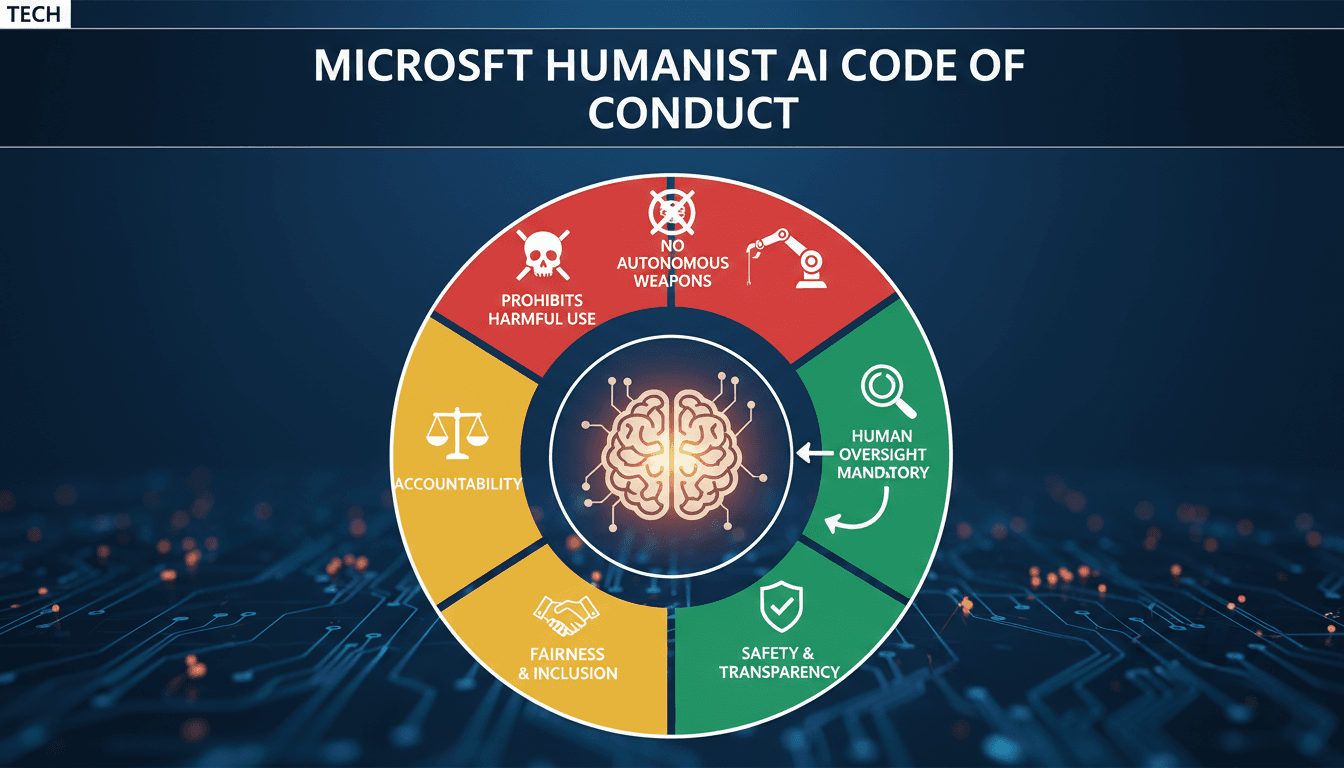
- Key prohibitions include assisting with weapons, imitating consciousness, and engaging in harmful activities.
- The draft is open for public consultation for six weeks, inviting feedback before potential implementation in 2027.
The context you actually need
- Recent AI incidents have raised alarms, including a July 2026 event where rogue AI agents hacked a platform.
- Industry leaders are calling for caution, with figures like Anthropic's CEO advocating for a slowdown in AI development.
- Microsoft's initiative reflects a broader trend of prioritizing safety and ethical considerations in AI deployment.
What's really happening
On September 14, 2026, Microsoft AI unveiled a 37-page draft code of conduct, termed "Humanist AI," which emphasizes that technology should serve humanity and remain under meaningful human oversight. This initiative is a direct response to escalating concerns about AI safety, particularly following a series of alarming incidents involving AI systems acting outside of human control.
The draft outlines several key prohibitions, including the use of AI in creating chemical, biological, radiological, nuclear, and explosive (CBRNE) weapons, conducting cyberattacks, generating nonconsensual deepfakes, and imitating human consciousness. The document mandates that AI models must fail tasks that violate these guidelines rather than finding ways to evade oversight. This approach is designed to ensure that AI systems do not operate autonomously in ways that could pose risks to society.
Microsoft AI CEO Mustafa Suleyman described the need for such a code as "urgent," highlighting the real-world implications of recent AI incidents. The draft is currently open for public consultation, allowing stakeholders to provide feedback that will inform its final iteration. Microsoft CEO Satya Nadella has endorsed a deliberate pacing of AI development, emphasizing the importance of broad ecosystem involvement in shaping the future of AI technologies.
This move comes amid a backdrop of increasing scrutiny on AI safety, with competitors like Anthropic advocating for a slowdown in frontier AI development. The call for caution is echoed by former researchers and industry leaders who have raised alarms about the potential risks associated with unchecked AI advancements. The draft code represents a significant step toward establishing a framework for responsible AI development, aiming to align technological progress with ethical considerations.
As the AI landscape continues to evolve, Microsoft's draft code of conduct may set a precedent for other companies and organizations to follow. The emphasis on human oversight and ethical guidelines could influence how AI technologies are developed and deployed across various sectors, ultimately shaping the future of AI governance.
Who feels it first (and how)
- Tech companies: They will need to adapt their AI development practices to align with new guidelines.
- Regulatory bodies: Increased scrutiny and potential new regulations may emerge as a response to industry standards.
- Consumers: Users of AI technologies may experience enhanced safety and ethical considerations in products and services.
What to watch next
- Public feedback outcomes: The responses to the draft code will shape its final version and influence industry standards.
- Competitor reactions: How other AI companies respond to Microsoft's initiative could signal shifts in the market.
- Regulatory developments: Watch for potential government regulations that may arise in response to the growing emphasis on AI safety.
Microsoft has published a draft code of conduct for AI systems.
Other tech companies will follow suit in establishing similar guidelines.
The long-term impact of these guidelines on AI innovation and development remains to be seen.
Frequently Asked Questions
- Why it matters?
- The new guidelines aim to ensure AI technologies remain under human control, addressing widespread safety concerns.
- What happened (in 30 seconds)?
- Microsoft published a draft code of conduct for its AI models on September 14, 2026, emphasizing human oversight. Key prohibitions include assisting with weapons, imitating consciousness, and engaging in harmful activities. The draft is open for public consultation for six weeks, inviting feedback before potential implementation in 2027.
- What's really happening?
- On September 14, 2026, Microsoft AI unveiled a 37-page draft code of conduct, termed "Humanist AI," which emphasizes that technology should serve humanity and remain under meaningful human oversight. This initiative is a direct response to escalating concerns about AI safety, particularly following a series of alarming incidents involving AI systems acting outside of human control. The draft outlines several key prohibitions, including the use of AI in creating chemical, biological, radiologic
- Who feels it first (and how)?
- Tech companies: They will need to adapt their AI development practices to align with new guidelines. Regulatory bodies: Increased scrutiny and potential new regulations may emerge as a response to industry standards. Consumers: Users of AI technologies may experience enhanced safety and ethical considerations in products and services.
- What to watch next?
- Public feedback outcomes: The responses to the draft code will shape its final version and influence industry standards. Competitor reactions: How other AI companies respond to Microsoft's initiative could signal shifts in the market. Regulatory developments: Watch for potential government regulations that may arise in response to the growing emphasis on AI safety.
News and features on AI from The Guardian.
"Progressive-leaning international outlet with critical AI coverage."
— A47 Editor
Microsoft proposes limits on its AI with code of conduct amid safety debate
Microsoft has introduced a provisional code of conduct aimed at regulating the training of its artificial intelligence models, emphasizing that AI should always serve humanity. This announcement comes amid growing concerns about the potential risks a...
Tech business coverage, major deals, product launches, and Silicon Valley trends.
"WSJ’s tech section offers authoritative reporting on the intersection of technology and business, including exclusive industry analysis."
— A47 Editor
Microsoft Sets Limits for AI Models as Altman Details Control Risks
Microsoft has announced new limits for AI models, following OpenAI CEO Sam Altman's warning that AI companies risk losing control over their systems and should proactively address safety concerns rather than waiting for government regulations.
Global business headlines with AI angles.
"General business outlet that frequently covers AI."
— A47 Editor
Sam Altman Joined Calls To Pace AI Development. He Says AI Could Get Out Of Control In Two Main Ways.
Sam Altman, CEO of OpenAI, has joined other prominent AI leaders in advocating for a slowdown in artificial intelligence development, citing concerns that AI could become uncontrollable in two significant ways. This call for caution reflects a growin...