
ClickFix Malware Delivery Method Targets Mac and Windows Users via Compromised Reddit Ads
Why it matters
This evolving cyber threat underscores the vulnerabilities in user trust and verification processes, impacting global internet security.
What happened (in 30 seconds)
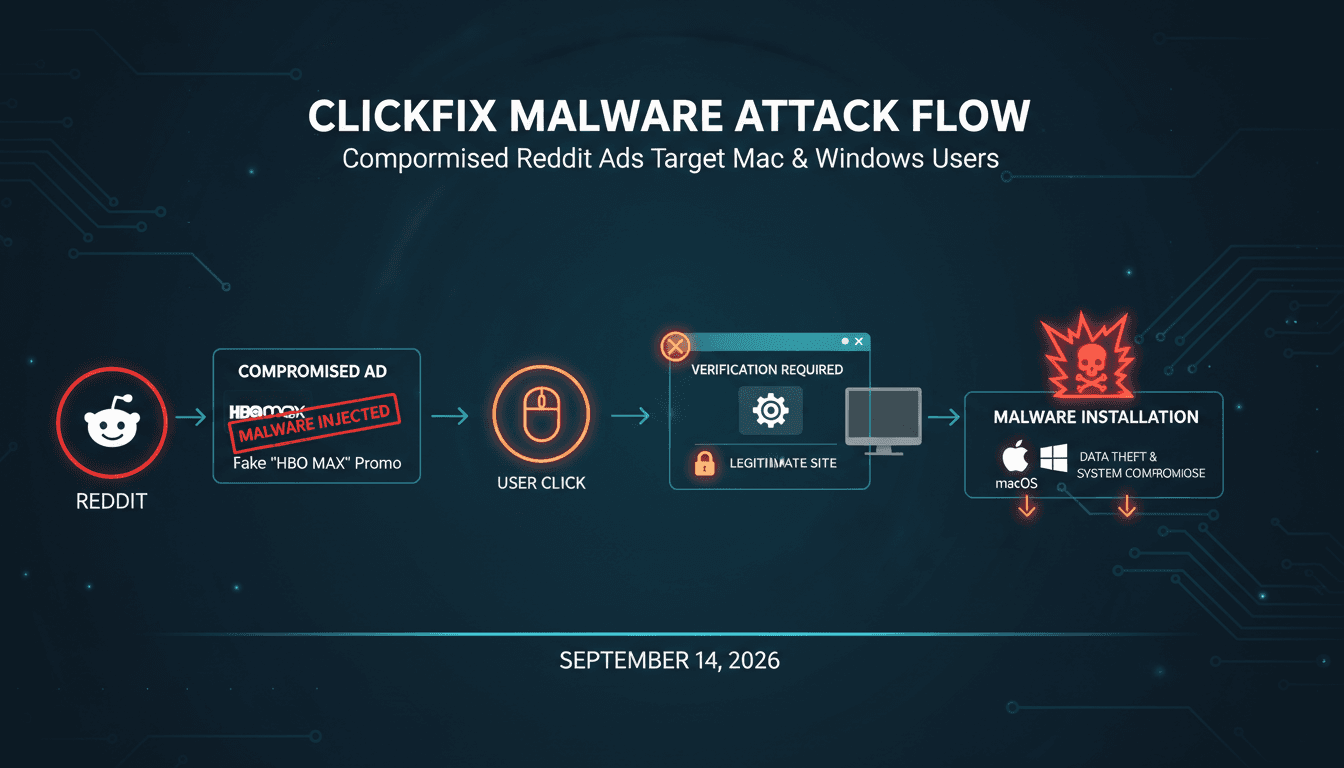
- ClickFix attacks surged on September 14, 2026, exploiting compromised Reddit ads for HBO Max.
- Users were deceived into executing malicious commands via terminal interfaces, leading to malware installation.
- Reddit has since locked the compromised account and removed the malicious ads, but the threat remains active.
The context you actually need
- ClickFix emerged in 2024 as a niche social engineering method, evolving into a prevalent malware delivery technique by 2026.
- The technique exploits user trust in CAPTCHA-like prompts, bypassing traditional security defenses.
- Previous campaigns targeted various sectors, delivering information-stealing malware across both macOS and Windows platforms.
What's really happening
The ClickFix malware delivery technique represents a significant evolution in social engineering tactics, leveraging user trust in verification processes to execute malicious commands. Initially emerging in 2024, ClickFix capitalized on the growing reliance on technical fixes and user engagement with platforms like Reddit. By 2026, it had transformed into a widespread threat, particularly through malvertising campaigns that exploit compromised legitimate accounts.
In the recent campaign, threat actors compromised an official HBO Max Reddit account, posting hundreds of fake advertisements that directed users to malicious sites. These sites employed fake CAPTCHA prompts, tricking users into copying and pasting commands into their terminal interfaces. This method allows for fileless malware deployment, which is harder for traditional antivirus software to detect. The malware installed through these commands is designed to steal sensitive information, including passwords, session data, and cryptocurrency assets.
The implications of this technique are profound. As users become more accustomed to interacting with verification prompts, the likelihood of falling victim to such attacks increases. This evolution in malware delivery not only highlights the sophistication of cybercriminals but also raises questions about the effectiveness of current cybersecurity measures. Organizations and individuals alike must adapt to this changing landscape, implementing stricter controls and awareness campaigns to mitigate risks.
Security experts recommend that enterprises restrict terminal access on Windows domains and utilize tools like BlockBlock for macOS users to prevent unauthorized command execution. The ongoing evolution of ClickFix emphasizes the need for continuous vigilance and adaptation in cybersecurity practices, as threat actors refine their methods to evade detection.
Who feels it first (and how)
- Tech-savvy users: Individuals familiar with terminal commands are more likely to execute malicious instructions.
- Reddit users: Those engaging with compromised advertisements are directly at risk.
- Organizations: Companies relying on user-generated content platforms for advertising may face reputational damage and security breaches.
What to watch next
- Increased awareness campaigns: As ClickFix evolves, expect more educational initiatives from cybersecurity firms to inform users about these threats.
- Emerging malware variants: Monitor for new strains of malware that may arise from this technique, targeting different platforms or user behaviors.
- Regulatory responses: Watch for potential regulations aimed at improving online advertising security and user verification processes.
ClickFix attacks are actively exploiting user trust through compromised advertisements.
The technique will continue to evolve, adapting to new security measures and user behaviors.
The full scale of the impact on global internet users remains uncertain, as ongoing campaigns are still being assessed.
Frequently Asked Questions
- Why it matters?
- This evolving cyber threat underscores the vulnerabilities in user trust and verification processes, impacting global internet security.
- What happened (in 30 seconds)?
- ClickFix attacks surged on September 14, 2026, exploiting compromised Reddit ads for HBO Max. Users were deceived into executing malicious commands via terminal interfaces, leading to malware installation. Reddit has since locked the compromised account and removed the malicious ads, but the threat remains active.
- What's really happening?
- The ClickFix malware delivery technique represents a significant evolution in social engineering tactics, leveraging user trust in verification processes to execute malicious commands. Initially emerging in 2024, ClickFix capitalized on the growing reliance on technical fixes and user engagement with platforms like Reddit. By 2026, it had transformed into a widespread threat, particularly through malvertising campaigns that exploit compromised legitimate accounts. In the recent campaign, threat
- Who feels it first (and how)?
- Tech-savvy users: Individuals familiar with terminal commands are more likely to execute malicious instructions. Reddit users: Those engaging with compromised advertisements are directly at risk. Organizations: Companies relying on user-generated content platforms for advertising may face reputational damage and security breaches.
- What to watch next?
- Increased awareness campaigns: As ClickFix evolves, expect more educational initiatives from cybersecurity firms to inform users about these threats. Emerging malware variants: Monitor for new strains of malware that may arise from this technique, targeting different platforms or user behaviors. Regulatory responses: Watch for potential regulations aimed at improving online advertising security and user verification processes.
Startup news with frequent AI coverage.
"Covers launches, funding, and product updates in AI."
— A47 Editor
ClickFix attacks are tricking Mac and Windows users into hacking themselves
Recent ClickFix attacks have been reported, targeting users of both Mac and Windows systems, particularly those who interacted with fake HBO Max ads on Reddit. These attacks trick users into compromising their own devices, leading to potential malwar...
Tech news, hardware, and AI tools coverage.
"PC/tech site increasingly covering AI hardware and apps."
— A47 Editor
Fake CAPTCHAs are tricking people into hacking their own computers, and it's working
Recent ClickFix attacks have emerged, utilizing fake CAPTCHA overlays to deceive users into executing malicious commands on their own computers, affecting both Windows and Mac systems. This method exploits user frustration and trust in familiar inter...
Technology industry news and policy coverage.
"Fox News is a highly influential conservative news outlet known for right-leaning political commentary and coverage."
— A47 Editor
Thousands of hacked sites trick you into installing malware
Over 5,400 legitimate websites have been compromised to serve fake CAPTCHA scams, tricking users into executing malware commands through ClickFix attacks on Windows systems. This alarming trend highlights the increasing sophistication of cyber threat...