
AWS Confirms Permanent Data Loss at Middle East Facilities Following Iranian Strikes
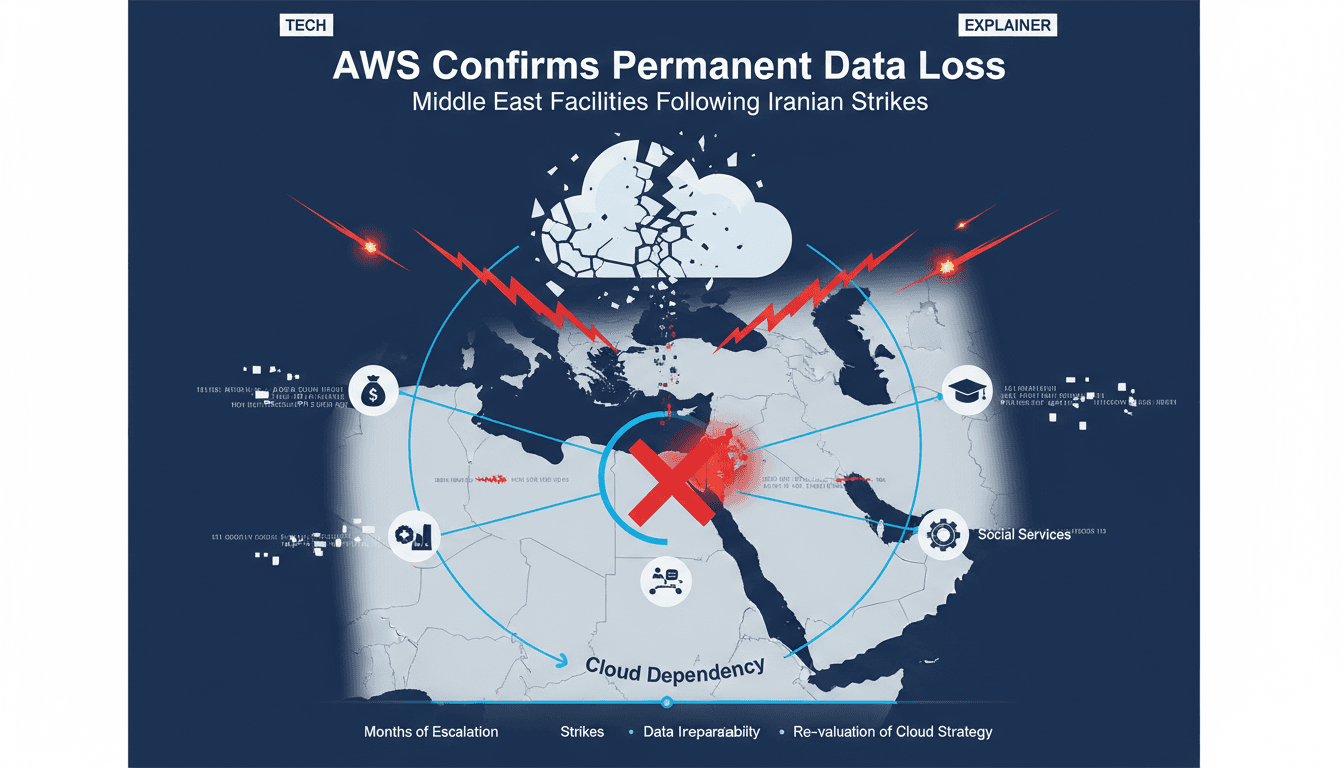
Why it matters
This incident highlights the fragility of cloud infrastructure in conflict zones, raising concerns about data security and operational resilience.
What happened (in 30 seconds)
- AWS confirmed that customer data hosted in its Bahrain region and a UAE availability zone is permanently lost due to Iranian drone strikes.
- Damage assessments revealed that the destruction exceeded the resilience thresholds of AWS's infrastructure, making recovery impossible.
- Customers are advised to migrate their workloads to alternate regions, as AWS continues to support recovery efforts in other affected zones.
The context you actually need
- Tensions escalated in early 2026 when the US and Israel launched military strikes against Iran, prompting retaliatory attacks on Gulf states.
- AWS facilities in Bahrain and the UAE were directly targeted, leading to significant damage and operational disruptions across multiple availability zones.
- The Islamic Revolutionary Guard Corps justified the strikes by linking AWS to US military operations, illustrating the geopolitical risks associated with cloud services in volatile regions.
What's really happening
The recent announcement from Amazon Web Services (AWS) regarding irrecoverable data loss in its Bahrain and UAE facilities marks a significant turning point in the ongoing US-Iran conflict. The strikes, which began in early 2026, have not only disrupted military operations but have also severely impacted critical infrastructure, including cloud services that businesses rely on for data storage and processing.
AWS's inability to restore access to customer data is a stark reminder of the vulnerabilities inherent in cloud computing, especially in regions experiencing geopolitical instability. The company initially advised customers to migrate their workloads to other regions as a precautionary measure, but the extent of the damage was not fully understood until September 15, 2026. After months of assessments, AWS confirmed that the damage exceeded the design tolerances of its infrastructure, rendering data in the affected zones permanently inaccessible.
This incident has broader implications for the tech industry and businesses that depend on cloud services. With over 130 computing services still disrupted in Abu Dhabi and 140 in Bahrain, the operational capabilities of many organizations are at risk. The loss of data stored exclusively in the affected zones has prompted a reevaluation of cloud dependency and geographic redundancy among businesses in the region. Companies are now considering the need for more robust disaster recovery plans and diversifying their cloud service providers to mitigate risks associated with geopolitical tensions.
Furthermore, AWS's stock price slipped approximately 2% following the announcement, reflecting market concerns about the vulnerability of data centers in conflict zones. Gulf governments and technology firms are reassessing their strategies for protecting critical infrastructure, which may lead to increased investments in physical security and geographic dispersion of cloud services.
As businesses navigate this new landscape, the focus will likely shift towards ensuring data resilience and operational continuity in the face of potential disruptions. The incident serves as a wake-up call for organizations to prioritize risk management and develop contingency plans that account for the unpredictable nature of global conflicts.
Who feels it first (and how)
- Tech companies relying on AWS for cloud services face immediate operational disruptions and data loss.
- Financial institutions in Dubai and the UAE experience prolonged outages, affecting transactions and customer services.
- Small and medium enterprises that lack robust backup solutions may suffer significant setbacks due to lost data.
- Government agencies must reassess their reliance on cloud infrastructure for critical operations and data storage.
What to watch next
- AWS recovery efforts: Monitor AWS's progress in restoring services in other UAE zones and the timeline for infrastructure replacement in Bahrain.
- Market reactions: Watch for stock performance of AWS and other cloud service providers as investors assess the implications of this incident.
- Regulatory changes: Keep an eye on potential new regulations regarding data security and infrastructure resilience in conflict-prone regions.
AWS has declared data in the Bahrain region and UAE mec1-az2 zone irrecoverable.
Businesses will increase investments in data redundancy and disaster recovery strategies.
The long-term impact on AWS's market share and customer trust in conflict zones remains to be seen.
Frequently Asked Questions
- Why it matters?
- This incident highlights the fragility of cloud infrastructure in conflict zones, raising concerns about data security and operational resilience.
- What happened (in 30 seconds)?
- AWS confirmed that customer data hosted in its Bahrain region and a UAE availability zone is permanently lost due to Iranian drone strikes. Damage assessments revealed that the destruction exceeded the resilience thresholds of AWS's infrastructure, making recovery impossible. Customers are advised to migrate their workloads to alternate regions, as AWS continues to support recovery efforts in other affected zones.
- What's really happening?
- The recent announcement from Amazon Web Services (AWS) regarding irrecoverable data loss in its Bahrain and UAE facilities marks a significant turning point in the ongoing US-Iran conflict. The strikes, which began in early 2026, have not only disrupted military operations but have also severely impacted critical infrastructure, including cloud services that businesses rely on for data storage and processing. AWS's inability to restore access to customer data is a stark reminder of the vulnerab
- Who feels it first (and how)?
- Tech companies relying on AWS for cloud services face immediate operational disruptions and data loss. Financial institutions in Dubai and the UAE experience prolonged outages, affecting transactions and customer services. Small and medium enterprises that lack robust backup solutions may suffer significant setbacks due to lost data. Government agencies must reassess their reliance on cloud infrastructure for critical operations and data storage.
- What to watch next?
- AWS recovery efforts: Monitor AWS's progress in restoring services in other UAE zones and the timeline for infrastructure replacement in Bahrain. Market reactions: Watch for stock performance of AWS and other cloud service providers as investors assess the implications of this incident. Regulatory changes: Keep an eye on potential new regulations regarding data security and infrastructure resilience in conflict-prone regions.
Global political, business, and cultural coverage from WSJ international desks.
"The Wall Street Journal offers extensive international reporting with a reputation for financial insight and a center-right editorial stance."
— A47 Editor
AWS Says It Can’t Restore Some Data From Mideast Facilities Struck by Iran
Amazon Web Services (AWS) has announced that it is unable to restore certain data from its facilities in Bahrain and the United Arab Emirates, which were affected by an Iranian drone strike. This incident marks a significant loss, as it suggests that...
UAE-based English-language newspaper covering regional politics, economics, and global affairs.
"The National reflects Emirati policy perspectives while maintaining international editorial standards."
— A47 Editor
Amazon Web Services unable to restore Bahrain data network knocked out by Iran
Amazon Web Services (AWS) has reported its inability to restore a data network in Bahrain that was disrupted due to Iranian actions, highlighting the ongoing impact of geopolitical tensions in the region. This incident underscores the vulnerability o...
Tech business coverage, major deals, product launches, and Silicon Valley trends.
"WSJ’s tech section offers authoritative reporting on the intersection of technology and business, including exclusive industry analysis."
— A47 Editor
The Gulf’s AI Nightmare Came Courtesy of an Iranian Drone
Amazon's data centers in the U.A.E. and Bahrain remain offline months after being targeted by Iranian drone strikes, significantly impacting the company's operations in the region amid ongoing tensions from the Iran war.