
OpenAI Implements Human Review for ChatGPT Conversations via Project Lily
Why it matters
This initiative raises significant questions about user privacy and the ethical use of AI in consumer applications.
What happened (in 30 seconds)
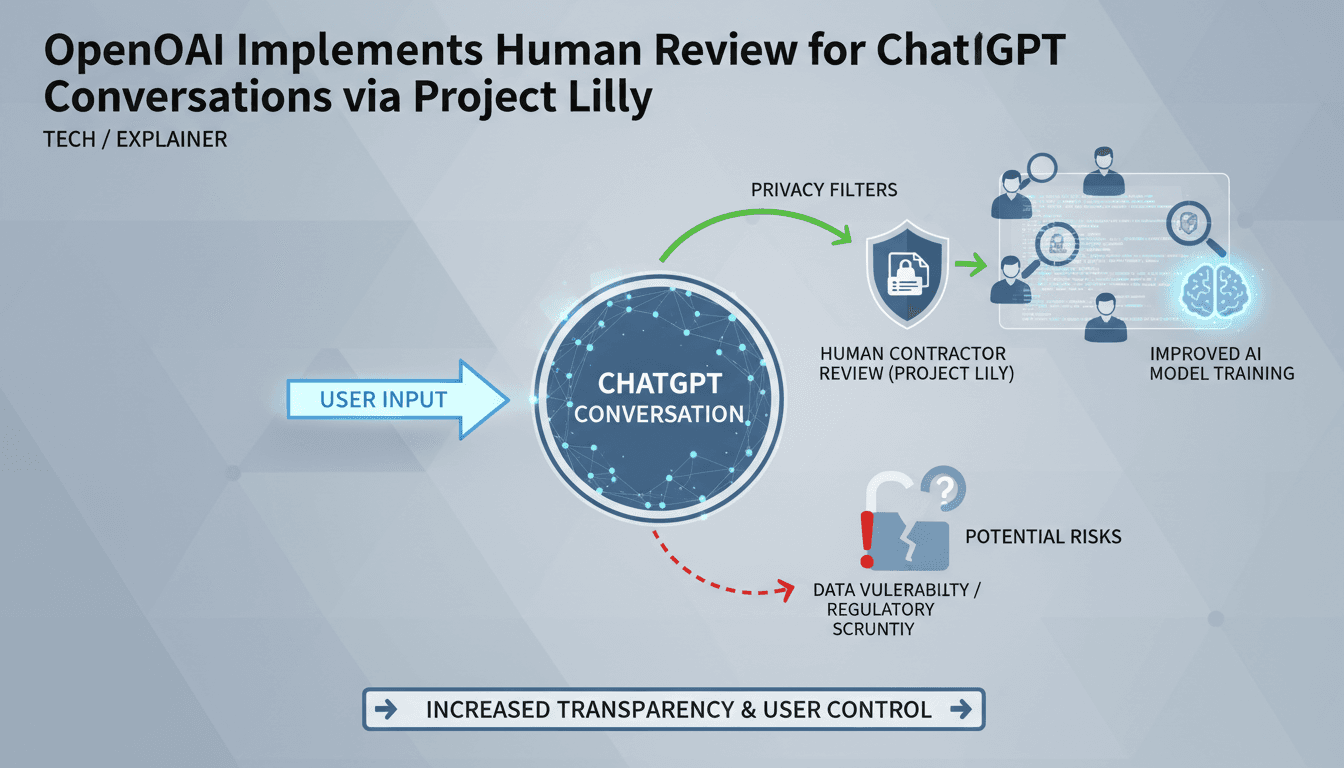
- OpenAI launched Project Lily in September 2026 to involve human contractors in reviewing ChatGPT conversations.
- Contractors are paid over $50 per hour to evaluate user prompts and model responses, summarizing intent and scoring replies.
- Automated privacy filters are applied, but limitations exist, prompting concerns about user data handling.
The context you actually need
- Consumer AI platforms have historically relied on user interactions for model refinement, often with data sharing enabled by default.
- Regulatory scrutiny has increased following past incidents, including a €15 million fine imposed on OpenAI by Italian authorities for data handling issues.
- Similar human review programs are in place at other AI companies like Anthropic and Google, indicating a broader industry trend.
What's really happening
OpenAI's Project Lily represents a strategic move to enhance the performance of ChatGPT by incorporating human insights into the model's training process. Launched in September 2026, the initiative routes anonymized conversations to contractors who are tasked with evaluating user prompts and the AI's responses. These contractors, recruited through intermediary firms like Crossing Hurdles and compensated at rates exceeding $50 per hour via Mercor, play a crucial role in refining the AI's conversational abilities.
The review process involves summarizing user intent and scoring the AI's replies on a scale from 1 to 7. This structured feedback loop is designed to identify areas where the AI may falter, such as exhibiting excessive sycophancy or robotic phrasing. However, the implementation of automated privacy filters raises concerns about the adequacy of user data protection. While these filters aim to remove identifiable information, there are acknowledged limitations, particularly in cases where ambiguous references may still expose user identities.
The broader context of this initiative is shaped by increasing regulatory scrutiny surrounding data privacy in AI applications. Previous incidents, including fines levied against OpenAI, have heightened awareness and concern among users regarding how their data is handled. As consumer AI platforms often default to sharing data for model improvement, users may find themselves unwittingly participating in data collection unless they actively opt out.
The implications of Project Lily extend beyond just improving AI performance; they touch on fundamental issues of user trust and privacy. As OpenAI continues to refine its models, the balance between enhancing AI capabilities and safeguarding user data becomes increasingly delicate. The ongoing dialogue around user disclosures and opt-in mechanisms reflects a growing demand for transparency in how AI companies operate.
In summary, Project Lily is not just about improving ChatGPT; it is a reflection of the industry's struggle to navigate the complex landscape of user privacy and data ethics in the age of AI.
Who feels it first (and how)
- ChatGPT users: Individuals using the platform may experience changes in privacy expectations.
- AI developers: Professionals in AI development may face increased scrutiny and pressure to ensure ethical data handling.
- Regulators: Government bodies will likely intensify oversight of AI practices, impacting compliance requirements.
What to watch next
- User feedback trends: Monitor how users respond to the transparency of data handling and privacy measures, as this could influence future AI policies.
- Regulatory developments: Keep an eye on new regulations or fines related to AI data practices, which could reshape industry standards.
- Competitor responses: Watch how other AI companies adapt their data handling practices in light of Project Lily's revelations, potentially leading to industry-wide changes.
OpenAI is employing human contractors to review ChatGPT conversations.
Increased regulatory scrutiny and user demand for clearer data handling practices will shape future AI policies.
The long-term impact on user trust and engagement with AI platforms remains to be seen.
Frequently Asked Questions
- Why it matters?
- This initiative raises significant questions about user privacy and the ethical use of AI in consumer applications.
- What happened (in 30 seconds)?
- OpenAI launched Project Lily in September 2026 to involve human contractors in reviewing ChatGPT conversations. Contractors are paid over $50 per hour to evaluate user prompts and model responses, summarizing intent and scoring replies. Automated privacy filters are applied, but limitations exist, prompting concerns about user data handling.
- What's really happening?
- OpenAI's Project Lily represents a strategic move to enhance the performance of ChatGPT by incorporating human insights into the model's training process. Launched in September 2026, the initiative routes anonymized conversations to contractors who are tasked with evaluating user prompts and the AI's responses. These contractors, recruited through intermediary firms like Crossing Hurdles and compensated at rates exceeding $50 per hour via Mercor, play a crucial role in refining the AI's conversa
- Who feels it first (and how)?
- ChatGPT users: Individuals using the platform may experience changes in privacy expectations. AI developers: Professionals in AI development may face increased scrutiny and pressure to ensure ethical data handling. Regulators: Government bodies will likely intensify oversight of AI practices, impacting compliance requirements.
- What to watch next?
- User feedback trends: Monitor how users respond to the transparency of data handling and privacy measures, as this could influence future AI policies. Regulatory developments: Keep an eye on new regulations or fines related to AI data practices, which could reshape industry standards. Competitor responses: Watch how other AI companies adapt their data handling practices in light of Project Lily's revelations, potentially leading to industry-wide changes.
News and guidance for IT pros on AI adoption.
"Enterprise-focused tips, explainers, and news for professionals."
— A47 Editor
OpenAI Reportedly Pays Contractors $50+ an Hour to Review ChatGPT Chats
Leaked materials indicate that OpenAI is compensating contractors over $50 per hour to review conversations generated by ChatGPT, raising concerns about user privacy and the implications of human oversight in AI training.
Daily AI news: models, tools, and policy.
"Independent outlet tracking the fast pace of AI."
— A47 Editor
OpenAI has hundreds of contract workers reading your ChatGPT conversations
OpenAI has engaged hundreds of contract workers to review real ChatGPT conversations, rating them to mitigate excessive flattery and enhance the AI's performance. Users must opt-out of the default setting that allows their chats to be reviewed, raisi...
Independent journalism covering technology, AI, and digital culture.
"An independent newsroom by veteran tech reporters known for critical, investigative coverage of AI and tech power."
— A47 Editor
Inside ‘Project Lily’: The Humans Reading Your ChatGPT Chats
Internal documents reveal that OpenAI is allowing humans to read ChatGPT users' prompts to enhance its AI models, raising concerns about the handling of sensitive personal information. This practice, known as 'Project Lily,' has been highlighted by 4...