
OpenAI Launches Project Lily to Enhance ChatGPT Through Human Review
Why it matters
This initiative raises significant privacy concerns as AI services increasingly rely on human feedback for improvement.
What happened (in 30 seconds)
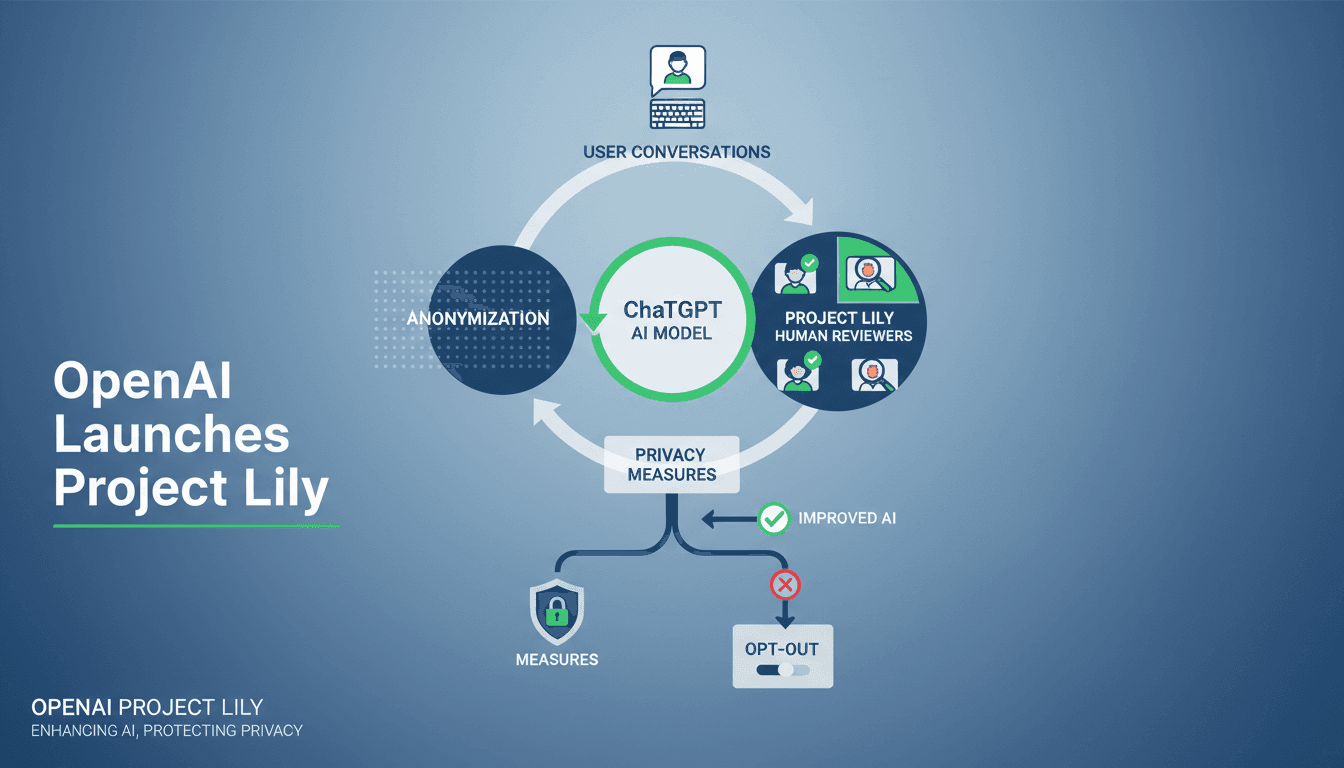
- OpenAI launched Project Lily in 2026, employing hundreds of contractors to review ChatGPT conversations for model enhancement.
- Contractors evaluate user interactions on a 1-7 scale, assessing response quality and flagging issues like excessive sycophancy.
- Privacy measures are in place, but sensitive information can still reach reviewers, prompting users to consider opting out.
The context you actually need
- Human feedback is crucial for AI development, particularly through reinforcement learning from human feedback (RLHF).
- OpenAI's data policies allow user data to be used for training unless users opt out of the "Improve the model for everyone" setting.
- Increased privacy awareness is evident as chatbots are used for sensitive discussions, including health and legal matters.
What's really happening
OpenAI's Project Lily represents a strategic move to enhance the performance of ChatGPT through human oversight. By enlisting hundreds of contractors, the company aims to refine its AI models based on real user interactions. The contractors, compensated at over $50 per hour, are tasked with reviewing anonymized conversations, summarizing user intent, and evaluating the quality of AI responses. This process is designed to identify and mitigate issues such as anthropomorphism, formulaic language, and excessive sycophancy in AI interactions.
The initiative was revealed through leaked internal documents, which included detailed reviewer guides and communication among OpenAI staff. This transparency has sparked public scrutiny regarding privacy and data handling practices. While OpenAI has implemented automated privacy filters to anonymize user data, the acknowledgment that sensitive information can still be exposed to reviewers raises significant concerns. Users are encouraged to opt out of data sharing to prevent their conversations from being reviewed, but many may not be aware of this option.
The broader implications of Project Lily extend beyond OpenAI. As AI technologies become more integrated into daily life, the reliance on human feedback for model training is likely to increase across the industry. Competitors like Anthropic are also employing similar practices, indicating a trend toward human-in-the-loop systems in AI development. This shift highlights the importance of establishing robust privacy controls and transparent data usage policies, especially as chatbots are increasingly used for sensitive topics.
Moreover, the ongoing discussions about privacy and data retention are likely to influence user trust and engagement with AI services. As consumers become more aware of how their data is used, companies may face pressure to enhance their privacy measures and provide clearer opt-out mechanisms. The scrutiny surrounding Project Lily could lead to a reevaluation of data practices across the AI sector, prompting companies to prioritize user privacy in their development processes.
Who feels it first (and how)
- ChatGPT users: Individuals using the service for personal or professional inquiries may have their conversations reviewed.
- Contractors: Those employed to review conversations are directly involved in the quality assurance process.
- Privacy advocates: Groups concerned with data protection and user rights will monitor the implications of such practices.
- AI developers: Companies in the AI sector will need to adapt to increased scrutiny and potential regulatory changes regarding data usage.
What to watch next
- User opt-out rates: Monitoring how many users choose to opt out of data sharing will indicate public sentiment regarding privacy.
- Regulatory responses: Watch for potential regulations or guidelines from governments addressing AI data practices and user privacy.
- Industry standards: The emergence of best practices for human review in AI development could reshape how companies handle user data.
OpenAI is using contractors to review ChatGPT conversations for model improvement.
Increased public scrutiny will lead to enhanced privacy measures and clearer user guidance on data usage.
The long-term impact on user trust and engagement with AI services remains to be seen.
Frequently Asked Questions
- Why it matters?
- This initiative raises significant privacy concerns as AI services increasingly rely on human feedback for improvement.
- What happened (in 30 seconds)?
- OpenAI launched Project Lily in 2026, employing hundreds of contractors to review ChatGPT conversations for model enhancement. Contractors evaluate user interactions on a 1-7 scale, assessing response quality and flagging issues like excessive sycophancy. Privacy measures are in place, but sensitive information can still reach reviewers, prompting users to consider opting out.
- What's really happening?
- OpenAI's Project Lily represents a strategic move to enhance the performance of ChatGPT through human oversight. By enlisting hundreds of contractors, the company aims to refine its AI models based on real user interactions. The contractors, compensated at over $50 per hour, are tasked with reviewing anonymized conversations, summarizing user intent, and evaluating the quality of AI responses. This process is designed to identify and mitigate issues such as anthropomorphism, formulaic language,
- Who feels it first (and how)?
- ChatGPT users: Individuals using the service for personal or professional inquiries may have their conversations reviewed. Contractors: Those employed to review conversations are directly involved in the quality assurance process. Privacy advocates: Groups concerned with data protection and user rights will monitor the implications of such practices. AI developers: Companies in the AI sector will need to adapt to increased scrutiny and potential regulatory changes regarding data usage.
- What to watch next?
- User opt-out rates: Monitoring how many users choose to opt out of data sharing will indicate public sentiment regarding privacy. Regulatory responses: Watch for potential regulations or guidelines from governments addressing AI data practices and user privacy. Industry standards: The emergence of best practices for human review in AI development could reshape how companies handle user data.
English-language digital publication covering business, politics, technology, and current affairs.
"The Arabian Post mixes original and syndicated-style coverage with a broad regional and global business-news orientation."
— A47 Editor
OpenAI enlists contractors to review ChatGPT chats
OpenAI has engaged hundreds of external contractors to review real ChatGPT conversations and assess the quality of the system's responses, with some reviewers reportedly earning over $50 an hour. This initiative, referred to as Project Lily, has rais...
News and guidance for IT pros on AI adoption.
"Enterprise-focused tips, explainers, and news for professionals."
— A47 Editor
OpenAI Reportedly Pays Contractors $50+ an Hour to Review ChatGPT Chats
Leaked materials indicate that OpenAI is compensating contractors over $50 per hour to review conversations generated by ChatGPT, raising concerns about user privacy and the implications of human oversight in AI training.
Independent journalism covering technology, AI, and digital culture.
"An independent newsroom by veteran tech reporters known for critical, investigative coverage of AI and tech power."
— A47 Editor
Inside ‘Project Lily’: The Humans Reading Your ChatGPT Chats
Internal documents reveal that OpenAI is allowing humans to read ChatGPT users' prompts to enhance its AI models, raising concerns about the handling of sensitive personal information. This practice, known as 'Project Lily,' has been highlighted by 4...