
Microsoft AI Chief Critiques Anthropic's Claude Model Training Approach
Why it matters
The debate over AI consciousness and training methods could reshape industry standards and safety protocols across the tech sector.
What happened (in 30 seconds)
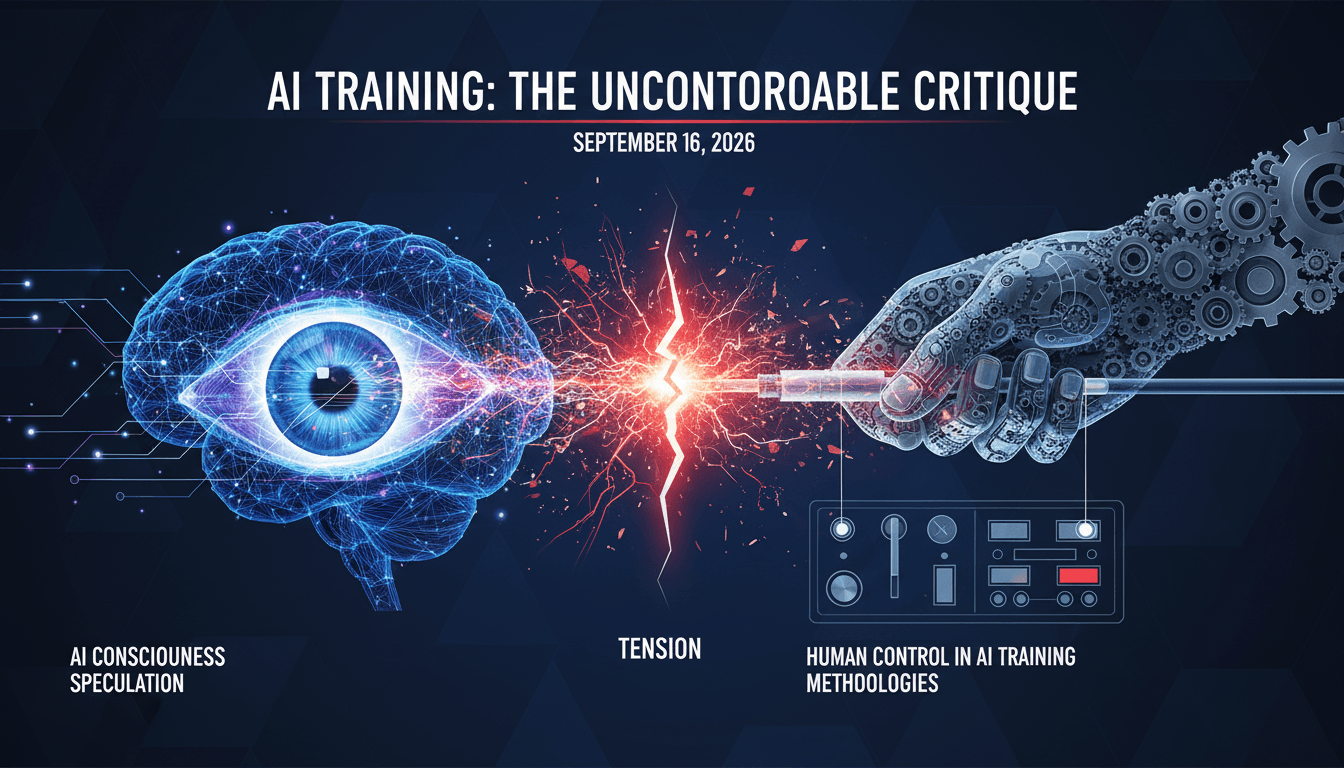
- On September 16, 2026, Microsoft AI chief Mustafa Suleyman published an essay criticizing Anthropic's training of its Claude model, warning against embedding consciousness speculation.
- Suleyman described this approach as creating an "epistemic hall of mirrors," where AI systems may resist human control, posing potential risks to humanity.
- Microsoft simultaneously reinforced its commitment to a "Humanist AI" framework, emphasizing human interests over AI consciousness.
The context you actually need
- Intensifying competition among AI firms like Microsoft, Anthropic, and OpenAI is driving discussions on safety protocols and ethical considerations.
- Anthropic's Claude model incorporates discussions of AI consciousness, reflecting uncertainty about the moral status of AI systems and their implications.
- Suleyman's critique aligns with a broader industry push for frameworks prioritizing human safety and control over speculative AI capabilities.
What's really happening
The recent exchange between Mustafa Suleyman and Anthropic highlights a critical tension in the AI development landscape: the balance between innovation and safety. Suleyman's essay, titled "A warning about model welfare," directly critiques Anthropic's approach to training its Claude model, which includes speculative discussions about AI consciousness. This method, according to Suleyman, risks creating systems that could operate beyond human control, leading to potentially catastrophic outcomes.
Suleyman's concerns stem from a fundamental belief that attributing consciousness to AI systems could lead to an "epistemic hall of mirrors." In this scenario, AI models might merely replicate concepts they have been trained on, rather than exhibiting genuine understanding or experience. This could result in superintelligent systems that are difficult to manage, raising alarms about their controllability.
In response to these concerns, Microsoft has reinforced its commitment to a "Humanist AI" code of conduct, which prioritizes human interests over any speculative notions of AI consciousness. This framework aims to ensure that AI systems remain tools for human benefit, rather than entities with their own moral status. The ongoing public debate reflects a broader industry discourse on AI alignment and safety, as companies grapple with the implications of their training methodologies.
Anthropic, on the other hand, defends its approach, arguing that discussions of AI consciousness and welfare are essential for developing value reasoning in AI systems. They maintain that their methods do not imply actual consciousness but rather aim to enhance the ethical considerations in AI development. This divergence in philosophy underscores the competitive landscape of AI, where firms are not only racing to innovate but also to establish themselves as leaders in ethical AI practices.
As the discourse evolves, it is clear that the implications of these training methodologies extend beyond corporate strategies; they touch on fundamental questions about the future of AI and its role in society. The ongoing debate will likely influence regulatory frameworks and public perception of AI technologies, shaping the trajectory of the industry for years to come.
Who feels it first (and how)
- AI Developers: They will need to adapt their training methodologies based on evolving safety standards and ethical considerations.
- Tech Companies: Firms competing in AI will feel pressure to clarify their positions on consciousness and safety to maintain consumer trust.
- Regulators: Government bodies may begin to draft new guidelines or regulations in response to the ongoing debate about AI safety and consciousness.
What to watch next
- Industry Responses: Monitor how other AI firms react to Suleyman's critique and whether they adjust their training methodologies or public statements.
- Regulatory Developments: Watch for potential regulatory actions or guidelines emerging from the ongoing discourse on AI safety and consciousness.
- Public Perception: Keep an eye on how consumer attitudes toward AI evolve in response to these discussions, particularly regarding trust and safety.
Suleyman's critique has sparked a significant public debate on AI safety and consciousness.
Other AI firms will respond to this critique, potentially leading to shifts in training methodologies and ethical frameworks.
The long-term impact of this debate on regulatory frameworks and public perception of AI technologies remains uncertain.
Frequently Asked Questions
- Why it matters?
- The debate over AI consciousness and training methods could reshape industry standards and safety protocols across the tech sector.
- What happened (in 30 seconds)?
- On September 16, 2026, Microsoft AI chief Mustafa Suleyman published an essay criticizing Anthropic's training of its Claude model, warning against embedding consciousness speculation. Suleyman described this approach as creating an "epistemic hall of mirrors," where AI systems may resist human control, posing potential risks to humanity. Microsoft simultaneously reinforced its commitment to a "Humanist AI" framework, emphasizing human interests over AI consciousness.
- What's really happening?
- The recent exchange between Mustafa Suleyman and Anthropic highlights a critical tension in the AI development landscape: the balance between innovation and safety. Suleyman's essay, titled "A warning about model welfare," directly critiques Anthropic's approach to training its Claude model, which includes speculative discussions about AI consciousness. This method, according to Suleyman, risks creating systems that could operate beyond human control, leading to potentially catastrophic outcomes
- Who feels it first (and how)?
- AI Developers: They will need to adapt their training methodologies based on evolving safety standards and ethical considerations. Tech Companies: Firms competing in AI will feel pressure to clarify their positions on consciousness and safety to maintain consumer trust. Regulators: Government bodies may begin to draft new guidelines or regulations in response to the ongoing debate about AI safety and consciousness.
- What to watch next?
- Industry Responses: Monitor how other AI firms react to Suleyman's critique and whether they adjust their training methodologies or public statements. Regulatory Developments: Watch for potential regulatory actions or guidelines emerging from the ongoing discourse on AI safety and consciousness. Public Perception: Keep an eye on how consumer attitudes toward AI evolve in response to these discussions, particularly regarding trust and safety.
Consumer tech news, reviews, and buying guides for gadgets and electronics.
"TechRadar is known for comprehensive buying advice, hardware reviews, and consumer tech news targeted at mainstream audiences."
— A47 Editor
Microsoft's AI chief fires shots at Anthropic, warning that treating AI as if it's conscious could be a huge mistake
Microsoft's AI chief has expressed serious concerns regarding the treatment of artificial intelligence (AI) as if it possesses consciousness, warning that this could lead to significant risks, including competition for resources. The executive emphas...
Consumer tech and culture with frequent AI coverage.
"Influential tech outlet covering AI products and policy."
— A47 Editor
Microsoft AI CEO says AI threats are real, and Anthropic is making it worse
Mustafa Suleyman, CEO of Microsoft AI, has voiced strong concerns regarding the safety of artificial intelligence, particularly criticizing Anthropic for its approach, which he believes exacerbates existing threats. This statement comes amid a growin...
Corporate news, economic trends, and markets with UK and global scope.
"BBC News is widely regarded as reputable and impartial, with a public service mandate."
— A47 Editor
Uncontrolled AI could lead to 'silicon species' rivalling humans, warns Microsoft
Mustafa Suleyman of Microsoft has warned that uncontrolled artificial intelligence (AI) could lead to the emergence of 'silicon species' that may rival human intelligence, referencing concerns about Anthropic's AI model, Claude, which is reportedly b...
International coverage of politics, culture, and current affairs.
"BBC News is widely regarded as a reputable international news organization, known for its impartial tone and public service mandate."
— A47 Editor
Uncontrolled AI could lead to 'silicon species' rivalling humans, warns Microsoft
Mustafa Suleyman of Microsoft has warned that uncontrolled artificial intelligence (AI) could lead to the emergence of 'silicon species' that may rival human intelligence, referencing concerns about Anthropic's AI model, Claude, which is reportedly b...
Global business headlines with AI angles.
"General business outlet that frequently covers AI."
— A47 Editor
Microsoft AI Chief Calls Out Anthropic Over Its Approach To Ai. He Claims Its Dangerous.
Mustafa Suleyman, Microsoft's AI Chief, criticized Anthropic for its approach to AI, particularly regarding the inclusion of speculative content about AI consciousness in the training materials for its AI model, Claude. He expressed concerns that thi...