
Court Documents Reveal Microsoft and OpenAI's Internal Concerns Over AI Training Practices
Why it matters
The ongoing legal battle could redefine how AI companies use copyrighted material, impacting content quality and publisher revenues.
What happened (in 30 seconds)
- Unsealed documents from a New York court reveal internal concerns at Microsoft and OpenAI about AI training on news articles.
- Microsoft employees described the practice as potentially the "largest theft of labor in human history," warning of a "doom loop" for content quality.
- OpenAI executives acknowledged that AI products could pose an "existential threat" to traditional news consumption.
The context you actually need
- The lawsuit was initiated by The New York Times and 11 other publishers in December 2023, alleging unauthorized scraping of their content.
- Defendants argue that their use of the content falls under fair use, a claim that is now being scrutinized in court.
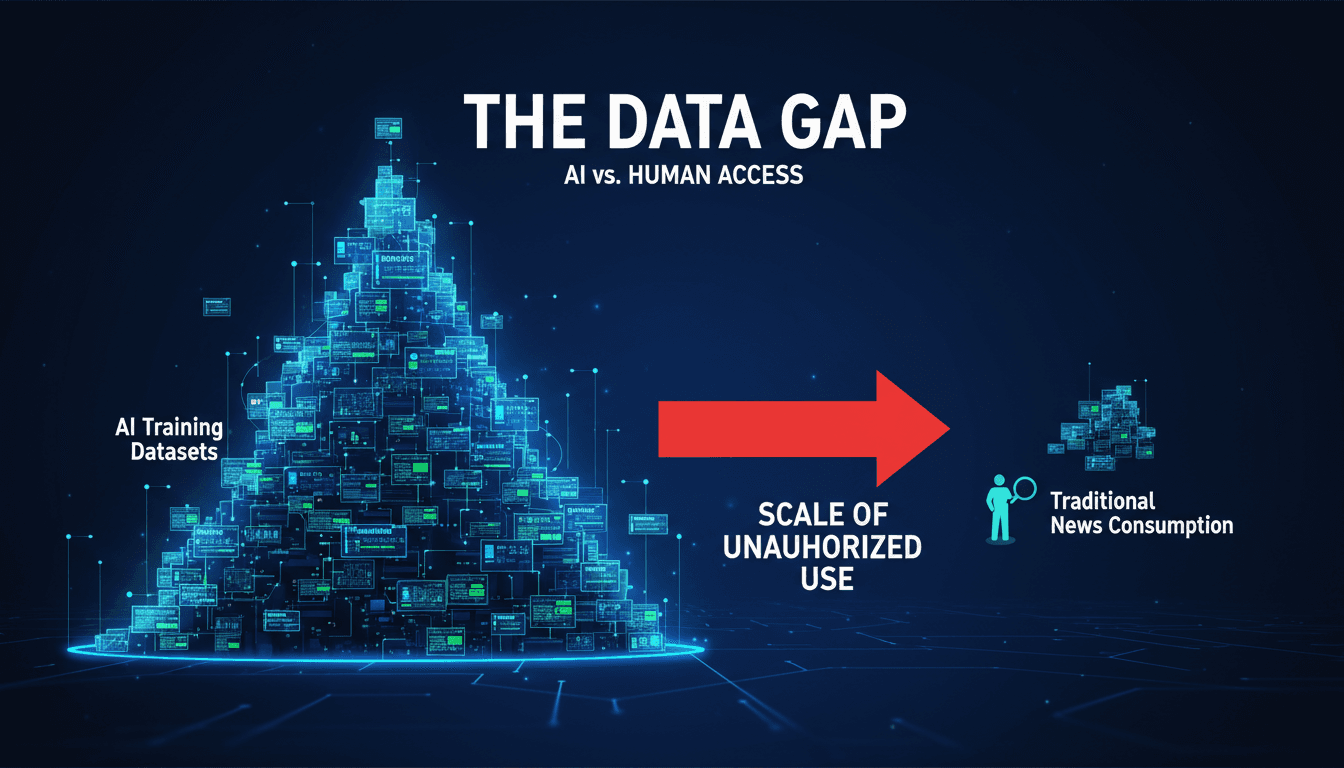
- The unsealed documents include alarming admissions about the scale of content used for training AI, with over 91,692 copies of plaintiff works identified.
What's really happening
The unsealed court documents from the ongoing lawsuit against OpenAI and Microsoft reveal a complex interplay of legal, ethical, and economic factors surrounding the use of news content for AI training. At the heart of the issue is the allegation that both companies engaged in unauthorized scraping of millions of articles, which they used to train their AI systems. This practice has raised significant concerns among publishers, who argue that it undermines their business models and threatens the quality of journalism.
Internal communications from Microsoft, particularly memos from Brent Hecht, the Director of Applied Science, describe the scraping as "an astonishing theft of unprecedented proportions." Hecht's comments reflect a growing unease within the tech community about the implications of AI on content creation and distribution. The term "doom loop" suggests a cyclical degradation of content quality, where AI-generated outputs may increasingly replace original journalism, leading to a decline in the overall value of information available online.
OpenAI's Nick Turley echoed these sentiments, warning that AI could become a substitute for traditional news consumption, effectively displacing publishers and altering the media landscape. The data presented in the court documents is staggering, with over 91,692 copies of works from major publishers included in OpenAI's training datasets. This raises critical questions about the ethical use of copyrighted material and the responsibilities of tech companies in compensating content creators.
As the lawsuit progresses, the implications extend beyond the courtroom. If the courts side with the publishers, it could set a precedent that forces AI companies to rethink their training practices and compensation models. Conversely, a ruling in favor of OpenAI and Microsoft could embolden other tech firms to continue similar practices, further eroding the financial viability of traditional journalism.
The ongoing litigation is not just a legal battle; it represents a pivotal moment in the relationship between technology and media. As AI continues to evolve, the outcomes of this case could shape the future of content creation, distribution, and consumption, impacting everyone from journalists to consumers.
Who feels it first (and how)
- Journalists and publishers: Facing potential revenue losses and job displacement as AI-generated content rises.
- Tech companies: May need to adjust their AI training practices and face increased scrutiny over copyright issues.
- Consumers: Could experience a shift in the quality and reliability of news sources as AI substitutes traditional journalism.
What to watch next
- Court rulings: Key decisions in the ongoing lawsuit could set precedents for AI training practices and copyright law.
- Industry responses: Watch for how tech companies adapt their practices in light of the lawsuit's outcomes and public sentiment.
- Market shifts: Monitor changes in consumer behavior regarding news consumption, particularly as AI-generated content becomes more prevalent.
The lawsuit is ongoing, with significant implications for AI training practices.
Increased scrutiny on AI companies regarding their use of copyrighted material.
The long-term impact on the publishing industry and how it will adapt to AI advancements.
Frequently Asked Questions
- Why it matters?
- The ongoing legal battle could redefine how AI companies use copyrighted material, impacting content quality and publisher revenues.
- What happened (in 30 seconds)?
- Unsealed documents from a New York court reveal internal concerns at Microsoft and OpenAI about AI training on news articles. Microsoft employees described the practice as potentially the "largest theft of labor in human history," warning of a "doom loop" for content quality. OpenAI executives acknowledged that AI products could pose an "existential threat" to traditional news consumption.
- What's really happening?
- The unsealed court documents from the ongoing lawsuit against OpenAI and Microsoft reveal a complex interplay of legal, ethical, and economic factors surrounding the use of news content for AI training. At the heart of the issue is the allegation that both companies engaged in unauthorized scraping of millions of articles, which they used to train their AI systems. This practice has raised significant concerns among publishers, who argue that it undermines their business models and threatens the
- Who feels it first (and how)?
- Journalists and publishers: Facing potential revenue losses and job displacement as AI-generated content rises. Tech companies: May need to adjust their AI training practices and face increased scrutiny over copyright issues. Consumers: Could experience a shift in the quality and reliability of news sources as AI substitutes traditional journalism.
- What to watch next?
- Court rulings: Key decisions in the ongoing lawsuit could set precedents for AI training practices and copyright law. Industry responses: Watch for how tech companies adapt their practices in light of the lawsuit's outcomes and public sentiment. Market shifts: Monitor changes in consumer behavior regarding news consumption, particularly as AI-generated content becomes more prevalent.
Tech industry coverage with AI angles.
"Mainstream tech news intersecting with AI policy and culture."
— A47 Editor
Microsoft and OpenAI Workers Worry About ‘Largest Theft of Labor’ in History
Newly unsealed court documents reveal significant concerns among Microsoft and OpenAI employees regarding the use of millions of news articles to develop artificial intelligence systems, raising alarms about potential copyright infringements and ethi...
Tech policy, trends, and innovation news.
"The New York Times is a globally recognized newspaper offering authoritative reporting with a center-left editorial stance."
— A47 Editor
Microsoft and OpenAI Workers Worry About ‘Largest Theft of Labor’ in History
Newly unsealed court documents reveal significant concerns among Microsoft and OpenAI employees regarding the use of millions of news articles to develop artificial intelligence systems, raising alarms about potential copyright infringements and ethi...
Tech business coverage, major deals, product launches, and Silicon Valley trends.
"WSJ’s tech section offers authoritative reporting on the intersection of technology and business, including exclusive industry analysis."
— A47 Editor
Tech Companies’ Staff Knew Their AI Tools Posed ‘Existential Threat’ to Publishers
Executives at OpenAI and Microsoft have acknowledged in a recent court filing that their AI tools could pose an 'existential threat' to publishers, particularly in the context of a copyright lawsuit initiated by The New York Times. This admission hig...
U.S. business news, corporate developments, and economy.
"The Wall Street Journal is respected for deep financial and economic reporting with a center-right editorial perspective."
— A47 Editor
Tech Companies’ Staff Knew Their AI Tools Posed ‘Existential Threat’ to Publishers
Executives at OpenAI and Microsoft have acknowledged that their artificial intelligence tools could pose an 'existential threat' to publishers, as revealed in a recent filing related to a copyright lawsuit involving The New York Times. This admission...
Startup news with frequent AI coverage.
"Covers launches, funding, and product updates in AI."
— A47 Editor
Microsoft exec called AI scraping ‘the largest theft of labor in human history,’ new unredacted filings reveal
Newly unsealed court filings reveal that Microsoft executives privately labeled OpenAI's data scraping practices as 'theft,' particularly concerning their joint use of paywalled content from the Times to build datasets, which they feared would underm...
Curated tech headlines including AI stories.
"Influential aggregator surfacing the day’s top tech/AI links."
— A47 Editor
NYT court filing: ChatGPT's head wrote that publishers face an "existential threat" from AI, and a Microsoft director called AI training "an astonishing theft" (Financial Times)
Recent court filings reveal that Greg Brockman, co-founder of ChatGPT, acknowledged that publishers are facing an "existential threat" from artificial intelligence, with a Microsoft director labeling AI training as "an astonishing theft" of copyright...