
NASA Identifies Largest Newly Formed Lunar Crater Named McGetchin
What happened
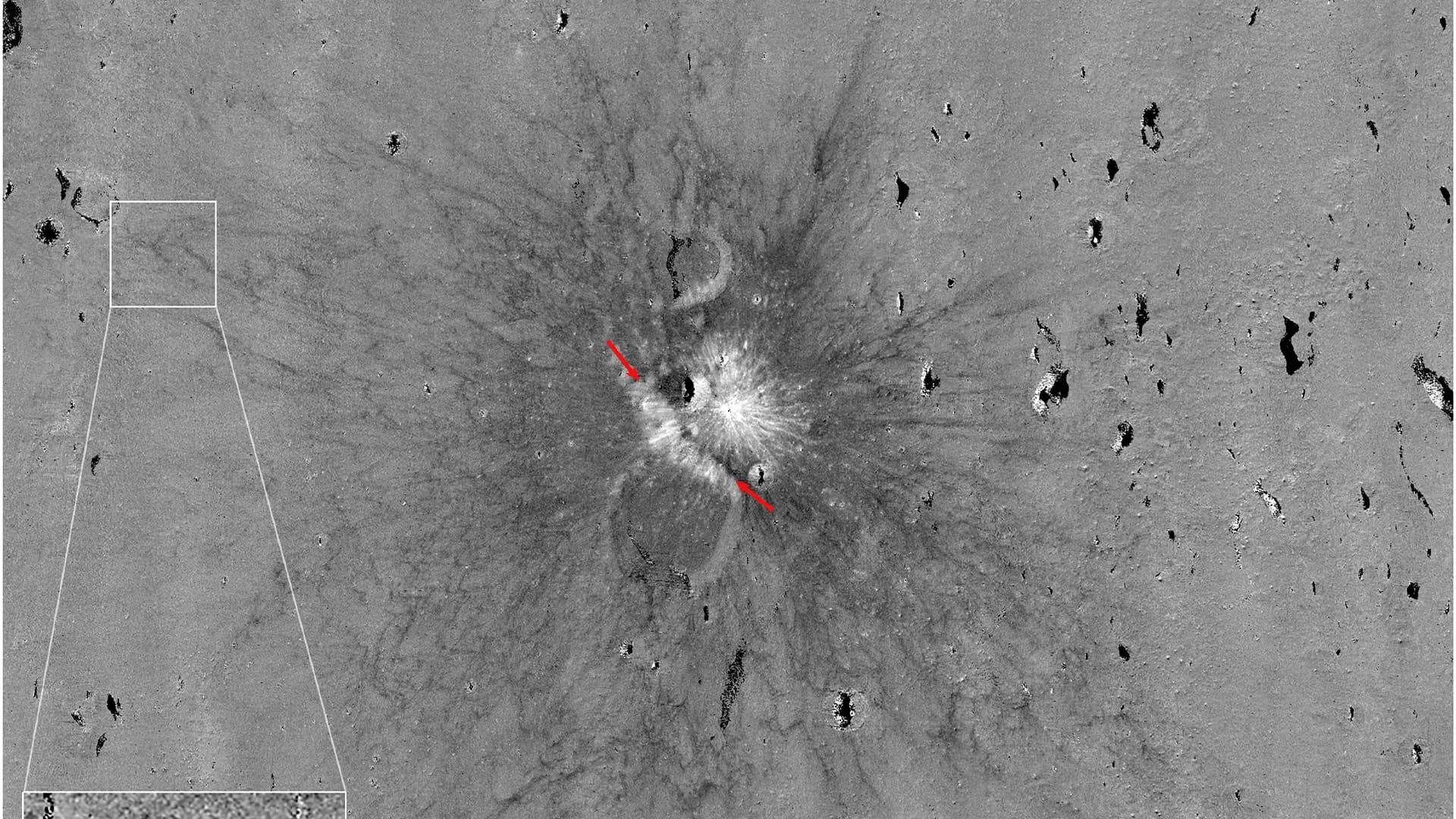
NASA scientist Robert Wagner identified the largest newly formed crater on the Moon, named McGetchin, during a routine data analysis.
The Context
- Significant discovery: The crater, measuring 728 feet wide and 141 feet deep, formed between April and May 2024, a statistically rare event expected only once every 132 years.
- Ongoing monitoring: NASA's Lunar Reconnaissance Orbiter has been capturing lunar imagery since 2009, identifying around 1,000 new impact craters, which aids in understanding the Moon's surface changes.
- Future implications: Findings from this crater will inform lunar science and planning for NASA's Artemis program, which aims to return humans to the Moon.
The Number
—the diameter of the largest newly formed crater identified by LRO, highlighting the rarity of such events and their importance for lunar research.
Takeaway
As lunar exploration continues, discoveries like McGetchin will play a crucial role in shaping our understanding of the Moon and preparing for future missions.
Consumer technology news with AI coverage.
"Gadget and tech site reporting on AI in products."
— A47 Editor
NASA's moon orbiter has spotted an impact crater that only happens once a century
NASA's Lunar Reconnaissance Orbiter has identified a new impact crater on the Moon, measuring 728 feet in diameter, resulting from a rare asteroid collision that occurs approximately once every century. This significant discovery underscores the ongo...
Covers consumer technology, electronics, gadgets, and product reviews.
"Engadget is a trusted source for gadget reviews and consumer tech news, known for its hands-on analysis and industry coverage."
— A47 Editor
NASA's moon orbiter has spotted an impact crater that only happens once a century
NASA's Lunar Reconnaissance Orbiter has identified a new impact crater on the Moon, measuring 728 feet in diameter, resulting from a rare asteroid collision that occurs approximately once every century. This significant discovery underscores the ongo...
RT is a Russian state-funded network covering global events from a Russian perspective.
"RT is widely criticized for promoting pro-Kremlin narratives and is considered by many to be a state propaganda outlet."
— A47 Editor
‘Once-in-a-century’ crater discovered on Moon (PHOTOS)
NASA has announced the discovery of the largest newly formed crater in the solar system on the Moon, marking a significant geological event. This crater is a result of a collision involving a four-ton piece of a SpaceX Falcon 9 rocket that crashed in...
Latest tech news, product reviews, and analysis for consumers and professionals.
"CNET delivers accessible and detailed technology reporting, including trusted product reviews and how-to guides."
— A47 Editor
A NASA Scientist Found a Huge New Crater on the Moon by Accident
A NASA scientist has accidentally discovered a significant new crater on the Moon, a finding that is unlikely to be replicated in the near future. This discovery highlights the ongoing exploration and observation efforts related to lunar geology and ...
Conservative-leaning political and national coverage.
"The Washington Times is a conservative-leaning newspaper known for its political coverage and advocacy of right-of-center viewpoints."
— A47 Editor
On the moon, scientists discover largest newly formed crater in solar system
Scientists have discovered the largest newly formed impact crater in the solar system on the moon, marking a significant milestone in lunar research. This crater's formation adds to the understanding of the moon's geological activity and impact histo...
News in science and technology, with a focus on consumer and innovation stories.
"Popular Science simplifies complex scientific topics for general audiences and celebrates innovation."
— A47 Editor
The moon’s new crater is 728 feet wide and a once-in-a-century find
A newly discovered crater on the moon measures 728 feet in diameter, resulting from a space rock impact. This significant event is described as a once-in-a-century find, highlighting the dynamic nature of lunar geology.