
Andreessen Horowitz Launches AI-Focused Academy as Alternative to Traditional College
Why it matters
This initiative challenges traditional higher education by offering a hands-on, project-based alternative that aligns with the evolving demands of the tech industry.
What happened (in 30 seconds)
- On September 22, 2026, Andreessen Horowitz announced the Horowitz Andreessen Academy, an AI-focused college alternative.
- Applications opened immediately for a tuition-free one-year program starting in fall 2027, targeting high school graduates and early college students.
- The program emphasizes project-based learning and partnerships with major tech firms, aiming to prepare students for careers in technology and entrepreneurship.
The context you actually need
- Silicon Valley's critique of traditional education has been growing, with many tech leaders questioning the value of elite institutions.
- Precedents exist for alternative educational models, such as the Thiel Fellowship, which encourages skipping college for entrepreneurship.
- The rapid advancement of AI necessitates a shift in educational approaches, focusing on practical skills over conventional degrees.
What's really happening
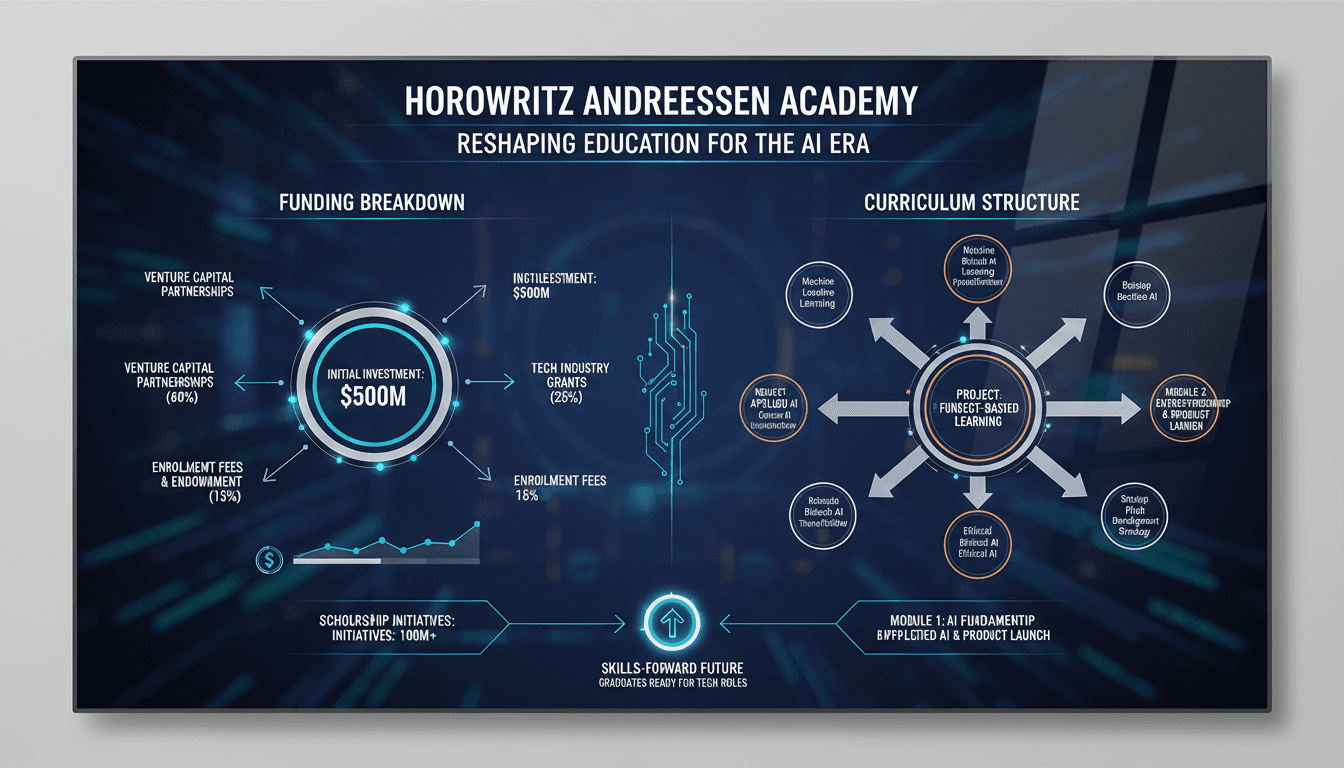
The launch of the Horowitz Andreessen Academy represents a significant shift in how education is perceived and delivered in the tech sector. With a total funding of $42 million, including $35 million from Andreessen Horowitz, the academy aims to provide a curriculum that is not only AI-native but also deeply integrated with real-world applications. This initiative is a direct response to the growing sentiment that traditional college degrees may not adequately prepare students for the fast-paced, ever-evolving tech landscape.
The academy's structure is designed to prioritize hands-on experience over traditional academic metrics. With 75-80% of the program dedicated to project-based learning, students will engage in practical work that mirrors the challenges they will face in their careers. This approach is bolstered by partnerships with leading tech firms such as Google, Meta, and OpenAI, which will provide students with access to mentorship, industry networks, and over $50,000 in compute credits.
By positioning itself as a college alternative, the academy is tapping into a demographic of high school graduates and early college students who are increasingly skeptical of the value of a traditional degree. The program's emphasis on proof of work rather than grades aligns with a broader trend in the job market, where employers are prioritizing skills and experience over formal qualifications.
As the academy prepares to launch its first cohort in fall 2027, it is also seeking regulatory approval for a full two-year program set to begin in 2028. This expansion could further solidify its role as a legitimate alternative to traditional higher education, especially if it can demonstrate successful outcomes for its students.
The implications of this initiative extend beyond just education; they signal a potential shift in hiring practices across the tech industry. If successful, the academy could inspire other institutions to adopt similar models, further challenging the status quo of higher education.
Who feels it first (and how)
- High school graduates looking for alternative pathways to tech careers.
- Early college students who may feel disillusioned with traditional degree programs.
- Tech companies seeking a new pipeline of talent equipped with practical skills.
- Investors interested in the future of education and workforce development.
What to watch next
- Regulatory approval for the two-year program: This will determine the academy's long-term viability and influence on the education sector.
- Enrollment numbers for the founding class: High demand could signal a shift in public perception of traditional college education.
- Partnerships with additional tech firms: Expanding industry connections could enhance the program's value and attract more students.
The academy has secured $42 million in funding and is set to launch its first cohort in fall 2027.
The program will attract students disillusioned with traditional college pathways, potentially reshaping hiring practices in tech.
The long-term impact on traditional higher education institutions and their response to this emerging model.
Frequently Asked Questions
- Why it matters?
- This initiative challenges traditional higher education by offering a hands-on, project-based alternative that aligns with the evolving demands of the tech industry.
- What happened (in 30 seconds)?
- On September 22, 2026, Andreessen Horowitz announced the Horowitz Andreessen Academy, an AI-focused college alternative. Applications opened immediately for a tuition-free one-year program starting in fall 2027, targeting high school graduates and early college students. The program emphasizes project-based learning and partnerships with major tech firms, aiming to prepare students for careers in technology and entrepreneurship.
- What's really happening?
- The launch of the Horowitz Andreessen Academy represents a significant shift in how education is perceived and delivered in the tech sector. With a total funding of $42 million, including $35 million from Andreessen Horowitz, the academy aims to provide a curriculum that is not only AI-native but also deeply integrated with real-world applications. This initiative is a direct response to the growing sentiment that traditional college degrees may not adequately prepare students for the fast-paced
- Who feels it first (and how)?
- High school graduates looking for alternative pathways to tech careers. Early college students who may feel disillusioned with traditional degree programs. Tech companies seeking a new pipeline of talent equipped with practical skills. Investors interested in the future of education and workforce development.
- What to watch next?
- Regulatory approval for the two-year program: This will determine the academy's long-term viability and influence on the education sector. Enrollment numbers for the founding class: High demand could signal a shift in public perception of traditional college education. Partnerships with additional tech firms: Expanding industry connections could enhance the program's value and attract more students.
Business, investment, entrepreneurship, leadership, and innovation.
"Forbes is known for its coverage of business leaders, market trends, and entrepreneurial ventures with a pro-business editorial stance."
— A47 Editor
Billionaire Venture Capital Firm Launches 2-Year College Alternative
The Horowitz Andreessen Academy, backed by a billionaire venture capital firm, is set to launch a two-year college alternative program, pending regulatory approval. The tuition for this program is expected to be equal to or exceed that of elite priva...
Tech business coverage, major deals, product launches, and Silicon Valley trends.
"WSJ’s tech section offers authoritative reporting on the intersection of technology and business, including exclusive industry analysis."
— A47 Editor
The Tech Elite Is Funding an Alternative to College
Andreessen Horowitz, a prominent venture-capital firm, has announced a $35 million investment to support a new two-year academy aimed at providing an alternative to traditional college education, particularly for recent high school graduates and coll...
Technology business and AI-related headlines.
"Data-driven tech newsroom with global scope."
— A47 Editor
Andreessen Horowitz Launches AI School as a College Alternative
Andreessen Horowitz, a prominent venture capital firm, has launched an AI School aimed at recent high school graduates and college dropouts, focusing on identifying and training young talent in artificial intelligence product development. This initia...
Technology business news, market impacts, and innovation trends.
"Bloomberg is a premier financial and tech news provider, respected for its in-depth reporting and analytical rigor."
— A47 Editor
Andreessen Horowitz Launches AI School as a College Alternative
Andreessen Horowitz, a prominent venture capital firm, has launched an AI School aimed at recent high school graduates and college dropouts, focusing on identifying and training young talent in artificial intelligence product development. This initia...