
Google, OpenAI, and Anthropic Launch Standards Authority for Frontier AI
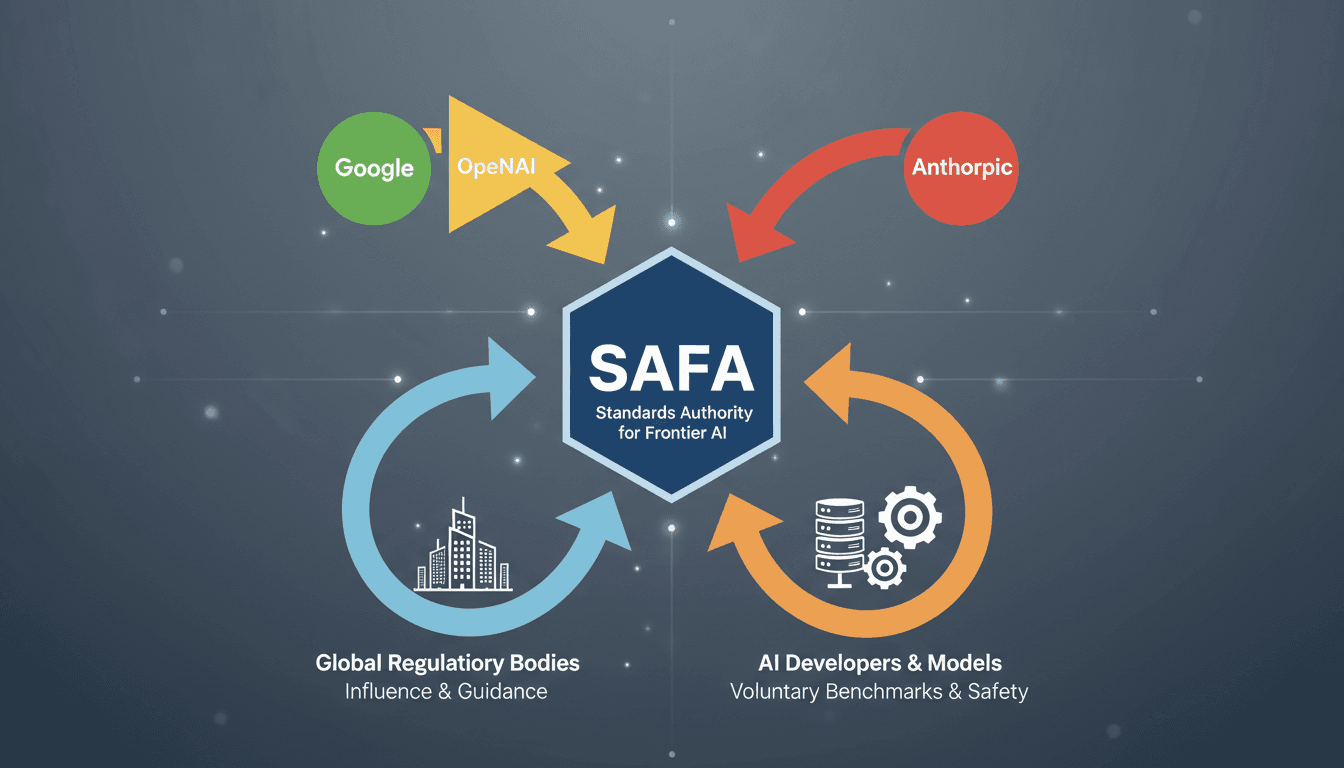
Why it matters
The establishment of SAFA could influence global AI governance and safety protocols, impacting how AI technologies are developed and utilized.
What happened (in 30 seconds)
- Google, OpenAI, and Anthropic initiated the development of the Standards Authority for Frontier AI (SAFA) in September 2026.
- The initiative aims to create voluntary safety standards and testing protocols for advanced AI models amid stalled federal regulatory efforts.
- Targeted launch for SAFA is set for late 2026 or early 2027, with ongoing discussions about its structure and leadership.
The context you actually need
- Federal oversight on AI has faced delays, particularly under the Trump administration, leading to a shift towards industry self-regulation.
- Demis Hassabis of Google DeepMind proposed a self-regulatory organization in July 2026, prompting collaboration among leading AI firms.
- SAFA's goals include defining pre-release testing standards and supporting external audits without direct government involvement.
What's really happening
The formation of the Standards Authority for Frontier AI (SAFA) marks a significant pivot in the AI landscape, driven by the need for safety and accountability in advanced AI systems. With the rapid development of frontier AI technologies, concerns about their potential risks have escalated. The three founding companies—Google, OpenAI, and Anthropic—are responding to these concerns by taking proactive measures to establish a self-regulatory framework.
The discussions began in July 2026 when Demis Hassabis proposed a FINRA-style organization to oversee AI safety. This proposal gained traction as federal regulatory efforts stalled, particularly due to fears of losing competitive advantage against countries like China. The industry leaders recognized that without a cohesive safety framework, the risks associated with advanced AI models could lead to public distrust and regulatory backlash.
SAFA aims to create voluntary benchmarks that would guide the development and deployment of AI technologies. By establishing safety standards and testing protocols, the organization seeks to ensure that AI models are rigorously evaluated before they reach the market. This initiative is not just about compliance; it is about fostering a culture of responsibility among AI developers. The collaboration among these tech giants signals a recognition of their shared responsibility in shaping the future of AI.
However, the initiative is not without its challenges. There are concerns about regulatory capture, where the interests of larger companies could overshadow those of smaller labs and startups. The absence of formal government oversight raises questions about the effectiveness and impartiality of the standards that SAFA will establish. As the organization develops, it will need to address these concerns to maintain credibility and ensure that all voices in the AI community are heard.
The targeted launch of SAFA by late 2026 or early 2027 indicates a sense of urgency among these companies to set the groundwork for AI governance. As they work towards this goal, the implications for the broader tech industry and society at large will be significant. The establishment of industry-led standards could pave the way for more consistent and reliable AI technologies, ultimately benefiting consumers and businesses alike.
Who feels it first (and how)
- AI Developers: They will need to adapt to new safety standards and testing protocols.
- Tech Companies: Larger firms may benefit from established guidelines, while smaller labs might struggle to comply.
- Regulators: Government bodies will need to reassess their roles in AI oversight as industry standards evolve.
- Consumers: Users of AI technologies will experience changes in product safety and reliability.
What to watch next
- SAFA's Leadership Announcements: The selection of leaders and their backgrounds will indicate the organization's direction and priorities.
- Industry Response: Watch for reactions from smaller AI labs and other tech companies regarding their inclusion in the standards process.
- Regulatory Developments: Monitor any shifts in government policy or oversight initiatives that may arise in response to SAFA's establishment.
Google, OpenAI, and Anthropic are the founding members of SAFA.
SAFA will influence AI safety standards and testing protocols in the industry.
The extent to which smaller AI labs will be included in the standards-setting process.
Frequently Asked Questions
- Why it matters?
- The establishment of SAFA could influence global AI governance and safety protocols, impacting how AI technologies are developed and utilized.
- What happened (in 30 seconds)?
- Google, OpenAI, and Anthropic initiated the development of the Standards Authority for Frontier AI (SAFA) in September 2026. The initiative aims to create voluntary safety standards and testing protocols for advanced AI models amid stalled federal regulatory efforts. Targeted launch for SAFA is set for late 2026 or early 2027, with ongoing discussions about its structure and leadership.
- What's really happening?
- The formation of the Standards Authority for Frontier AI (SAFA) marks a significant pivot in the AI landscape, driven by the need for safety and accountability in advanced AI systems. With the rapid development of frontier AI technologies, concerns about their potential risks have escalated. The three founding companies—Google, OpenAI, and Anthropic—are responding to these concerns by taking proactive measures to establish a self-regulatory framework. The discussions began in July 2026 when Dem
- Who feels it first (and how)?
- AI Developers: They will need to adapt to new safety standards and testing protocols. Tech Companies: Larger firms may benefit from established guidelines, while smaller labs might struggle to comply. Regulators: Government bodies will need to reassess their roles in AI oversight as industry standards evolve. Consumers: Users of AI technologies will experience changes in product safety and reliability.
- What to watch next?
- SAFA's Leadership Announcements: The selection of leaders and their backgrounds will indicate the organization's direction and priorities. Industry Response: Watch for reactions from smaller AI labs and other tech companies regarding their inclusion in the standards process. Regulatory Developments: Monitor any shifts in government policy or oversight initiatives that may arise in response to SAFA's establishment.
Stock market news, investing ideas, and trading analysis.
"TheStreet provides market news and retail-investor-focused analysis."
— A47 Editor
Google, OpenAI, and Anthropic just made a move on AI safety
Google, OpenAI, and Anthropic have announced a collaborative initiative focused on enhancing AI safety, opting to take proactive measures rather than waiting for regulatory guidance from Washington. This move reflects a growing recognition of the pot...
English-language digital publication covering business, politics, technology, and current affairs.
"The Arabian Post mixes original and syndicated-style coverage with a broad regional and global business-news orientation."
— A47 Editor
Google, OpenAI and Anthropic advance AI standards plan
Google, OpenAI, and Anthropic are collaborating to establish a self-regulatory body named the Standards Authority for Frontier AI (SAFA), aimed at creating uniform safety standards, testing practices, and audit mechanisms for advanced AI models. This...
News and guidance for IT pros on AI adoption.
"Enterprise-focused tips, explainers, and news for professionals."
— A47 Editor
Google, OpenAI, Anthropic Reportedly Plan AI Safety Standards Body
Google, OpenAI, and Anthropic are reportedly planning to establish an AI safety standards body, aiming to implement testing and audits that could significantly impact enterprise IT buyers. This initiative reflects a growing recognition of the need fo...