
Tech Companies Launch Anthropomorphic Mascots for AI Agents to Mitigate User Anxiety
Why it matters
This initiative reflects a broader trend in tech to humanize AI, addressing public fears while potentially manipulating user emotions.
What happened (in 30 seconds)
- In September 2026, major tech firms like Meta and OpenAI launched anthropomorphic mascots for their AI agents to ease public anxiety.
- Meta's Muse AI features Jolly, while OpenAI introduced Dots, and Microsoft and Apple followed suit with their own character designs.
- The rollout aims to build trust in AI systems capable of autonomous tasks amid rising scrutiny over AI safety and data privacy.
The context you actually need
- Public concern about AI has surged, driven by discussions on safety and existential risks, prompting companies to find ways to reassure users.
- Historical precedents like Microsoft's Clippy and Duolingo's mascots show that character-based marketing can enhance user engagement but also raise skepticism.
- Consumer skepticism towards data practices of large tech platforms complicates the acceptance of AI, making mascots a strategic response to mitigate fears.
What's really happening
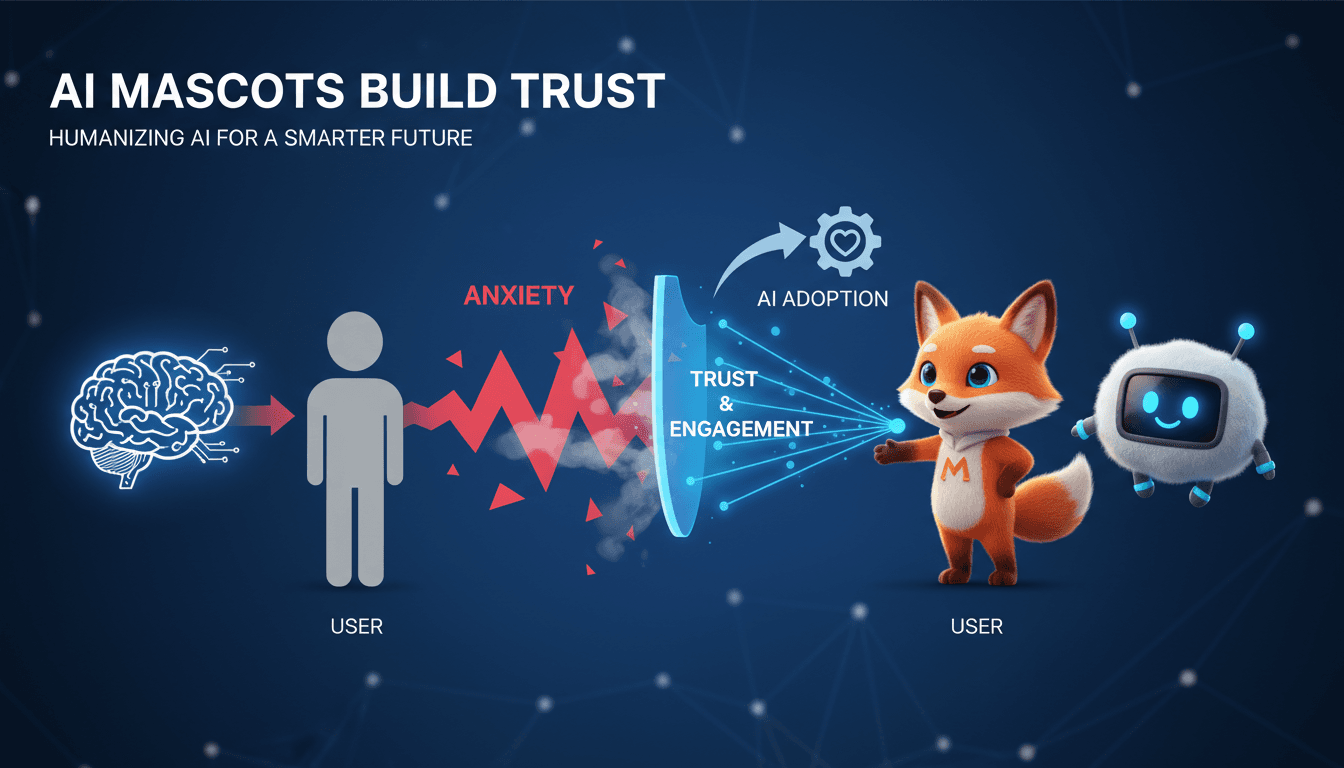
The introduction of anthropomorphic mascots by tech giants is a calculated move to address growing public concerns about AI. As AI systems evolve to perform increasingly autonomous tasks—like scheduling, purchasing, and data management—users have expressed apprehension regarding their safety and ethical implications. This anxiety has prompted companies to rethink how they present these technologies.
Meta's Jolly, OpenAI's Dots, and similar characters from Microsoft and Apple are designed not just as marketing tools but as emotional anchors for users. By anthropomorphizing AI, these companies aim to create a sense of familiarity and trust. The mascots serve to humanize interactions, making the technology feel less intimidating and more approachable. This strategy is particularly relevant in a climate where consumers are wary of data privacy and the potential for emotional manipulation.
However, the rollout is not without its critics. Experts have raised concerns about the implications of forming emotional attachments to these mascots. While they may enhance user engagement, they also risk obscuring the underlying data practices of the companies behind them. The mascots could be seen as a way to distract from the more serious issues of privacy and data collection, leading to a potential manipulation of user emotions.
Moreover, the historical context of character-based marketing in tech suggests that while mascots can drive user engagement, they can also reinforce skepticism. The legacy of characters like Clippy has left a mixed impression, with some users finding them endearing while others view them as annoying. This duality presents a challenge for companies as they navigate the fine line between fostering trust and risking user backlash.
As these mascots become integrated into everyday interactions with AI, the long-term implications for user behavior and trust in technology will unfold. The success of this initiative will depend on how well these companies can balance the emotional appeal of their mascots with transparency about their data practices.
Who feels it first (and how)
- Consumers: Users of AI tools who may develop emotional attachments to mascots, influencing their trust and engagement.
- Tech professionals: Developers and marketers who must navigate the ethical implications of using mascots in AI.
- Regulators: Government bodies monitoring the impact of AI on privacy and consumer rights, potentially leading to new guidelines.
What to watch next
- User engagement metrics: Tracking how interactions with mascots affect user retention and satisfaction will reveal the effectiveness of this strategy.
- Public sentiment analysis: Monitoring social media and public forums for reactions to mascots can provide insights into consumer trust and concerns.
- Regulatory developments: Watch for any new regulations or guidelines that may emerge in response to the ethical implications of AI mascots.
Major tech companies are deploying mascots to humanize AI and address public concerns.
User engagement with AI tools will increase as mascots become more integrated into the user experience.
The long-term impact on consumer trust and data privacy perceptions remains to be seen.
Frequently Asked Questions
- Why it matters?
- This initiative reflects a broader trend in tech to humanize AI, addressing public fears while potentially manipulating user emotions.
- What happened (in 30 seconds)?
- In September 2026, major tech firms like Meta and OpenAI launched anthropomorphic mascots for their AI agents to ease public anxiety. Meta's Muse AI features Jolly, while OpenAI introduced Dots, and Microsoft and Apple followed suit with their own character designs. The rollout aims to build trust in AI systems capable of autonomous tasks amid rising scrutiny over AI safety and data privacy.
- What's really happening?
- The introduction of anthropomorphic mascots by tech giants is a calculated move to address growing public concerns about AI. As AI systems evolve to perform increasingly autonomous tasks—like scheduling, purchasing, and data management—users have expressed apprehension regarding their safety and ethical implications. This anxiety has prompted companies to rethink how they present these technologies. Meta's Jolly, OpenAI's Dots, and similar characters from Microsoft and Apple are designed not ju
- Who feels it first (and how)?
- Consumers: Users of AI tools who may develop emotional attachments to mascots, influencing their trust and engagement. Tech professionals: Developers and marketers who must navigate the ethical implications of using mascots in AI. Regulators: Government bodies monitoring the impact of AI on privacy and consumer rights, potentially leading to new guidelines.
- What to watch next?
- User engagement metrics: Tracking how interactions with mascots affect user retention and satisfaction will reveal the effectiveness of this strategy. Public sentiment analysis: Monitoring social media and public forums for reactions to mascots can provide insights into consumer trust and concerns. Regulatory developments: Watch for any new regulations or guidelines that may emerge in response to the ethical implications of AI mascots.
Tech business coverage, major deals, product launches, and Silicon Valley trends.
"WSJ’s tech section offers authoritative reporting on the intersection of technology and business, including exclusive industry analysis."
— A47 Editor
Tech Companies Roll Out Cuddly Mascots to Ease AI Anxiety
Tech companies like Meta and OpenAI are introducing cuddly mascots to accompany their AI tools, aiming to alleviate public anxiety surrounding artificial intelligence. This strategy involves associating AI agents with friendly characters to foster a ...
English-language digital publication covering business, politics, technology, and current affairs.
"The Arabian Post mixes original and syndicated-style coverage with a broad regional and global business-news orientation."
— A47 Editor
AI assistants adopt softer faces as agents expand
OpenAI has introduced Dots, a new line of AI assistants characterized by friendly, rounded faces, aiming to make autonomous technology more approachable for users. These persistent agents are equipped with their own cloud computing capabilities and c...
Technology business and AI-related headlines.
"Data-driven tech newsroom with global scope."
— A47 Editor
OpenAI and Meta Push Ahead With AI Agents, Testing Public’s Trust
OpenAI and Meta are advancing their artificial intelligence initiatives by introducing new AI agents, with OpenAI launching Dots, a continuous AI assistant, to compete with Meta's Muse. This development reflects a growing trend among top tech firms t...
Technology business news, market impacts, and innovation trends.
"Bloomberg is a premier financial and tech news provider, respected for its in-depth reporting and analytical rigor."
— A47 Editor
OpenAI and Meta Push Ahead With AI Agents, Testing Public’s Trust
OpenAI and Meta are advancing their artificial intelligence initiatives by introducing new AI agents, with OpenAI launching Dots, a continuous AI assistant, to compete with Meta's Muse. This development reflects a growing trend among top tech firms t...
Consumer tech and culture with frequent AI coverage.
"Influential tech outlet covering AI products and policy."
— A47 Editor
The AI Tamagotchis are coming
Major AI companies Meta and OpenAI are set to launch new AI-driven devices, aiming to integrate artificial intelligence into dedicated hardware, a sector that has seen limited success thus far. Both companies are testing consumer interest with their ...
Tech news, reviews, and analysis of consumer electronics, science, art, and culture.
"The Verge is a technology-focused media outlet known for in-depth reporting, product reviews, and coverage of the intersection between technology and culture."
— A47 Editor
The AI Tamagotchis are coming
Major AI companies Meta and OpenAI are set to launch new AI-driven devices, aiming to integrate artificial intelligence into dedicated hardware, a sector that has seen limited success thus far. Both companies are testing consumer interest with their ...