
UAE Space Sector Transitions to Economic Value Creation Under National Space Strategy 2031
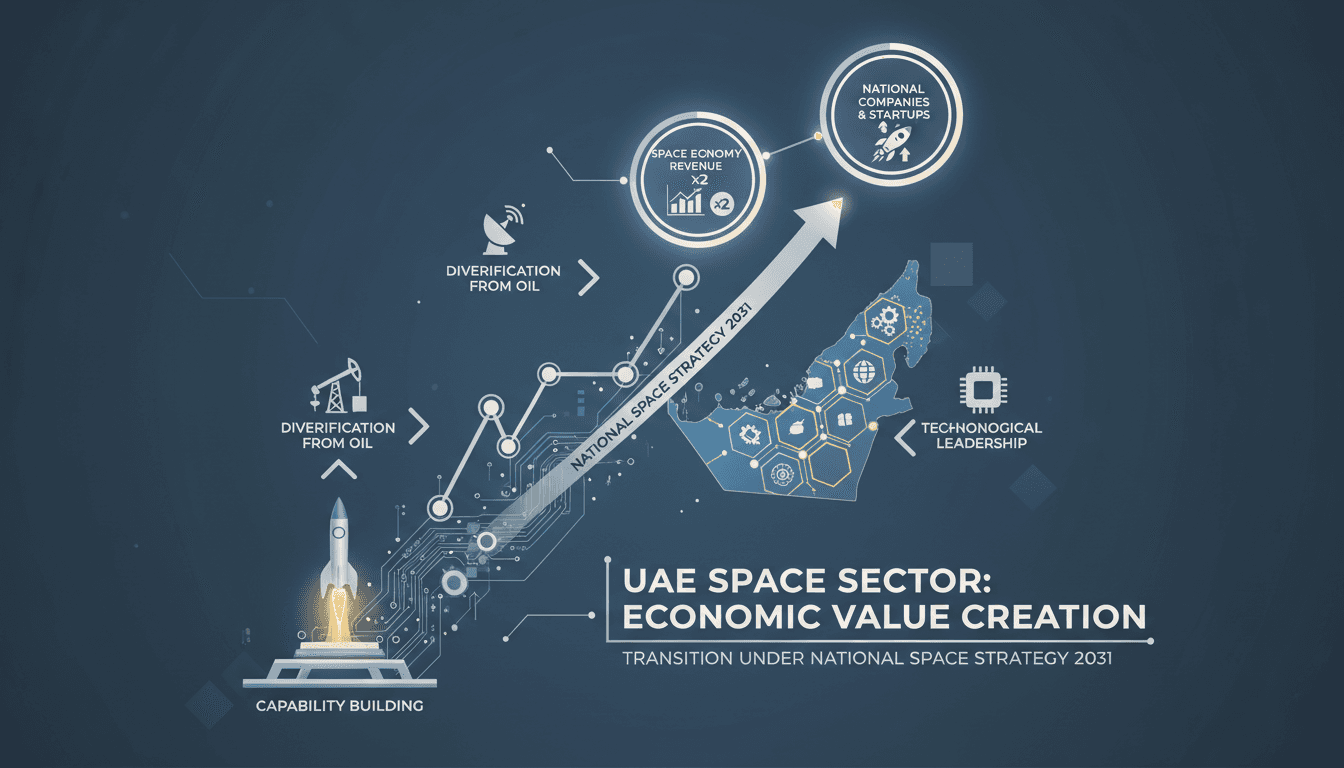
Why it matters
The UAE's transition to an economically driven space strategy signals a broader trend of nations leveraging space for technological and economic advancement.
What happened (in 30 seconds)
- The UAE Cabinet approved the National Space Strategy 2031 in March 2026, focusing on economic outcomes and value creation.
- A report published on October 3, 2026, highlights the UAE's shift from capability-building to generating economic value through innovation and investment.
- Key partnerships and projects have emerged, including a US$1 billion consortium for satellite manufacturing and a new mobile coverage infrastructure initiative.
The context you actually need
- The UAE has rapidly expanded its space sector, with over 170 entities operating by 2026, tripling since 2020.
- The geopolitical climate necessitates diversification away from oil, positioning space as a key driver for technological leadership and global partnerships.
- Abu Dhabi is the primary hub for this transformation, with significant investments in infrastructure, manufacturing, and data services.
What's really happening
The UAE's National Space Strategy 2031 represents a pivotal shift from merely building capabilities to creating tangible economic value. This transition is driven by a combination of strategic foresight and the pressing need for economic diversification. The UAE has recognized that the space sector can serve as a catalyst for broader economic growth, particularly in the face of fluctuating oil prices and the global push for sustainable development.
The strategy aims to double space economy revenues and increase economic added value by 60 percent, which is ambitious yet achievable given the current trajectory of the sector. The report from Emirates 24|7 outlines several key initiatives that are already underway, including the International Space Cooperation Programme, which has been allocated AED1 billion in funding. This program is designed to foster international partnerships and enhance the UAE's position as a global player in the space economy.
Moreover, the operationalization of satellites like Space42's Foresight-3, -4, and -5, which offer advanced Earth observation capabilities, showcases the UAE's commitment to integrating cutting-edge technology into its space endeavors. The collaboration between Marlan Space and Loft Orbital to form a US$1 billion consortium for satellite manufacturing in Abu Dhabi further emphasizes the shift towards a more commercially viable space sector.
The emphasis on private-sector expansion and global market access is evident in the formation of joint ventures, such as Equatys, which aims to enhance mobile coverage infrastructure. This reflects a broader governmental support for commercial space activities, indicating a shift in how the UAE perceives its role in the global space economy.
As the UAE continues to invest in human capital initiatives and partnerships, including collaborations with the African Space Agency, the potential for innovation and economic growth in the space sector becomes increasingly apparent. This strategic pivot not only positions the UAE as a leader in the space economy but also creates a ripple effect that can benefit various sectors, from telecommunications to agriculture, as space-derived data and services become more integrated into everyday applications.
Who feels it first (and how)
- Tech startups: Increased opportunities for collaboration and funding in the space sector.
- Investors: New avenues for investment in satellite manufacturing and data services.
- Research institutions: Enhanced partnerships and funding for R&D initiatives.
- Local businesses: Access to advanced technologies and data applications that can improve operations.
What to watch next
- Investment trends: Monitor the flow of private investments into the UAE space sector, as this will indicate confidence in the strategy's success.
- Partnership developments: Keep an eye on new international collaborations that could enhance the UAE's technological capabilities and market reach.
- Economic impact assessments: Look for reports evaluating the economic contributions of the space sector to gauge its effectiveness in driving growth.
The UAE has over 170 entities in its space economy, reflecting significant growth.
Continued increase in private investment and international partnerships in the space sector.
The long-term economic impact of the National Space Strategy 2031 on the broader UAE economy.
Frequently Asked Questions
- Why it matters?
- The UAE's transition to an economically driven space strategy signals a broader trend of nations leveraging space for technological and economic advancement.
- What happened (in 30 seconds)?
- The UAE Cabinet approved the National Space Strategy 2031 in March 2026, focusing on economic outcomes and value creation. A report published on October 3, 2026, highlights the UAE's shift from capability-building to generating economic value through innovation and investment. Key partnerships and projects have emerged, including a US$1 billion consortium for satellite manufacturing and a new mobile coverage infrastructure initiative.
- What's really happening?
- The UAE's National Space Strategy 2031 represents a pivotal shift from merely building capabilities to creating tangible economic value. This transition is driven by a combination of strategic foresight and the pressing need for economic diversification. The UAE has recognized that the space sector can serve as a catalyst for broader economic growth, particularly in the face of fluctuating oil prices and the global push for sustainable development. The strategy aims to double space economy reve
- Who feels it first (and how)?
- Tech startups: Increased opportunities for collaboration and funding in the space sector. Investors: New avenues for investment in satellite manufacturing and data services. Research institutions: Enhanced partnerships and funding for R&D initiatives. Local businesses: Access to advanced technologies and data applications that can improve operations.
- What to watch next?
- Investment trends: Monitor the flow of private investments into the UAE space sector, as this will indicate confidence in the strategy's success. Partnership developments: Keep an eye on new international collaborations that could enhance the UAE's technological capabilities and market reach. Economic impact assessments: Look for reports evaluating the economic contributions of the space sector to gauge its effectiveness in driving growth.
English-language coverage focused on UAE news, government updates, and domestic affairs.
"Emirates 24|7 reflects a mainstream UAE editorial perspective with strong emphasis on official and domestic developments."
— A47 Editor
UAE space sector expands economic footprint through innovation, investment: Report
The UAE's space sector is undergoing a significant transformation, evolving from traditional scientific missions to a comprehensive economic ecosystem that includes infrastructure, manufacturing, and artificial intelligence. This shift, highlighted i...
Arabic-language local coverage focused on UAE domestic issues, civic affairs, and community reporting.
"Emarat Al Youm local coverage emphasizes UAE institutions, public services, and community-level developments."
— A47 Editor
انطلاق «الطائر-1» أول قمر إماراتي تجاري لرصد الأرض انطلاق «الطائر-1» أول قمر إماراتي تجاري لرصد الأرض
The UAE successfully launched the satellite 'Al-Tayer-1', marking it as the first commercial Earth observation satellite in the Emirates' constellation, with initial indicators confirming the commencement of its experimental operation.
English-language coverage focused on UAE news, government updates, and domestic affairs.
"Emirates 24|7 reflects a mainstream UAE editorial perspective with strong emphasis on official and domestic developments."
— A47 Editor
Orbitworks launches first commercial satellite built in UAE
The UAE successfully launched Altair-1, its first commercial satellite, aboard SpaceX's Transporter-18 mission from Vandenberg Space Force Base, marking a significant milestone in the nation's space endeavors. The satellite, designed and integrated b...
Arabic-language sports reporting covering UAE competitions and major international events.
"Emarat Al Youm sports coverage is mainstream and accessible, with strong emphasis on UAE and regional sport."
— A47 Editor
انطلاق «الطائر-1» أول قمر صناعي إماراتي تجاري لرصد الأرض انطلاق «الطائر-1» أول قمر صناعي إماراتي تجاري لرصد الأرض
The UAE successfully launched the 'Al-Tayer-1' satellite, marking it as the first commercial Earth observation satellite in the Emirates' constellation, with initial indicators confirming the start of its experimental operations.
UAE-based English-language newspaper covering regional politics, economics, and global affairs.
"The National reflects Emirati policy perspectives while maintaining international editorial standards."
— A47 Editor
First UAE-built commercial satellite completes historic launch in major step forward in space race
The United Arab Emirates (UAE) has successfully launched its first commercial satellite, marking a significant milestone in its space ambitions. This achievement underscores the UAE's growing capabilities in satellite technology and its commitment to...