
UK Banks Complete First Interbank Tokenized Deposit Transactions
Why it matters
This initiative marks a significant shift in how banks handle transactions, potentially leading to faster and more efficient payment systems.
What happened (in 30 seconds)
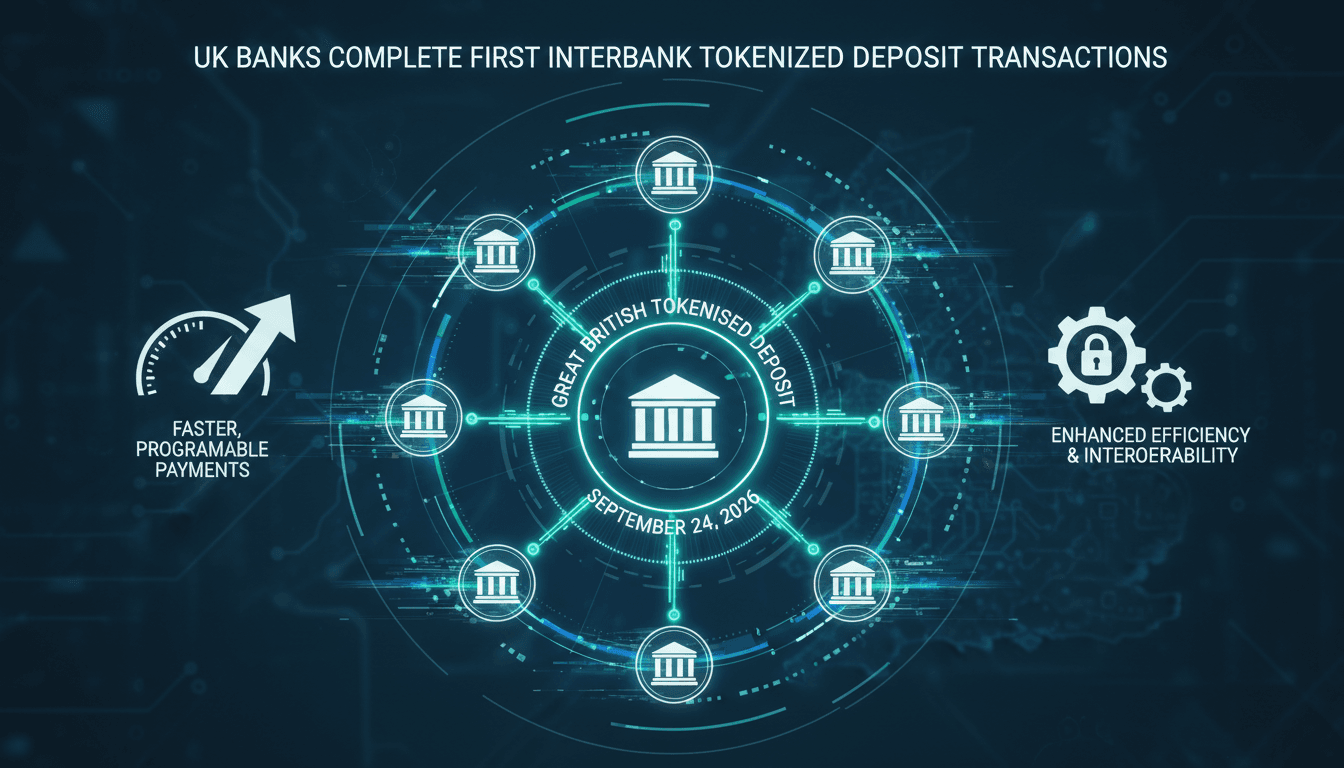
- On September 24, 2026, the UK’s largest banks executed the world’s first interbank transactions using tokenized deposits.
- Participating banks included Barclays, HSBC, Lloyds Banking Group, NatWest, Nationwide, Santander, and Monzo, showcasing a collaborative effort.
- The Great British Tokenised Deposit (GBTD) initiative aims to enhance payment efficiency and programmability while maintaining regulatory protections.
The context you actually need
- The GBTD initiative builds on previous experiments by UK Finance, including a 2025 pilot and earlier tests involving 11 banks.
- The Bank of England has expressed a preference for regulated tokenized deposits over private stablecoins, emphasizing the need for innovation in payment systems.
- The pilot transactions demonstrated interoperability across different banks, indicating a move towards a more integrated financial ecosystem.
What's really happening
The Great British Tokenised Deposit (GBTD) initiative represents a pivotal moment in the evolution of banking in the UK. By enabling interbank transactions using tokenized deposits, the participating banks are addressing longstanding inefficiencies in traditional settlement systems. This shift is not merely technological; it reflects a broader strategic alignment with regulatory preferences and market demands for faster, programmable payments.
The pilot, which involved major players like Barclays, HSBC, and Lloyds, showcased live retail transactions, including remortgage completions and simulated peer-to-peer marketplace purchases. These transactions were executed on a shared distributed ledger platform developed by Quant, which allows for the seamless movement of tokenized commercial bank money across institutions. This interoperability is crucial, as it reduces the friction typically associated with cross-bank transactions, such as delays and manual processing.
The GBTD initiative is particularly significant because it retains the regulatory protections associated with traditional deposits while introducing the programmability and speed that digital transactions offer. This dual approach addresses the concerns of regulators, who have been cautious about the rise of private stablecoins, which lack the same level of oversight. By prioritizing regulated tokenized deposits, the Bank of England is fostering an environment conducive to innovation while ensuring consumer protections remain intact.
As the pilot transitions to a full-scale implementation, UK Finance plans to establish a dedicated company and develop a governance framework. This will facilitate the broader adoption of tokenized deposits across the banking sector. Additionally, participating banks are looking to issue digital bonds in early 2027 that will be settleable with these tokenized deposits, further integrating this technology into the financial landscape.
The implications of this initiative extend beyond the immediate participants. As banks streamline their operations and enhance customer experiences, consumers can expect faster transaction times and potentially lower costs. Moreover, the success of the GBTD initiative could inspire similar projects globally, influencing how banks operate in other regions.
Who feels it first (and how)
- Retail customers: Experience faster and more efficient payment processes.
- Banking professionals: Benefit from reduced manual processes and improved transaction reliability.
- Financial institutions: Gain a competitive edge through enhanced interoperability and programmability.
- Regulators: Observe a model that balances innovation with consumer protection, potentially influencing future policies.
What to watch next
- Governance framework development: The establishment of a dedicated company and rulebook will be crucial for the initiative's success and scalability.
- Digital bond issuance: The planned issuance of digital bonds in Q1 2027 will test the market's readiness for tokenized deposits in broader financial applications.
- Global adoption trends: Watch for similar initiatives in other countries, as the success of the GBTD could inspire international banking reforms.
The pilot transactions have been successfully completed, demonstrating the feasibility of tokenized deposits.
The establishment of a governance framework and the issuance of digital bonds will proceed as planned.
The long-term impact on consumer behavior and the broader financial ecosystem remains to be seen.
Frequently Asked Questions
- Why it matters?
- This initiative marks a significant shift in how banks handle transactions, potentially leading to faster and more efficient payment systems.
- What happened (in 30 seconds)?
- On September 24, 2026, the UK’s largest banks executed the world’s first interbank transactions using tokenized deposits. Participating banks included Barclays, HSBC, Lloyds Banking Group, NatWest, Nationwide, Santander, and Monzo, showcasing a collaborative effort. The Great British Tokenised Deposit (GBTD) initiative aims to enhance payment efficiency and programmability while maintaining regulatory protections.
- What's really happening?
- The Great British Tokenised Deposit (GBTD) initiative represents a pivotal moment in the evolution of banking in the UK. By enabling interbank transactions using tokenized deposits, the participating banks are addressing longstanding inefficiencies in traditional settlement systems. This shift is not merely technological; it reflects a broader strategic alignment with regulatory preferences and market demands for faster, programmable payments. The pilot, which involved major players like Barcla
- Who feels it first (and how)?
- Retail customers: Experience faster and more efficient payment processes. Banking professionals: Benefit from reduced manual processes and improved transaction reliability. Financial institutions: Gain a competitive edge through enhanced interoperability and programmability. Regulators: Observe a model that balances innovation with consumer protection, potentially influencing future policies.
- What to watch next?
- Governance framework development: The establishment of a dedicated company and rulebook will be crucial for the initiative's success and scalability. Digital bond issuance: The planned issuance of digital bonds in Q1 2027 will test the market's readiness for tokenized deposits in broader financial applications. Global adoption trends: Watch for similar initiatives in other countries, as the success of the GBTD could inspire international banking reforms.
Covers blockchain, cryptocurrency news, project analysis, and market insights.
"CoinDesk is a well-established cryptocurrency and blockchain news provider, offering comprehensive insights, market data, and industry research."
— A47 Editor
UK’s largest banks complete world’s first interbank transactions using tokenized deposits
UK’s largest banks, including Barclays, NatWest, and HSBC, have successfully completed the world’s first interbank transactions using tokenized deposits, marking a significant milestone in the evolution of digital banking. This initiative involved th...
Real-time updates, analysis, and reports on the blockchain and cryptocurrency sectors.
"Crypto News delivers real-time updates, analysis, and reports on the blockchain and cryptocurrency sectors."
— A47 Editor
Barclays, Lloyds and NatWest complete tokenized deposit transactions
Barclays, Lloyds Banking Group, and NatWest have successfully completed the world's first interbank transactions using tokenized deposits, a significant step in testing blockchain-based commercial bank money for mortgage and person-to-person payments...
Real-time updates, analysis, and reports on the blockchain and cryptocurrency sectors.
"Crypto News delivers real-time updates, analysis, and reports on the blockchain and cryptocurrency sectors."
— A47 Editor
Canada’s Big Six banks explore shared tokenized deposit system
Canada's six largest banks, including TD Bank and Bank of Montreal, have initiated a joint project to test the transfer of tokenized Canadian-dollar deposits among regulated financial institutions. This effort aims to enhance the efficiency of interb...