
IBM and Swift Launch Beta Integration for Tokenized Deposit Transactions
Why it matters
This integration enhances the efficiency of international banking transactions while maintaining compliance with existing regulations.
What happened (in 30 seconds)
- On September 24, 2026, IBM announced a beta integration of its Digital Asset Haven with Swift’s blockchain ledger.
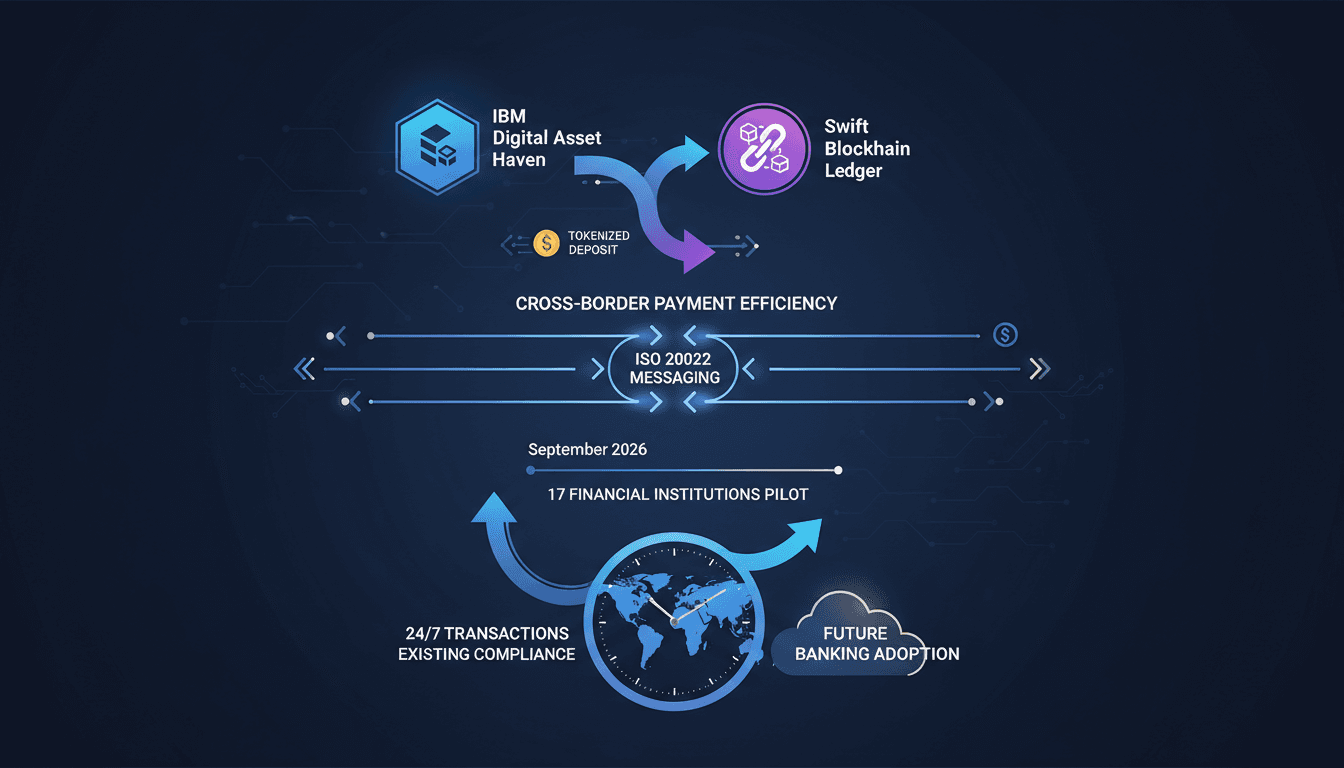
- The integration allows financial institutions to execute tokenized deposit transactions using ISO 20022 payment messages.
- Seventeen banks are piloting this integration, aiming to improve cross-border payment efficiency.
The context you actually need
- Swift's blockchain ledger was developed in collaboration with over 40 financial institutions and launched at Sibos 2025.
- The ledger enables 24/7 cross-border movements of bank-issued tokenized deposits, ensuring final settlement through conventional systems.
- IBM's Digital Asset Haven now supports on-premises deployment, allowing regulated entities to maintain data-center control.
What's really happening
On September 24, 2026, IBM unveiled a beta version of its ISO 20022 Messaging Adapter for Digital Asset Haven, facilitating a connection to Swift’s blockchain-based shared ledger. This integration allows financial institutions to issue tokenized deposit instructions using existing payment message formats, which is crucial for operational familiarity. The adapter translates standard ISO 20022 credit transfer instructions into on-chain actions, eliminating the need for banks to adopt new workflows specific to blockchain technology.
This development comes on the heels of Swift's July 2026 announcement that its blockchain ledger was ready for pilot transactions among 17 participating banks, including major players like HSBC, Citi, and Wells Fargo. The ledger serves as an orchestration layer for bank-issued tokenized deposits, enabling continuous cross-border transactions while ensuring compliance with regulatory standards. This is particularly significant as it positions Swift's offering as a response to the rise of stablecoins, which have been scrutinized for their regulatory implications.
The integration is designed to enhance the efficiency of cross-border payments, a critical area for financial institutions that often face delays and high costs associated with traditional banking systems. By leveraging existing compliance frameworks and operational processes, banks can adopt this new technology without overhauling their current systems. This is expected to accelerate the adoption of tokenized deposits, as banks are more likely to embrace solutions that align with their established practices.
Moreover, the integration supports ongoing pilots by the 17 institutions without disrupting conventional payment systems. Market commentary suggests that the operational familiarity provided by the integration is a key factor driving the adoption of tokenized deposits. As banks become more comfortable with the technology, the potential for widespread implementation increases, paving the way for a more efficient global banking landscape.
Who feels it first (and how)
- Financial institutions: Banks will experience improved transaction efficiency and reduced costs.
- Regulatory bodies: They will need to adapt to the evolving landscape of tokenized deposits and blockchain technology.
- Corporate clients: Businesses engaging in cross-border transactions will benefit from faster and more reliable payment processes.
- UAE-based banks: Institutions like First Abu Dhabi Bank and Mashreq are already participating in pilots, enhancing regional payment capabilities.
What to watch next
- Adoption rates among participating banks: Monitoring how quickly the 17 banks implement the integration will indicate market readiness.
- Regulatory responses: Watch for any changes in regulations regarding tokenized deposits and blockchain technology as adoption increases.
- Expansion of pilot programs: If successful, expect more banks to join the pilot, which could lead to broader industry shifts.
IBM and Swift have successfully integrated their platforms for beta testing.
Increased adoption of tokenized deposits among financial institutions as operational familiarity grows.
The long-term regulatory implications of widespread tokenized deposit usage.
Frequently Asked Questions
- Why it matters?
- This integration enhances the efficiency of international banking transactions while maintaining compliance with existing regulations.
- What happened (in 30 seconds)?
- On September 24, 2026, IBM announced a beta integration of its Digital Asset Haven with Swift’s blockchain ledger. The integration allows financial institutions to execute tokenized deposit transactions using ISO 20022 payment messages. Seventeen banks are piloting this integration, aiming to improve cross-border payment efficiency.
- What's really happening?
- On September 24, 2026, IBM unveiled a beta version of its ISO 20022 Messaging Adapter for Digital Asset Haven, facilitating a connection to Swift’s blockchain-based shared ledger. This integration allows financial institutions to issue tokenized deposit instructions using existing payment message formats, which is crucial for operational familiarity. The adapter translates standard ISO 20022 credit transfer instructions into on-chain actions, eliminating the need for banks to adopt new workflows
- Who feels it first (and how)?
- Financial institutions: Banks will experience improved transaction efficiency and reduced costs. Regulatory bodies: They will need to adapt to the evolving landscape of tokenized deposits and blockchain technology. Corporate clients: Businesses engaging in cross-border transactions will benefit from faster and more reliable payment processes. UAE-based banks: Institutions like First Abu Dhabi Bank and Mashreq are already participating in pilots, enhancing regional payment capabilities.
- What to watch next?
- Adoption rates among participating banks: Monitoring how quickly the 17 banks implement the integration will indicate market readiness. Regulatory responses: Watch for any changes in regulations regarding tokenized deposits and blockchain technology as adoption increases. Expansion of pilot programs: If successful, expect more banks to join the pilot, which could lead to broader industry shifts.
Bitcoin news, technical analysis, and forecasts across crypto markets.
"NewsBTC covers Bitcoin news, technical analysis, and forecasts across crypto markets and major blockchain projects."
— A47 Editor
IBM Connects Banks To Swift’s Blockchain Ledger For Tokenized Deposits
IBM has successfully integrated its Digital Asset Haven with Swift's blockchain-based shared ledger, allowing banks to manage tokenized deposit transactions using existing ISO 20022 payment messages. This beta integration is currently being tested by...
Covers blockchain, cryptocurrency news, project analysis, and market insights.
"Cointelegraph is a leading crypto-focused media outlet known for timely news, analysis, and educational content related to blockchain and digital assets."
— A47 Editor
IBM opens beta Swift ledger link for 24/7 tokenized deposits
IBM has launched a beta link that allows banks to execute tokenized deposit transfers on Swift's ledger, utilizing existing payment messages and compliance processes. This development signifies a step forward in integrating blockchain technology with...
Real-time updates, analysis, and reports on the blockchain and cryptocurrency sectors.
"Crypto News delivers real-time updates, analysis, and reports on the blockchain and cryptocurrency sectors."
— A47 Editor
IBM links Digital Asset Haven to Swift blockchain ledger
IBM has successfully linked its Digital Asset Haven to Swift's blockchain ledger, introducing an on-premises beta version aimed at banks for managing tokenized deposits and stablecoins. This integration enhances the operational capabilities of financ...