
Microsoft Launches Copilot as a New Operating System for Enterprise Work
Why it matters
This update positions Microsoft as a leader in AI-driven productivity tools, reshaping enterprise workflows.
What happened (in 30 seconds)
- On September 25, 2026, Microsoft announced a comprehensive update to its Copilot AI assistant, branding it as a "new OS for work."
- The update introduces three core sections: Home, Code, and Autopilot, enhancing document creation, app development, and task management.
- Rollouts will prioritize enterprise users, with broader previews expected through late 2026.
The context you actually need
- Microsoft has been expanding Copilot since its 2023 launch, integrating it into various platforms like Office 365 and GitHub.
- The announcement follows a shift away from consumer-focused branding, as Microsoft de-emphasized Copilot+ PC due to low interest.
- Previous initiatives like Project Aion explored AI-centric operating systems, setting the stage for this overhaul.
What's really happening
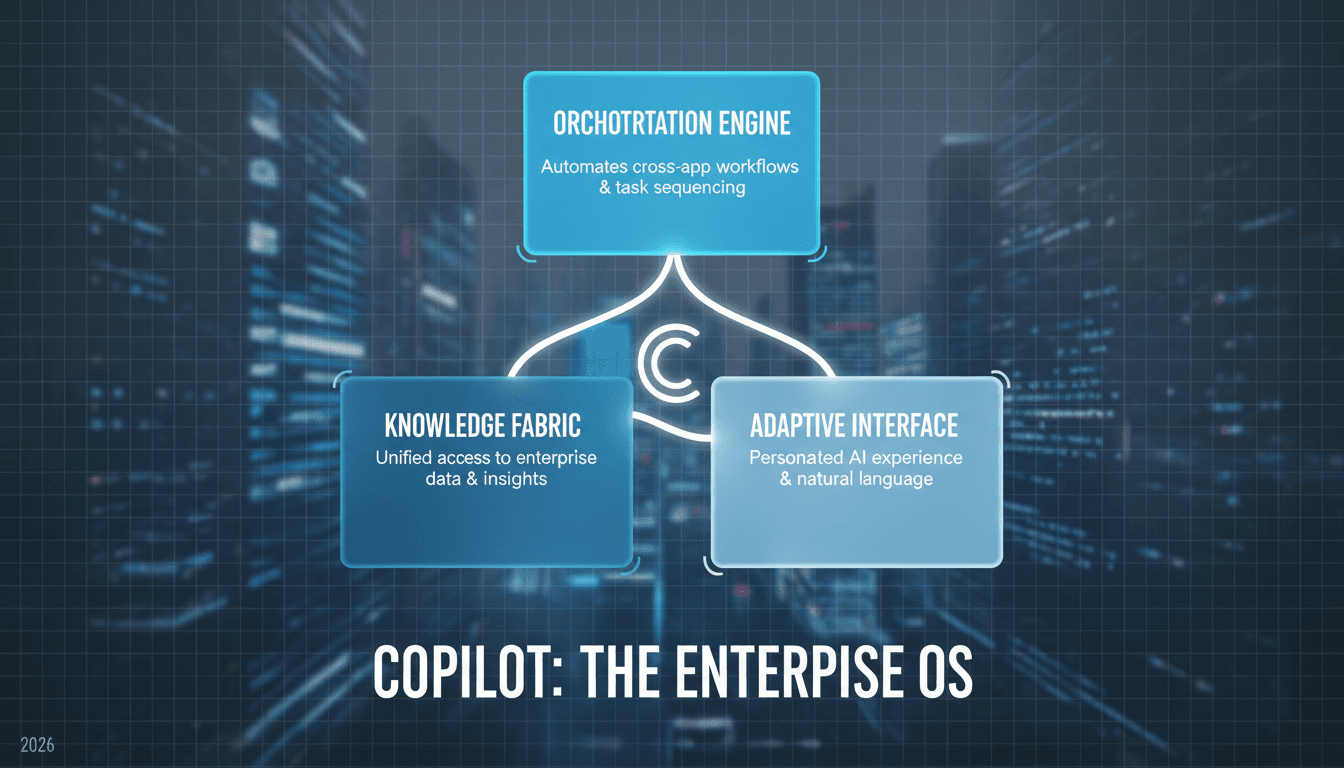
Microsoft's September 2026 announcement marks a pivotal moment in the evolution of workplace productivity tools. The updated Copilot app is designed to function as a comprehensive operating system for enterprise work, integrating advanced AI capabilities across Microsoft 365 tools. This strategic pivot comes in response to the growing demand for AI-driven solutions that enhance productivity and streamline workflows.
The new Copilot features three main sections: Home, Code, and Autopilot. The Home section merges chat functionalities with a Cowork agent, allowing users to draft documents in Word, Excel, and PowerPoint automatically. This integration is particularly significant as it reduces the time spent on routine tasks, enabling employees to focus on higher-value activities. The Code section leverages GitHub Copilot technology to facilitate natural-language app development, allowing users to build applications securely within their organizational environments. This feature is poised to democratize app development, making it accessible to non-technical users.
Autopilot, the rebranded persistent agent, operates continuously to execute role-based objectives across Teams, Outlook, and documents. This capability allows for a seamless workflow, as Autopilot can manage tasks without requiring ongoing user input. The emphasis on enterprise security and financial operations (FinOps) controls for AI spending management further underscores Microsoft's commitment to addressing the unique challenges faced by organizations in adopting AI technologies.
The decision to prioritize enterprise users comes after Microsoft's acknowledgment of limited consumer interest in the Copilot+ PC branding. By focusing on business applications, Microsoft aims to capture a larger share of the enterprise market, where the demand for AI-driven productivity tools is surging. This shift not only positions Microsoft as a frontrunner in the AI space but also reflects a broader trend in the tech industry, where companies are increasingly investing in AI capabilities to enhance operational efficiency.
As the rollout progresses, Microsoft will prioritize participants in its Frontier program, with broader previews scheduled for late 2026. This phased approach allows Microsoft to gather feedback and refine the platform before a full-scale launch, ensuring that it meets the needs of enterprise users effectively.
Who feels it first (and how)
- Enterprise employees: Those in roles requiring document creation and task management will experience immediate benefits.
- IT departments: They will need to adapt to new security protocols and manage the integration of AI tools.
- Developers: Non-technical users will find app development more accessible, while developers may need to adjust to new collaborative workflows.
- C-suite executives: They will be focused on the financial implications of AI adoption and productivity gains.
What to watch next
- User adoption rates: Monitoring how quickly enterprises integrate Copilot will indicate its effectiveness and market reception.
- Feedback from Frontier program participants: Insights from early users will shape future updates and enhancements.
- Competitive responses: Watch for how competitors like Anthropic and OpenAI react to Microsoft's positioning in the enterprise AI space.
Microsoft is focusing on enterprise users with the Copilot overhaul.
The integration of AI tools will lead to increased productivity and efficiency in enterprise settings.
The long-term impact on the competitive landscape among AI-driven productivity tools remains to be seen.
Frequently Asked Questions
- Why it matters?
- This update positions Microsoft as a leader in AI-driven productivity tools, reshaping enterprise workflows.
- What happened (in 30 seconds)?
- On September 25, 2026, Microsoft announced a comprehensive update to its Copilot AI assistant, branding it as a "new OS for work." The update introduces three core sections: Home, Code, and Autopilot, enhancing document creation, app development, and task management. Rollouts will prioritize enterprise users, with broader previews expected through late 2026.
- What's really happening?
- Microsoft's September 2026 announcement marks a pivotal moment in the evolution of workplace productivity tools. The updated Copilot app is designed to function as a comprehensive operating system for enterprise work, integrating advanced AI capabilities across Microsoft 365 tools. This strategic pivot comes in response to the growing demand for AI-driven solutions that enhance productivity and streamline workflows. The new Copilot features three main sections: Home, Code, and Autopilot. The Ho
- Who feels it first (and how)?
- Enterprise employees: Those in roles requiring document creation and task management will experience immediate benefits. IT departments: They will need to adapt to new security protocols and manage the integration of AI tools. Developers: Non-technical users will find app development more accessible, while developers may need to adjust to new collaborative workflows. C-suite executives: They will be focused on the financial implications of AI adoption and productivity gains.
- What to watch next?
- User adoption rates: Monitoring how quickly enterprises integrate Copilot will indicate its effectiveness and market reception. Feedback from Frontier program participants: Insights from early users will shape future updates and enhancements. Competitive responses: Watch for how competitors like Anthropic and OpenAI react to Microsoft's positioning in the enterprise AI space.
Tech news, hardware, and AI tools coverage.
"PC/tech site increasingly covering AI hardware and apps."
— A47 Editor
Microsoft wants Copilot to become an "OS" that writes your documents and manages your work
<a href="https://www.techspot.com/news/113998-microsoft-calls-copilot-biggest-update-new-os.html" target="_blank"><img src="https://www.techspot.com/images2/news/ts3_thumbs/2026/04/2026-04-24-ts3_thumbs-4a7.jpg" width="800" height="560" style="paddin...
Latest AI/ML research news and breakthroughs.
"Aggregated research highlights across institutions."
— A47 Editor
Microsoft integrates Word and Excel more deeply into Copilot
Microsoft has announced a deeper integration of its productivity applications—Word, Excel, and PowerPoint—into its AI-powered assistant, Copilot. This initiative aims to position AI as the primary interface for users of Microsoft’s software suite, en...
AI news with an enterprise and cloud focus.
"Covers AI in the context of data infrastructure, cloud, and enterprise stacks."
— A47 Editor
Microsoft overhauls Copilot with new coding, document editing features
Microsoft Corp. has launched a new version of its Copilot AI assistant within the Microsoft 365 suite, introducing a new Code interface that allows nontechnical users to create simple applications through prompts, enhancing productivity and accessibi...
Daily AI news: models, tools, and policy.
"Independent outlet tracking the fast pace of AI."
— A47 Editor
Microsoft gives Copilot another makeover, adding an Autopilot agent and usage-based billing
Microsoft has announced a significant update to its Copilot application, dividing it into three sections: Home, Code, and a new Autopilot agent. The Autopilot, built on OpenClaw, operates continuously in the cloud, autonomously monitoring Teams chann...
Technology and innovation coverage, including consumer tech and digital transformation stories.
"Emirates 24|7 technology coverage often highlights practical tech developments with relevance to Gulf readers and businesses."
— A47 Editor
Microsoft revamps Copilot with code generation, agentic AI tools
<p>Microsoft on Friday unveiled several new capabilities in its Copilot app, including a coding tool and an always-on AI agent, as the software giantseeks to transform its AI assistant into a one-stop shop for office workers.</p><p>The company is al...
Consumer technology news with AI coverage.
"Gadget and tech site reporting on AI in products."
— A47 Editor
Microsoft's Copilot app adds Office, natural coding and automation
Microsoft has announced an update to its Copilot app, integrating features from Office, enhancing natural coding capabilities, and introducing automation tools. This revamp aims to streamline user experience and improve productivity across various ap...
Covers consumer technology, electronics, gadgets, and product reviews.
"Engadget is a trusted source for gadget reviews and consumer tech news, known for its hands-on analysis and industry coverage."
— A47 Editor
Microsoft's Copilot app adds Office, natural coding and automation
Microsoft has announced an update to its Copilot app, integrating features from Office, enhancing natural coding capabilities, and introducing automation tools. This revamp aims to streamline user experience and improve productivity across various ap...