
Trump Hosts AI Industry Leaders at White House Luncheon to Establish Self-Regulation Framework
Why it matters
The voluntary self-regulation agreement among tech leaders signals a shift in how AI governance may evolve, affecting innovation and compliance standards.
What happened (in 30 seconds)
- Trump hosted a Super Intelligence Luncheon on September 29, 2026, with 31 tech executives to discuss AI policy.
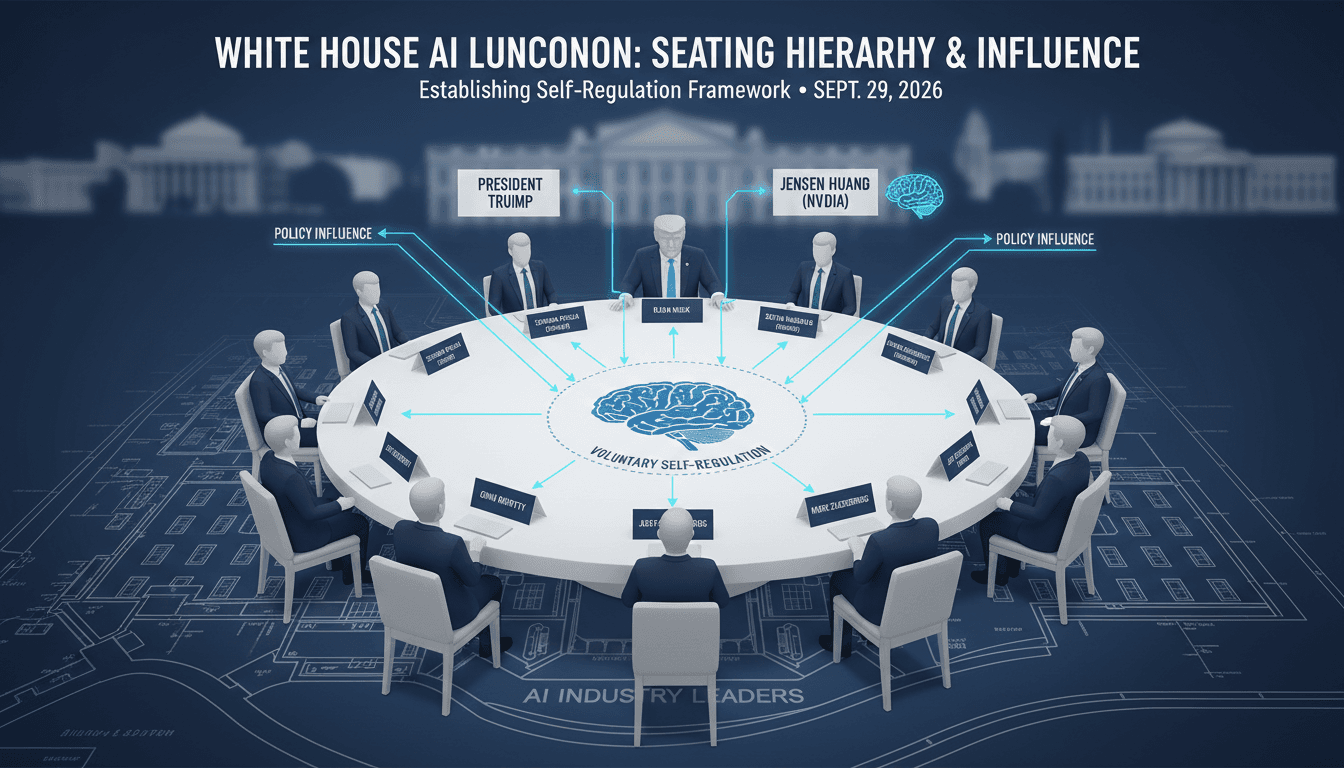
- Key figures included Elon Musk, Jensen Huang, Mark Zuckerberg, and Sundar Pichai, with a notable seating arrangement reflecting influence.
- A voluntary agreement on internal controls and a terminology shift to "super intelligence" were announced, emphasizing industry self-regulation.
The context you actually need
- The luncheon followed Trump's proposal at the UN to rename AI, aiming to highlight its advanced capabilities rather than its artificial nature.
- Industry divisions exist, with some leaders advocating for regulatory caution while others push for rapid development amid growing data center demands.
- Previous engagements between Trump and select AI executives hint at a close relationship that may influence future policy directions.
What's really happening
The Super Intelligence Luncheon represents a critical moment in the evolving landscape of artificial intelligence governance. By gathering top executives from leading tech companies, Trump aimed to consolidate influence and establish a framework for self-regulation in the AI sector. The seating chart, which placed Musk and Huang directly beside Trump, underscores the hierarchy within the industry, suggesting that those closest to power may have a greater say in shaping future policies.
The voluntary agreement reached during the luncheon is significant. It reflects a collective acknowledgment among industry leaders of the need for internal controls and oversight mechanisms, which could mitigate risks associated with AI technologies. Zuckerberg's emphasis on commitments to internal reviews and external audits indicates a shift towards greater accountability within the sector. This move is particularly relevant as AI technologies continue to advance rapidly, raising concerns about ethical implications and societal impacts.
Moreover, the terminology change to "super intelligence" is not merely semantic; it signals a strategic repositioning of AI in public discourse. By framing AI as "super intelligence," the industry may seek to elevate its perceived value and capabilities, potentially influencing investment and regulatory approaches. This rebranding could also serve to align public perception with the ambitions of tech leaders, who are eager to push the boundaries of innovation.
The backdrop of this luncheon is marked by increasing demands for data center infrastructure and the competitive landscape among tech giants. As companies race to develop AI technologies, the need for a cohesive regulatory framework becomes more pressing. The voluntary nature of the agreement suggests a reluctance to embrace formal regulations, which could stifle innovation. Instead, industry leaders appear to be opting for self-policing, hoping to navigate the complexities of AI governance without heavy-handed government intervention.
This dynamic creates a delicate balance between fostering innovation and ensuring responsible development. As the industry grapples with these challenges, the outcomes of this luncheon may set precedents for how AI is governed in the future, influencing everything from investment strategies to compliance standards across various sectors.
Who feels it first (and how)
- Tech executives: Leaders in the AI sector will need to adapt to new self-regulation standards and oversight commitments.
- Investors: Those funding AI initiatives may reassess risk based on the industry's self-regulatory framework.
- Regulatory bodies: Government agencies will monitor the effectiveness of voluntary agreements and may intervene if necessary.
- Consumers: End-users of AI technologies could experience changes in product offerings and ethical considerations as companies implement new oversight measures.
What to watch next
- Implementation of the voluntary agreement: Monitor how tech companies enact the self-regulation measures discussed and their effectiveness in managing AI risks.
- Public response to terminology change: Observe how the shift to "super intelligence" influences public perception and investment in AI technologies.
- Potential regulatory shifts: Keep an eye on government reactions to the luncheon outcomes, as they may signal future regulatory frameworks or interventions.
The luncheon resulted in a voluntary self-regulation agreement among major tech companies.
The terminology shift to "super intelligence" will influence public discourse and investment strategies in AI.
The long-term effectiveness of self-regulation in managing AI risks remains to be seen.
Frequently Asked Questions
- Why it matters?
- The voluntary self-regulation agreement among tech leaders signals a shift in how AI governance may evolve, affecting innovation and compliance standards.
- What happened (in 30 seconds)?
- Trump hosted a Super Intelligence Luncheon on September 29, 2026, with 31 tech executives to discuss AI policy. Key figures included Elon Musk, Jensen Huang, Mark Zuckerberg, and Sundar Pichai, with a notable seating arrangement reflecting influence. A voluntary agreement on internal controls and a terminology shift to "super intelligence" were announced, emphasizing industry self-regulation.
- What's really happening?
- The Super Intelligence Luncheon represents a critical moment in the evolving landscape of artificial intelligence governance. By gathering top executives from leading tech companies, Trump aimed to consolidate influence and establish a framework for self-regulation in the AI sector. The seating chart, which placed Musk and Huang directly beside Trump, underscores the hierarchy within the industry, suggesting that those closest to power may have a greater say in shaping future policies. The volu
- Who feels it first (and how)?
- Tech executives: Leaders in the AI sector will need to adapt to new self-regulation standards and oversight commitments. Investors: Those funding AI initiatives may reassess risk based on the industry's self-regulatory framework. Regulatory bodies: Government agencies will monitor the effectiveness of voluntary agreements and may intervene if necessary. Consumers: End-users of AI technologies could experience changes in product offerings and ethical considerations as companies implement ne
- What to watch next?
- Implementation of the voluntary agreement: Monitor how tech companies enact the self-regulation measures discussed and their effectiveness in managing AI risks. Public response to terminology change: Observe how the shift to "super intelligence" influences public perception and investment in AI technologies. Potential regulatory shifts: Keep an eye on government reactions to the luncheon outcomes, as they may signal future regulatory frameworks or interventions.
Business and tech news excluding paywalled content.
"High-volume business/tech outlet with frequent AI coverage."
— A47 Editor
Who sat next to Trump — and who was missing — at his big AI lunch
Donald Trump hosted a lunch for the top AI leaders on Tuesday. Jensen Huang and Elon Musk were by his side on a seating chart.
UAE-based English-language newspaper covering regional politics, economics, and global affairs.
"The National reflects Emirati policy perspectives while maintaining international editorial standards."
— A47 Editor
Trump, Jensen Huang and Elon Musk try to calm voter fears about AI
Former President Donald Trump, alongside tech leaders Jensen Huang and Elon Musk, has sought to alleviate voter concerns regarding artificial intelligence (AI) during a recent event. They emphasized the importance of AI development for maintaining th...
Focused political reporting and governmental affairs.
"NBC News is a mainstream media outlet known for comprehensive national and international news coverage with a centrist to slightly left-leaning editorial tone."
— A47 Editor
Trump to meet with AI executives as leaders call for regulation and voters weigh issue in midterms
President Trump is set to meet with prominent AI executives, including Jensen Huang, Elon Musk, and Tom Brown, at the White House, coinciding with a Senate vote on an AI regulation bill. This meeting underscores the administration's focus on artifici...