
OpenAI Launches Persistent Reusable Cloud Environments for Codex Agent
If you're a developer, this update could streamline your workflow and enhance collaboration across devices.
Why it matters
This innovation reflects a significant shift in software development practices, emphasizing efficiency and collaboration in an increasingly remote work environment.
What happened (in 30 seconds)
- OpenAI announced reusable cloud environments for its Codex software engineering agent on September 29, 2026.
- These environments allow persistent, configurable workspaces that can be accessed across multiple devices.
- Additional features include voice-directed operations, enhanced code review tools, and security enhancements.
The context you actually need
- Prior limitations of Codex included isolated cloud tasks that lacked persistence and cross-device accessibility.
- Industry trends are moving towards AI-assisted software engineering, making these updates timely and relevant.
- OpenAI's enhancements build on existing integrations with platforms like GitHub, indicating a focus on seamless developer experiences.
What's really happening
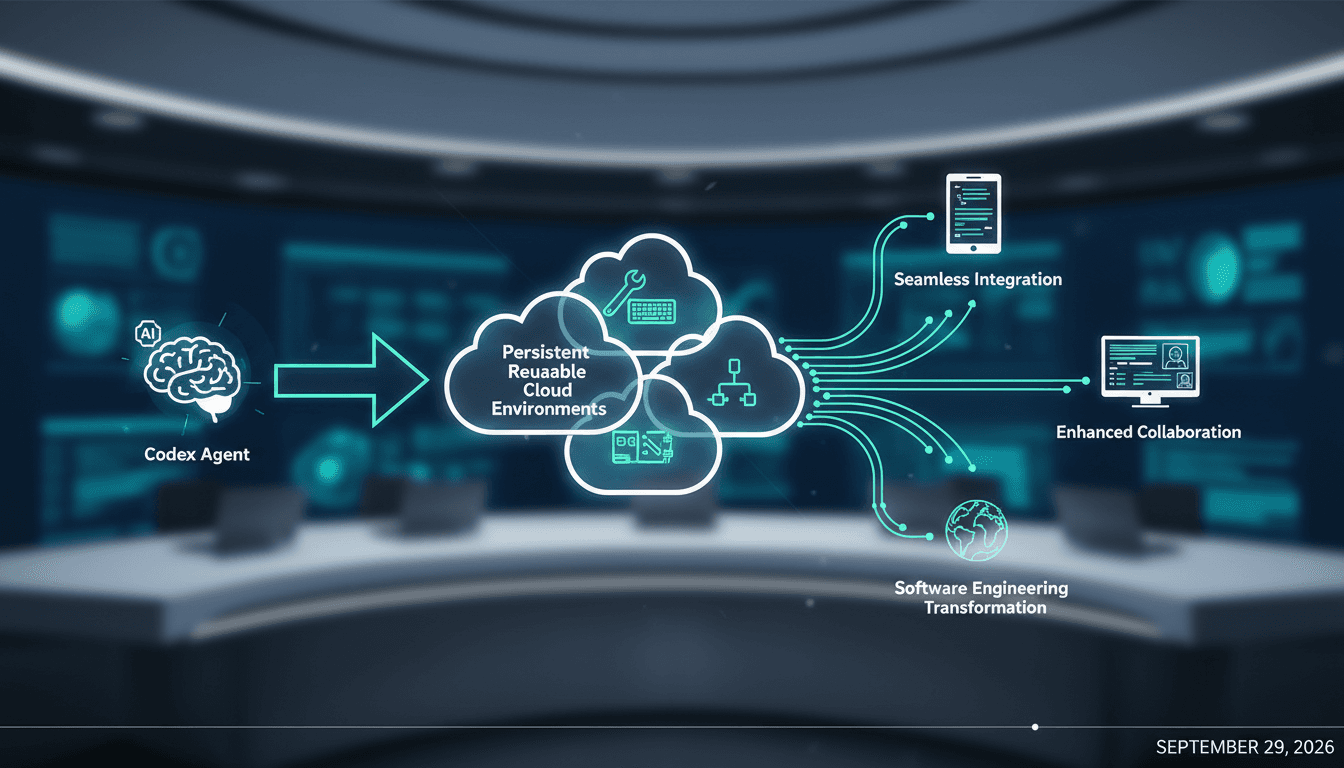
On September 29, 2026, OpenAI unveiled a transformative update to its Codex software engineering agent during its DevDay event. The introduction of reusable cloud environments marks a pivotal shift in how developers interact with cloud-based tools. Previously, Codex allowed for remote cloud tasks, but each task operated in isolation, lacking the ability to retain state or configurations across sessions. This update changes the game by enabling developers to create persistent workspaces that capture project dependencies, tools, and configurations for reuse across multiple tasks.
The new environments allow developers to launch tasks in isolated workspaces that are cloned from a published environment. This means that work can continue even when local devices are offline, significantly enhancing productivity. The ability to recover a task's state for up to seven days after its last use is a notable feature, ensuring that developers can pick up where they left off without losing progress.
In addition to the reusable environments, OpenAI announced several complementary features that enhance the Codex experience. Voice-directed operations through the Codex CLI allow for hands-free coding, while the new /agents view facilitates task delegation among team members. Enhanced code review tools integrated within the ChatGPT desktop app aim to streamline the development process, making it easier for teams to collaborate and maintain code quality. Furthermore, the Codex Security Cloud introduces repository scanning and automated fixes, addressing security concerns that are increasingly critical in software development.
These updates align with broader industry trends towards AI-assisted software engineering agents and persistent cloud workspaces. As companies increasingly adopt remote work models, the demand for tools that facilitate collaboration and efficiency is growing. OpenAI's enhancements position Codex as a leading solution in this evolving landscape, potentially reshaping how software development teams operate.
Who feels it first (and how)
- Software Developers: They will benefit from improved workflows and collaboration tools.
- Tech Startups: Startups can leverage these features to enhance productivity and reduce time-to-market.
- Remote Teams: Teams working across different locations will find the persistent environments particularly useful for maintaining continuity.
What to watch next
- Adoption Rates: Monitor how quickly developers and companies integrate these new features into their workflows, as this will indicate market acceptance.
- Competitive Responses: Watch for reactions from other tech companies offering similar tools, as this could signal shifts in the competitive landscape.
- User Feedback: Pay attention to developer feedback on the usability and effectiveness of these new features, which will inform future updates and enhancements.
OpenAI has rolled out the reusable cloud environments to users.
Increased adoption of AI-assisted tools in software development will continue as remote work persists.
The long-term impact on traditional software development practices remains to be seen.
Frequently Asked Questions
- Why it matters?
- This innovation reflects a significant shift in software development practices, emphasizing efficiency and collaboration in an increasingly remote work environment.
- What happened (in 30 seconds)?
- OpenAI announced reusable cloud environments for its Codex software engineering agent on September 29, 2026. These environments allow persistent, configurable workspaces that can be accessed across multiple devices. Additional features include voice-directed operations, enhanced code review tools, and security enhancements.
- What's really happening?
- On September 29, 2026, OpenAI unveiled a transformative update to its Codex software engineering agent during its DevDay event. The introduction of reusable cloud environments marks a pivotal shift in how developers interact with cloud-based tools. Previously, Codex allowed for remote cloud tasks, but each task operated in isolation, lacking the ability to retain state or configurations across sessions. This update changes the game by enabling developers to create persistent workspaces that capt
- Who feels it first (and how)?
- Software Developers: They will benefit from improved workflows and collaboration tools. Tech Startups: Startups can leverage these features to enhance productivity and reduce time-to-market. Remote Teams: Teams working across different locations will find the persistent environments particularly useful for maintaining continuity.
- What to watch next?
- Adoption Rates: Monitor how quickly developers and companies integrate these new features into their workflows, as this will indicate market acceptance. Competitive Responses: Watch for reactions from other tech companies offering similar tools, as this could signal shifts in the competitive landscape. User Feedback: Pay attention to developer feedback on the usability and effectiveness of these new features, which will inform future updates and enhancements.
Startup news with frequent AI coverage.
"Covers launches, funding, and product updates in AI."
— A47 Editor
OpenAI gives Codex reusable cloud environments that work across devices
OpenAI has announced enhancements to its Codex platform, introducing reusable cloud development environments, a revamped command-line interface with voice controls, new code review tools, and a security-focused product for scanning repositories and p...
Daily AI news: models, tools, and policy.
"Independent outlet tracking the fast pace of AI."
— A47 Editor
OpenAI expands Codex and its API at DevDay with security scans, a Decisions API, and Ultrafast
At DevDay 2026, OpenAI announced significant enhancements to its Codex platform, including reusable cloud environments, automatic security scans for GitHub repositories, and a new Decisions API for rapid decision-making. The Ultrafast premium tier wa...
Microsoft developer news including AI tooling.
"Covers .NET/VS features intersecting with AI workloads."
— A47 Editor
Hands-On With OpenAI's Mandatory Custom GPT-to-Plugin Migration (Deadline Coming)
OpenAI is transitioning from Custom GPTs to a new plugin system that incorporates reusable skills, reference files, and connected tools, with a deadline for migration approaching. This change also affects developers through Codex, which is now integr...