
OpenAI Launches textGrain Watermarking for ChatGPT and Codex in EU
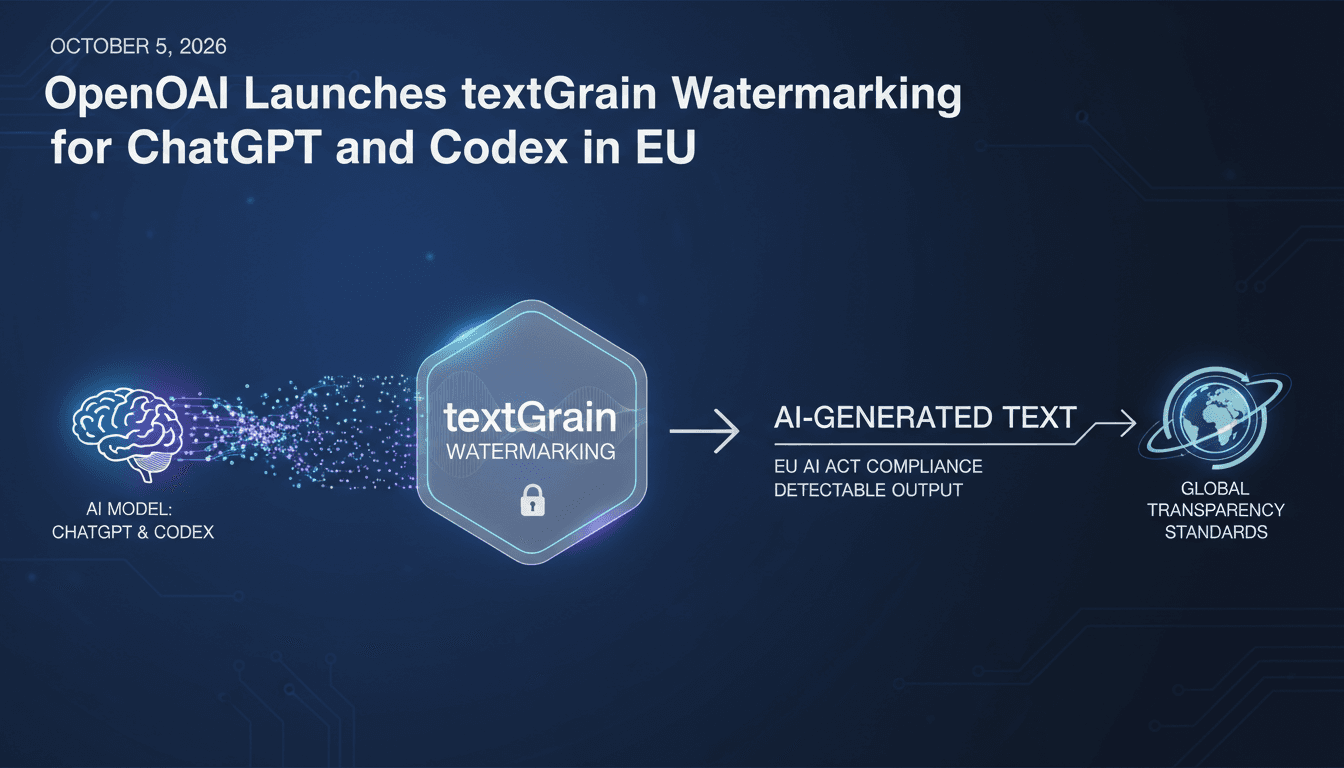
If you're in the EU, your interactions with ChatGPT and Codex will now include a statistical watermark, enhancing transparency in AI-generated content.
Why it matters
This move aligns OpenAI with EU regulations, setting a precedent for AI transparency and accountability.
What happened (in 30 seconds)
- OpenAI announced the phased rollout of its textGrain watermarking technology for ChatGPT and Codex outputs in the EU on October 5, 2026.
- The watermarking system embeds a statistical signal into text outputs, allowing for machine detection without altering the visible content.
- This initiative complies with Article 50 of the EU AI Act, which mandates detectable AI-generated text.
The context you actually need
- The EU AI Act requires generative AI systems to produce machine-detectable text outputs, effective from August 2026 for new entrants and December 2026 for existing providers.
- OpenAI's textGrain technology modifies token selection probabilities using a secret key, achieving an 80% detection rate for 200-token samples.
- The rollout targets eligible EU users, while global API customers can opt in for select models, with detector access limited to approved researchers.
What's really happening
On October 5, 2026, OpenAI unveiled its textGrain watermarking technology, a significant step towards compliance with the EU AI Act. This technology embeds an imperceptible statistical pattern into the word choices of AI-generated text, allowing for machine detection without visible alterations. The system achieves approximately 80% detection accuracy for 200-token samples at a 1% false positive rate, with performance improving for longer texts. However, it struggles with short texts, mathematical content, or when synonyms are substituted.
The decision to implement textGrain stems from OpenAI's commitment to transparency and regulatory compliance. The EU AI Act's Article 50 mandates that AI-generated content must be detectable, pushing companies like OpenAI to innovate in this space. The watermarking technology is designed to ensure that users can identify AI-generated text, which is crucial for maintaining trust in AI systems.
OpenAI's phased rollout will first target eligible users in the EU, with plans to gather real-world feedback before broader deployment. This cautious approach reflects the company's desire to refine the technology based on user experiences. Meanwhile, global API customers can opt in for select models, allowing them to leverage the watermarking feature if they choose.
The detector tool, however, will initially be restricted to vetted researchers and institutions, limiting its availability to the general public. OpenAI has also confirmed that no user identification or prompt logging occurs, addressing privacy concerns that often accompany AI technologies.
As other AI providers, such as Anthropic and Google, face similar compliance timelines, the competitive landscape may shift. OpenAI's benchmark performance parity with and without watermarking suggests that the technology will not hinder user experience, which is critical for maintaining its user base.
Who feels it first (and how)
- EU-based ChatGPT and Codex users: They will experience the watermarking directly in their interactions.
- AI developers and researchers: Those working on compliance and transparency will need to adapt to new standards.
- Regulatory bodies: They will monitor the effectiveness of the watermarking in ensuring compliance with the EU AI Act.
What to watch next
- User feedback: Monitor how EU users respond to the watermarking feature and its impact on their trust in AI-generated content.
- Adoption rates: Watch for the uptake of the opt-in feature among global API customers, which could indicate broader market trends.
- Regulatory developments: Keep an eye on how other AI providers respond to similar compliance requirements and the potential for new regulations.
OpenAI's textGrain watermarking technology is rolling out in the EU.
Other AI providers will follow suit to comply with the EU AI Act.
The long-term impact of watermarking on user trust and AI adoption rates remains to be seen.
Frequently Asked Questions
- Why it matters?
- This move aligns OpenAI with EU regulations, setting a precedent for AI transparency and accountability.
- What happened (in 30 seconds)?
- OpenAI announced the phased rollout of its textGrain watermarking technology for ChatGPT and Codex outputs in the EU on October 5, 2026. The watermarking system embeds a statistical signal into text outputs, allowing for machine detection without altering the visible content. This initiative complies with Article 50 of the EU AI Act, which mandates detectable AI-generated text.
- What's really happening?
- On October 5, 2026, OpenAI unveiled its textGrain watermarking technology, a significant step towards compliance with the EU AI Act. This technology embeds an imperceptible statistical pattern into the word choices of AI-generated text, allowing for machine detection without visible alterations. The system achieves approximately 80% detection accuracy for 200-token samples at a 1% false positive rate, with performance improving for longer texts. However, it struggles with short texts, mathematic
- Who feels it first (and how)?
- EU-based ChatGPT and Codex users: They will experience the watermarking directly in their interactions. AI developers and researchers: Those working on compliance and transparency will need to adapt to new standards. Regulatory bodies: They will monitor the effectiveness of the watermarking in ensuring compliance with the EU AI Act.
- What to watch next?
- User feedback: Monitor how EU users respond to the watermarking feature and its impact on their trust in AI-generated content. Adoption rates: Watch for the uptake of the opt-in feature among global API customers, which could indicate broader market trends. Regulatory developments: Keep an eye on how other AI providers respond to similar compliance requirements and the potential for new regulations.
Arabic tech news covering startups, apps, AI, and gadgets.
"AITnews is a well-known Arabic technology outlet covering regional tech developments."
— A47 Editor
بصمة لا تُرى.. ChatGPT يبدأ وضع علامة مائية خفية في النصوص والأكواد التي يولدها
OpenAI is set to implement an invisible digital watermark in the texts and codes generated by its ChatGPT models in the European Union, aligning with new transparency regulations mandated by the European AI Act. This initiative aims to enhance accoun...
Startup news with frequent AI coverage.
"Covers launches, funding, and product updates in AI."
— A47 Editor
OpenAI will start watermarking ChatGPT’s text in the EU
OpenAI has announced that it will implement watermarking for text generated by its ChatGPT and Codex models in the European Union, in compliance with the AI Act. This digital watermarking, referred to as textGrain, aims to enhance transparency and tr...
Consumer technology news with AI coverage.
"Gadget and tech site reporting on AI in products."
— A47 Editor
OpenAI will add a digital watermark to text and code generated in the EU
OpenAI has announced the implementation of a digital watermark for text and code generated by its AI models in the European Union, aligning with new EU regulations aimed at enhancing AI transparency. This watermarking feature, known as textGrain, wil...
Covers consumer technology, electronics, gadgets, and product reviews.
"Engadget is a trusted source for gadget reviews and consumer tech news, known for its hands-on analysis and industry coverage."
— A47 Editor
OpenAI will add a digital watermark to text and code generated in the EU
OpenAI has announced the implementation of a digital watermark for text and code generated by its AI models in the European Union, aligning with new EU regulations aimed at enhancing AI transparency. This watermarking feature, known as textGrain, wil...
Consumer tech and culture with frequent AI coverage.
"Influential tech outlet covering AI products and policy."
— A47 Editor
OpenAI is adding text watermarking in ChatGPT and Codex
OpenAI has announced the rollout of an invisible, machine-readable text watermarking feature in its ChatGPT and Codex products, initially available to users in the European Union. This watermarking, known as textGrain, is designed to enhance the trac...
Tech news, reviews, and analysis of consumer electronics, science, art, and culture.
"The Verge is a technology-focused media outlet known for in-depth reporting, product reviews, and coverage of the intersection between technology and culture."
— A47 Editor
OpenAI is adding text watermarking in ChatGPT and Codex
OpenAI has announced the rollout of an invisible, machine-readable text watermarking feature in its ChatGPT and Codex products, initially available to users in the European Union. This watermarking, known as textGrain, is designed to enhance the trac...
Daily AI news: models, tools, and policy.
"Independent outlet tracking the fast pace of AI."
— A47 Editor
OpenAI will watermark ChatGPT text in the EU but makes it optional for API users worldwide
OpenAI has announced the implementation of invisible textGrain watermarks for ChatGPT outputs in the European Union, while allowing API users globally to opt out of this feature. This decision aligns with new EU regulations aimed at enhancing AI tran...
Curated tech headlines including AI stories.
"Influential aggregator surfacing the day’s top tech/AI links."
— A47 Editor
To comply with the EU AI Act, OpenAI plans to add text watermarking for ChatGPT and Codex users in the EU and an opt-in setting for API customers globally (OpenAI)
OpenAI has announced plans to implement text watermarking for its ChatGPT and Codex users in the European Union, as part of its compliance with the EU AI Act. This feature will allow API customers globally to opt-in to watermarking for select models ...