
Super Micro Contractor Admits Guilt in $2.5 Billion AI Technology Export Scheme to China
Why it matters
The diversion of advanced AI technology to China raises significant national security concerns and could impact global tech supply chains.
What happened (in 30 seconds)
- Ting-Wei 'Willy' Sun pleaded guilty to conspiring to illegally export Nvidia AI chip servers to China.
- Super Micro Computer is implicated in a scheme involving $2.5 billion worth of diverted technology, but the company itself is not charged.
- U.S. authorities are ramping up enforcement actions against export violations, particularly concerning advanced AI hardware.
The context you actually need
- U.S.-China tech rivalry: The competition for AI dominance has led to strict export controls on advanced technology, particularly Nvidia chips.
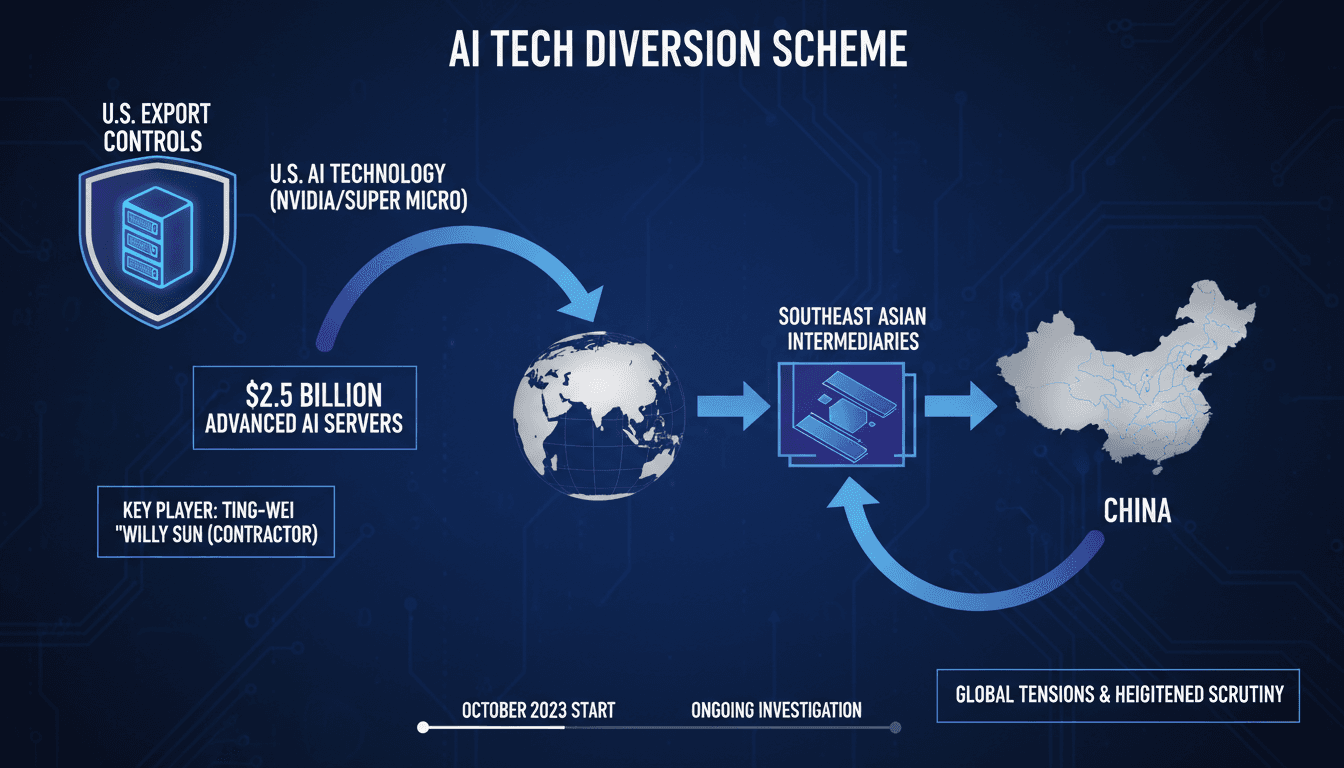
- Southeast Asian intermediaries: The scheme utilized a pass-through entity to obscure the true destination of the servers, highlighting vulnerabilities in export compliance.
- Ongoing investigations: Additional indictments related to similar export violations indicate a broader crackdown on illegal technology transfers.
What's really happening
The guilty plea from Ting-Wei 'Willy' Sun marks a significant moment in the ongoing U.S.-China tech rivalry, particularly in the realm of artificial intelligence. The case revolves around the illegal export of advanced Nvidia AI chip servers, valued at approximately $2.5 billion, to China. This diversion scheme, which began around October 2023, involved a complex web of deceit, including the use of fabricated documents and dummy servers to mislead U.S. authorities.
The underlying mechanism of this scheme reflects a growing trend among companies to exploit loopholes in export regulations, particularly in high-stakes sectors like AI. As the U.S. government tightens its grip on technology exports to China, companies may feel pressured to find alternative routes to maintain market access. This creates a precarious balance between compliance and competitiveness, where the temptation to circumvent regulations can lead to severe legal repercussions.
The implications of this case extend beyond the individuals involved. Super Micro Computer, while not charged, has faced significant stock volatility since the initial indictment in March 2026. The company's public statements emphasize its lack of involvement, yet the shadow of this scandal looms large over its operations and reputation. The ongoing investigations into related parties, such as Earthmade Computer's CEO for similar violations, suggest that this is just the tip of the iceberg in a larger crackdown on export control violations.
As the U.S. continues to enforce stringent export laws, companies operating in the tech sector must navigate an increasingly complex regulatory landscape. The risk of legal action not only threatens individual companies but also has broader implications for the global tech supply chain. The diversion of advanced AI technology to China could potentially enhance its capabilities, raising national security concerns and prompting further restrictions on technology exports.
In summary, this case serves as a cautionary tale for companies involved in high-tech exports. The interplay between compliance, competition, and national security will shape the future of the tech industry, particularly as the U.S. and China continue to vie for dominance in artificial intelligence.
Who feels it first (and how)
- Tech companies: Increased scrutiny and potential legal risks for firms involved in AI and advanced technology exports.
- Investors: Stock volatility and market uncertainty surrounding companies implicated in export violations.
- Regulatory bodies: Heightened enforcement actions and resource allocation to monitor compliance in the tech sector.
What to watch next
- Increased enforcement actions: Watch for more indictments and legal actions against companies involved in export violations, which could reshape compliance strategies.
- Regulatory changes: Monitor potential updates to export control laws that may further restrict technology transfers to China.
- Market reactions: Observe how stock prices of tech companies fluctuate in response to ongoing investigations and legal outcomes.
Ting-Wei 'Willy' Sun has pleaded guilty to export control violations.
Additional indictments and enforcement actions will emerge as U.S. authorities continue their crackdown.
The long-term impact on Super Micro's operations and stock performance remains uncertain.
Frequently Asked Questions
- Why it matters?
- The diversion of advanced AI technology to China raises significant national security concerns and could impact global tech supply chains.
- What happened (in 30 seconds)?
- Ting-Wei 'Willy' Sun pleaded guilty to conspiring to illegally export Nvidia AI chip servers to China. Super Micro Computer is implicated in a scheme involving $2.5 billion worth of diverted technology, but the company itself is not charged. U.S. authorities are ramping up enforcement actions against export violations, particularly concerning advanced AI hardware.
- What's really happening?
- The guilty plea from Ting-Wei 'Willy' Sun marks a significant moment in the ongoing U.S.-China tech rivalry, particularly in the realm of artificial intelligence. The case revolves around the illegal export of advanced Nvidia AI chip servers, valued at approximately $2.5 billion, to China. This diversion scheme, which began around October 2023, involved a complex web of deceit, including the use of fabricated documents and dummy servers to mislead U.S. authorities. The underlying mechanism of t
- Who feels it first (and how)?
- Tech companies: Increased scrutiny and potential legal risks for firms involved in AI and advanced technology exports. Investors: Stock volatility and market uncertainty surrounding companies implicated in export violations. Regulatory bodies: Heightened enforcement actions and resource allocation to monitor compliance in the tech sector.
- What to watch next?
- Increased enforcement actions: Watch for more indictments and legal actions against companies involved in export violations, which could reshape compliance strategies. Regulatory changes: Monitor potential updates to export control laws that may further restrict technology transfers to China. Market reactions: Observe how stock prices of tech companies fluctuate in response to ongoing investigations and legal outcomes.
Market-moving headlines impacting equities, bonds, and related risk assets.
"Real-time catalysts and volatility drivers across indices and sectors."
— A47 Editor
Super Micro contractor pleads guilty in scheme to divert AI servers with Nvidia chips to China
A contractor for Super Micro has pleaded guilty to a scheme involving the diversion of AI servers equipped with Nvidia chips to China, raising concerns about the security and integrity of sensitive technology transfers. This case highlights the ongoi...
Curated tech headlines including AI stories.
"Influential aggregator surfacing the day’s top tech/AI links."
— A47 Editor
A man US authorities called a "fixer", who was charged alongside Super Micro co-founder Yih-Shyan Liaw with smuggling restricted chips to China, pleaded guilty (Bob Van Voris/Bloomberg)
A man identified by U.S. authorities as a 'fixer' has pleaded guilty to charges of conspiring with Super Micro co-founder Yih-Shyan Liaw to smuggle advanced AI chips to China, violating U.S. export controls. This plea underscores the serious legal re...
Research, news, and analysis on blockchain startups, DeFi, and regulations.
"Crypto Briefing provides research, news, and analysis on blockchain startups, DeFi, and crypto regulations with investor-focused coverage."
— A47 Editor
Super Micro contractor pleads guilty in Nvidia AI chip rerouting scheme
A contractor for Super Micro has pleaded guilty in a scheme involving the rerouting of Nvidia AI chips, highlighting significant challenges in enforcing export controls. This plea raises concerns about compliance with regulations and the potential fo...
Technology business and AI-related headlines.
"Data-driven tech newsroom with global scope."
— A47 Editor
Super Micro Case ‘Fixer’ Pleads Guilty to Diverting AI Tech
A man associated with Super Micro Computer Inc. and its co-founder Yih-Shyan “Wally” Liaw has pleaded guilty to charges of conspiring to illegally divert advanced AI technology to China, violating U.S. export controls. This plea highlights serious le...
Technology business news, market impacts, and innovation trends.
"Bloomberg is a premier financial and tech news provider, respected for its in-depth reporting and analytical rigor."
— A47 Editor
Super Micro Case ‘Fixer’ Pleads Guilty to Diverting AI Tech
A man associated with Super Micro Computer Inc. and its co-founder Yih-Shyan “Wally” Liaw has pleaded guilty to charges of conspiring to illegally divert advanced AI technology to China, violating U.S. export controls. This plea highlights serious le...