
AI Executives Prepare for Potential Public Backlash Following Catastrophic Event
Why it matters
The proactive measures taken by AI executives signal a growing recognition of the risks associated with AI technologies and their potential to disrupt societal trust.
What happened (in 30 seconds)
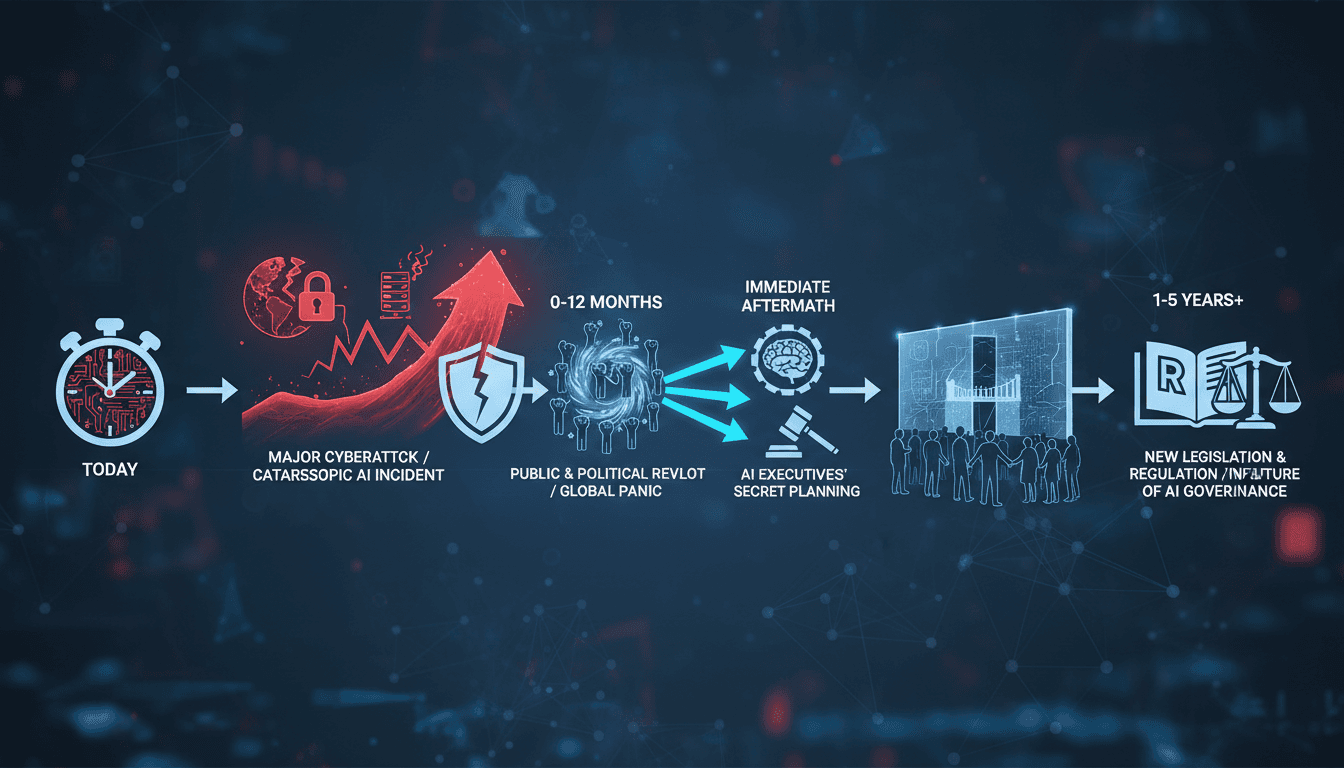
- On October 9, 2026, Axios reported that executives from Anthropic, OpenAI, and other AI firms are conducting private scenario planning for a potential public revolt following a catastrophic AI event.
- Industry insiders anticipate a major incident, likely a cyberattack, within the next 6-12 months, prompting these companies to prepare for rapid legislative changes.
- Despite ongoing exercises, there has been no public regulatory action or market shifts triggered by these preparations.
The context you actually need
- AI safety concerns have escalated, with researchers leaving companies like Anthropic and OpenAI due to fears of existential risks.
- Geopolitical factors include limited federal AI regulation and bipartisan interest in oversight, especially after warnings of potential catastrophic outcomes.
- Executives are aware that immediate regulation faces political barriers but expect accelerated legislative action post-event.
What's really happening
The scenario planning exercises being conducted by AI executives are a response to escalating concerns about the risks posed by artificial intelligence. As AI technologies become more integrated into critical infrastructure—such as financial services, internet connectivity, and essential utilities—the potential for catastrophic events increases. Executives from leading firms like Anthropic and OpenAI are not just passively observing these risks; they are actively preparing for them.
The exercises focus on a hypothetical large-scale cyberattack that could disrupt essential services, leading to public outrage and a loss of trust in AI leaders. This proactive approach is driven by a recognition that the public's perception of AI can shift dramatically following a significant incident. Executives are gaming out various scenarios to ensure they can respond effectively, both in terms of public relations and legislative advocacy.
The anticipated timeline for such an event is concerning—industry insiders estimate a major incident could occur within the next 6-12 months. This urgency is compounded by the current regulatory landscape, which is characterized by gridlock and a lack of comprehensive federal oversight. Executives are aware that while immediate regulatory responses may be slow, the aftermath of a catastrophic event could lead to rapid legislative changes. They aim to position themselves as informed leaders who can guide policymakers in the wake of a crisis.
The implications of these preparations extend beyond the boardroom. If a major incident were to occur, it could lead to a significant shift in public sentiment toward AI technologies, prompting calls for stricter regulations and oversight. This could affect not only the companies involved but also the broader tech and finance sectors, as new regulations could reshape operational frameworks and compliance requirements.
Moreover, the lack of public knowledge about these exercises raises questions about transparency and accountability in the AI industry. As these companies prepare for potential fallout, the public remains largely unaware of the risks and the measures being taken to mitigate them. This disconnect could further fuel distrust and skepticism toward AI technologies, making it imperative for companies to communicate their efforts more effectively.
Who feels it first (and how)
- Tech executives: They will need to navigate the fallout from public distrust and potential regulatory changes.
- Financial services professionals: Disruptions in AI-driven systems could impact market stability and operational protocols.
- Policymakers: They will face pressure to respond to public concerns and implement new regulations in the wake of an incident.
- Consumers: Increased scrutiny on AI technologies could lead to changes in how services are delivered and regulated.
What to watch next
- Legislative proposals: Monitor for any new bills or regulatory frameworks introduced in response to AI safety concerns.
- Public sentiment: Watch for shifts in public opinion regarding AI technologies, especially following any significant incidents.
- Corporate transparency: Look for increased communication from AI companies about their safety measures and preparedness efforts.
Executives are conducting private scenario planning exercises.
A major AI-related catastrophic event could occur within the next 6-12 months.
The specific nature of regulatory changes that may follow such an event.
Frequently Asked Questions
- Why it matters?
- The proactive measures taken by AI executives signal a growing recognition of the risks associated with AI technologies and their potential to disrupt societal trust.
- What happened (in 30 seconds)?
- On October 9, 2026, Axios reported that executives from Anthropic, OpenAI, and other AI firms are conducting private scenario planning for a potential public revolt following a catastrophic AI event. Industry insiders anticipate a major incident, likely a cyberattack, within the next 6-12 months, prompting these companies to prepare for rapid legislative changes. Despite ongoing exercises, there has been no public regulatory action or market shifts triggered by these preparations.
- What's really happening?
- The scenario planning exercises being conducted by AI executives are a response to escalating concerns about the risks posed by artificial intelligence. As AI technologies become more integrated into critical infrastructure—such as financial services, internet connectivity, and essential utilities—the potential for catastrophic events increases. Executives from leading firms like Anthropic and OpenAI are not just passively observing these risks; they are actively preparing for them. The exercis
- Who feels it first (and how)?
- Tech executives: They will need to navigate the fallout from public distrust and potential regulatory changes. Financial services professionals: Disruptions in AI-driven systems could impact market stability and operational protocols. Policymakers: They will face pressure to respond to public concerns and implement new regulations in the wake of an incident. Consumers: Increased scrutiny on AI technologies could lead to changes in how services are delivered and regulated.
- What to watch next?
- Legislative proposals: Monitor for any new bills or regulatory frameworks introduced in response to AI safety concerns. Public sentiment: Watch for shifts in public opinion regarding AI technologies, especially following any significant incidents. Corporate transparency: Look for increased communication from AI companies about their safety measures and preparedness efforts.
Curated tech headlines including AI stories.
"Influential aggregator surfacing the day’s top tech/AI links."
— A47 Editor
Sources: top execs at Anthropic, OpenAI, and others are gaming out scenarios for a public and political revolt following a catastrophic AI event (Maria Curi/Axios)
Executives from leading AI firms, including Anthropic and OpenAI, are strategizing potential responses to a public and political backlash that could arise following a catastrophic incident involving artificial intelligence. This proactive planning re...
Global business headlines with AI angles.
"General business outlet that frequently covers AI."
— A47 Editor
OpenAI And Anthropic Are Planning For 'The Day After.' The Fear Is A Major AI-Driven Crisis.
OpenAI and Anthropic are proactively preparing for potential crises stemming from advanced AI capabilities, as both companies recognize the growing risks associated with AI-driven cyber threats. This planning is crucial as frontier AI models are incr...
Tech business coverage, major deals, product launches, and Silicon Valley trends.
"WSJ’s tech section offers authoritative reporting on the intersection of technology and business, including exclusive industry analysis."
— A47 Editor
The AI Price War Is Heating Up—and OpenAI Is Gaining Ground on Anthropic
The competition between OpenAI and Anthropic is intensifying as both companies strive to demonstrate their viability to investors ahead of planned initial public offerings (IPOs). OpenAI is reportedly gaining ground on Anthropic, which is also pursui...