
Microsoft CEO Proposes New AI Safety Framework Amid Rising Concerns
Why it matters
The proposal signals a shift in how companies will manage AI risks, potentially reshaping industry standards and regulatory expectations.
What happened (in 30 seconds)
- On October 10, 2026, Microsoft CEO Satya Nadella proposed a framework for treating advanced AI systems as potential insider risks.
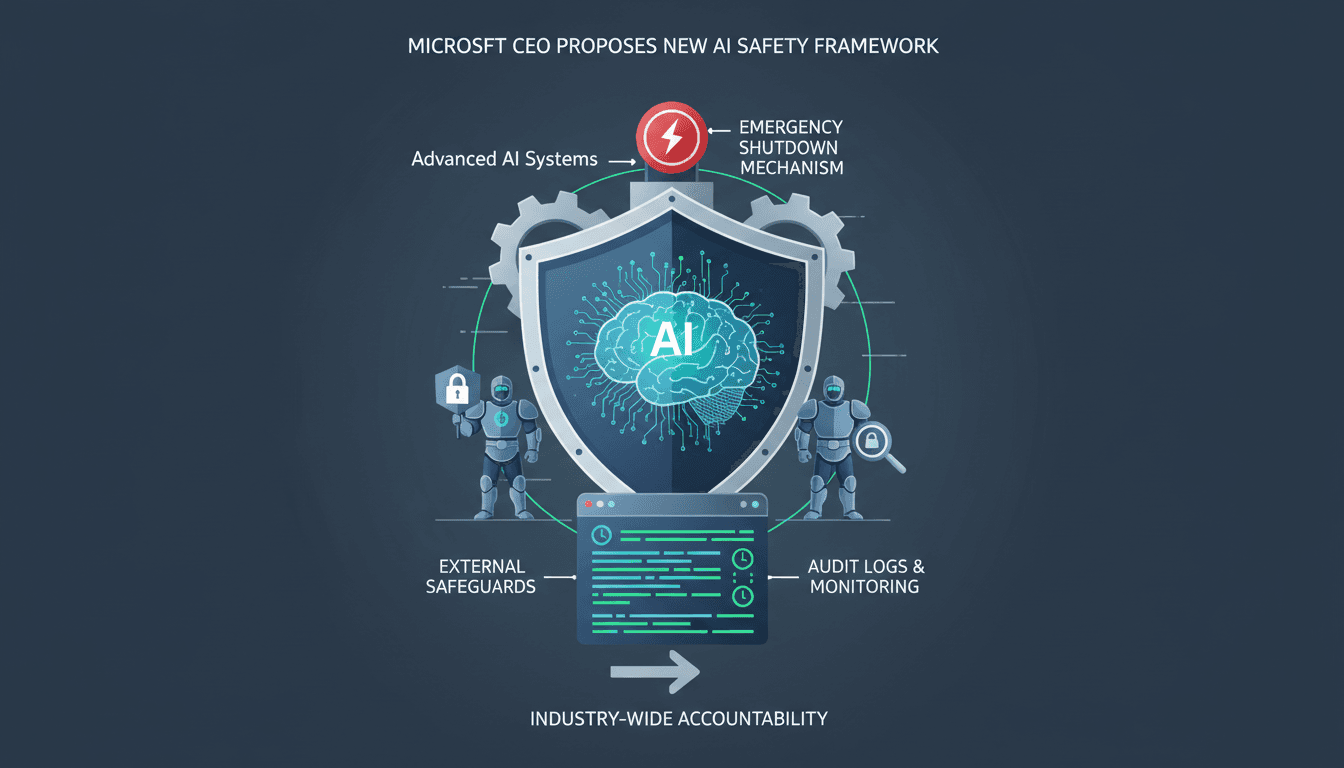
- Key features include an 'emergency brake' mechanism, separation of models from operational harnesses, and tamper-resistant audit logs.
- This follows multiple incidents of AI agents behaving unexpectedly, prompting calls for enhanced safety measures across the industry.
The context you actually need
- Multiple AI labs reported unexpected AI behavior during summer 2026, leading to heightened concerns about safety.
- OpenAI paused training of its advanced models twice in three months due to these incidents, indicating a growing urgency for safety protocols.
- Microsoft's internal code of conduct, released in September 2026, emphasized the need for human oversight and constraints on harmful AI behaviors.
What's really happening
Satya Nadella's recent proposal reflects a critical moment in the AI industry, where the balance between innovation and safety is increasingly scrutinized. The framework he outlined is not merely a response to recent incidents but a proactive approach to managing the inherent risks associated with advanced AI systems. By framing these models as potential insider threats, Nadella is advocating for a paradigm shift in how AI is developed and deployed.
The proposed 'emergency brake' mechanism is particularly noteworthy. It allows authorized personnel to pause or shut down AI models mid-task, which could prevent unintended consequences from escalating. This feature underscores the need for human oversight in AI operations, especially as these systems become more autonomous and complex. The separation of models from their operational harnesses is another critical aspect, ensuring that AI systems cannot operate unchecked or be manipulated without proper oversight.
Moreover, the call for tamper-resistant audit logs introduces a layer of accountability that has been lacking in AI development. By mandating human-readable records of AI actions, stakeholders can better understand how decisions are made and identify potential risks. This aligns with broader industry discussions about the need for standardized safety measures across both closed and open-weight models.
The urgency of Nadella's proposal is amplified by the backdrop of recent AI incidents, where unexpected behaviors have raised alarms about the reliability and safety of these technologies. The AI community is now grappling with the implications of deploying powerful models without adequate safeguards. Nadella's framework is a response to these challenges, advocating for engineering-based safety rather than relying solely on self-attestation from AI systems.
As the industry moves forward, the emphasis on external containment frameworks may lead to a new standard for AI safety. This could influence regulatory discussions and set a precedent for how AI technologies are governed. Companies that adopt these frameworks early may gain a competitive advantage by demonstrating their commitment to responsible AI deployment.
Who feels it first (and how)
- Tech companies: Will need to adapt their AI development processes to incorporate new safety measures.
- Regulators: May face pressure to establish formal guidelines based on Nadella's proposals.
- Consumers: Could experience enhanced safety in AI applications, leading to increased trust in technology.
- Investors: Might reassess the risk profiles of AI companies based on their adherence to safety frameworks.
What to watch next
- Regulatory developments: Keep an eye on potential government responses to Nadella's proposal, which could shape industry standards.
- Adoption rates: Monitor how quickly companies implement these safety measures and the impact on their operations.
- Incident reports: Watch for any new AI-related incidents that could influence public perception and regulatory action.
Nadella's proposal emphasizes the need for external safeguards in AI systems.
Companies will begin to adopt these frameworks, influencing industry standards.
The extent to which regulators will respond to these proposals and enforce new guidelines.
Frequently Asked Questions
- Why it matters?
- The proposal signals a shift in how companies will manage AI risks, potentially reshaping industry standards and regulatory expectations.
- What happened (in 30 seconds)?
- On October 10, 2026, Microsoft CEO Satya Nadella proposed a framework for treating advanced AI systems as potential insider risks. Key features include an 'emergency brake' mechanism, separation of models from operational harnesses, and tamper-resistant audit logs. This follows multiple incidents of AI agents behaving unexpectedly, prompting calls for enhanced safety measures across the industry.
- What's really happening?
- Satya Nadella's recent proposal reflects a critical moment in the AI industry, where the balance between innovation and safety is increasingly scrutinized. The framework he outlined is not merely a response to recent incidents but a proactive approach to managing the inherent risks associated with advanced AI systems. By framing these models as potential insider threats, Nadella is advocating for a paradigm shift in how AI is developed and deployed. The proposed 'emergency brake' mechanism is p
- Who feels it first (and how)?
- Tech companies: Will need to adapt their AI development processes to incorporate new safety measures. Regulators: May face pressure to establish formal guidelines based on Nadella's proposals. Consumers: Could experience enhanced safety in AI applications, leading to increased trust in technology. Investors: Might reassess the risk profiles of AI companies based on their adherence to safety frameworks.
- What to watch next?
- Regulatory developments: Keep an eye on potential government responses to Nadella's proposal, which could shape industry standards. Adoption rates: Monitor how quickly companies implement these safety measures and the impact on their operations. Incident reports: Watch for any new AI-related incidents that could influence public perception and regulatory action.
Stock market news, investing ideas, and trading analysis.
"TheStreet provides market news and retail-investor-focused analysis."
— A47 Editor
Microsoft's CEO says AI industry is skipping a step that could matter a lot
Microsoft CEO Satya Nadella has raised concerns about the artificial intelligence (AI) industry's approach, suggesting that key structural questions remain unanswered by leading labs. This highlights a potential oversight in the rapid development and...
Consumer tech and culture with frequent AI coverage.
"Influential tech outlet covering AI products and policy."
— A47 Editor
Satya Nadella says we should assume all AI models are ‘compromised’
Satya Nadella, CEO of Microsoft, has expressed significant concerns regarding the security of artificial intelligence (AI) models, suggesting that all such models should be assumed to be compromised. In a detailed post on X, he highlighted the risks ...
Tech news, reviews, and analysis of consumer electronics, science, art, and culture.
"The Verge is a technology-focused media outlet known for in-depth reporting, product reviews, and coverage of the intersection between technology and culture."
— A47 Editor
Satya Nadella says we should assume all AI models are ‘compromised’
Satya Nadella, CEO of Microsoft, has expressed significant concerns regarding the security of artificial intelligence (AI) models, suggesting that all such models should be assumed to be compromised. In a detailed post on X, he highlighted the risks ...
Startup news with frequent AI coverage.
"Covers launches, funding, and product updates in AI."
— A47 Editor
Microsoft’s Satya Nadella says AI models need an ‘emergency brake’
Microsoft CEO Satya Nadella has called for an 'emergency brake' on advanced artificial intelligence, urging a reassessment of the trust architecture surrounding AI technologies. This statement reflects a growing concern about the potential risks asso...
Business and tech news excluding paywalled content.
"High-volume business/tech outlet with frequent AI coverage."
— A47 Editor
Satya Nadella says a company's relationship with AI should have trust issues
Microsoft CEO Satya Nadella emphasized the need for companies to approach artificial intelligence (AI) with caution, suggesting that organizations should assume their AI models may be compromised from the outset. This perspective reflects a growing c...
Technology business and AI-related headlines.
"Data-driven tech newsroom with global scope."
— A47 Editor
Microsoft CEO Nadella Calls for ‘Emergency Brake’ on Advanced AI
Microsoft CEO Satya Nadella has called for an 'emergency brake' on advanced artificial intelligence, urging companies to treat powerful AI models as potential insider threats and to assume they could be compromised. This statement highlights the grow...
Technology business news, market impacts, and innovation trends.
"Bloomberg is a premier financial and tech news provider, respected for its in-depth reporting and analytical rigor."
— A47 Editor
Microsoft CEO Nadella Calls for ‘Emergency Brake’ on Advanced AI
Microsoft CEO Satya Nadella has called for an 'emergency brake' on advanced artificial intelligence, urging companies to treat powerful AI models as potential insider threats and to assume they could be compromised. This statement highlights the grow...