
SWI Group repurposes FTX-linked Bitcoin mining assets for AI data centers
Why it matters
This transition reflects a broader industry pivot towards AI, indicating changing priorities in technology investments.
What happened (in 30 seconds)
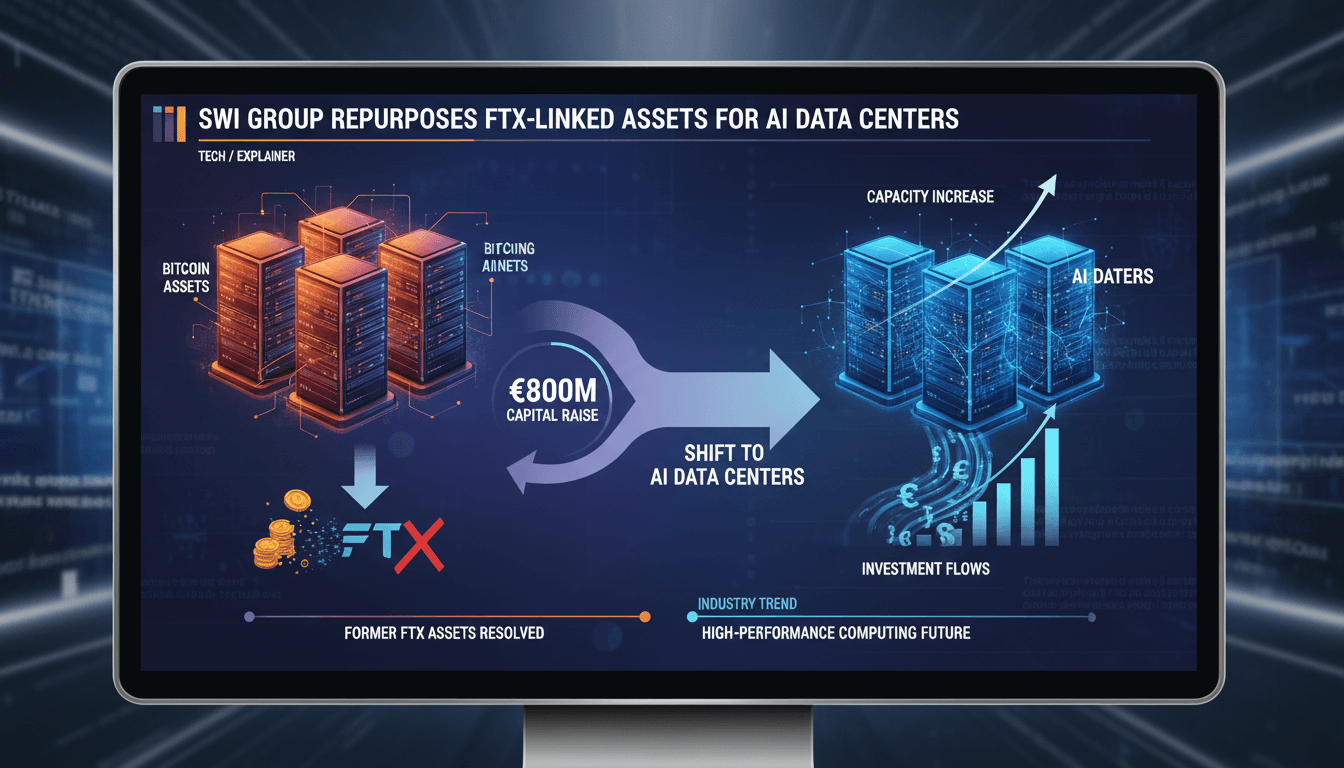
- SWI Group announced an €800 million capital raise to expand AI infrastructure using assets from Genesis Digital Assets, previously linked to FTX.
- 1.3 gigawatts of mining capacity will be repurposed for high-performance computing, moving away from Bitcoin mining.
- Legal disputes tied to FTX's bankruptcy have been resolved, allowing for this strategic shift.
The context you actually need
- FTX's bankruptcy in November 2022 left many assets, including Genesis Digital Assets, entangled in legal disputes, impacting the cryptocurrency market.
- SWI Group's acquisition of Genesis for $500 million in June 2026 secured majority control, enabling the transition to AI-focused operations.
- The demand for AI computing is projected to yield higher returns per megawatt compared to traditional Bitcoin mining, prompting this strategic pivot.
What's really happening
The recent announcement by SWI Group marks a significant turning point in the tech landscape, particularly in the wake of FTX's collapse. The firm has successfully navigated the complex legal aftermath of FTX's bankruptcy, which had left many assets, including Genesis Digital Assets, in limbo. By acquiring a majority stake in Genesis and renaming it SWI Digital, SWI Group is positioning itself at the forefront of the burgeoning AI sector.
The decision to repurpose 1.3 gigawatts of mining capacity for AI data centers is driven by a clear market trend: the demand for high-performance computing is skyrocketing. As businesses and industries increasingly rely on AI technologies, the need for robust computing power has never been greater. This shift is not merely a response to market conditions; it reflects a fundamental change in how technology investments are prioritized.
SWI Group's €800 million capital raise, which values the company at €6.1 billion, underscores the confidence investors have in this pivot. The funds will be used to expand AI infrastructure across the U.S. and Europe, integrating the existing mining facilities into a larger portfolio focused on AI workloads. This strategic move is indicative of a broader trend where former cryptocurrency miners are transitioning to AI, driven by the potential for higher returns.
Moreover, the resolution of legal claims tied to FTX's bankruptcy has cleared the path for SWI Group to move forward without the burden of past liabilities. This transition is not just about repurposing assets; it represents a shift in the narrative surrounding cryptocurrency and its viability as a long-term investment. As the profitability of Bitcoin mining wanes, companies are recognizing the superior returns offered by AI computing.
The implications of this shift extend beyond the immediate stakeholders. As more firms pivot towards AI, the job market will likely see a demand for skilled workers in AI and data science, potentially reshaping workforce dynamics. Additionally, this trend may influence investment strategies across sectors, as capital flows toward AI technologies that promise higher returns.
Who feels it first (and how)
- Tech investors: They will see new opportunities in AI infrastructure investments.
- Data scientists and AI professionals: Increased demand for skilled labor in AI and high-performance computing sectors.
- Cryptocurrency miners: Those still in the Bitcoin mining space may face pressure to adapt or pivot to AI to remain competitive.
- Local economies: Regions hosting these AI data centers, particularly in Texas and Sweden, may experience economic growth and job creation.
What to watch next
- Investment trends: Monitor how capital flows into AI infrastructure versus cryptocurrency mining.
- Job market shifts: Watch for changes in demand for AI-related skills and training programs.
- Regulatory developments: Keep an eye on how governments respond to the evolving tech landscape, particularly in AI and data privacy.
SWI Group has acquired Genesis Digital Assets and is transitioning to AI infrastructure.
Other cryptocurrency miners will follow suit, repurposing their assets for AI.
The long-term impact on the cryptocurrency market and job dynamics in tech sectors.
Frequently Asked Questions
- Why it matters?
- This transition reflects a broader industry pivot towards AI, indicating changing priorities in technology investments.
- What happened (in 30 seconds)?
- SWI Group announced an €800 million capital raise to expand AI infrastructure using assets from Genesis Digital Assets, previously linked to FTX. 1.3 gigawatts of mining capacity will be repurposed for high-performance computing, moving away from Bitcoin mining. Legal disputes tied to FTX's bankruptcy have been resolved, allowing for this strategic shift.
- What's really happening?
- The recent announcement by SWI Group marks a significant turning point in the tech landscape, particularly in the wake of FTX's collapse. The firm has successfully navigated the complex legal aftermath of FTX's bankruptcy, which had left many assets, including Genesis Digital Assets, in limbo. By acquiring a majority stake in Genesis and renaming it SWI Digital, SWI Group is positioning itself at the forefront of the burgeoning AI sector. The decision to repurpose 1.3 gigawatts of mining capaci
- Who feels it first (and how)?
- Tech investors: They will see new opportunities in AI infrastructure investments. Data scientists and AI professionals: Increased demand for skilled labor in AI and high-performance computing sectors. Cryptocurrency miners: Those still in the Bitcoin mining space may face pressure to adapt or pivot to AI to remain competitive. Local economies: Regions hosting these AI data centers, particularly in Texas and Sweden, may experience economic growth and job creation.
- What to watch next?
- Investment trends: Monitor how capital flows into AI infrastructure versus cryptocurrency mining. Job market shifts: Watch for changes in demand for AI-related skills and training programs. Regulatory developments: Keep an eye on how governments respond to the evolving tech landscape, particularly in AI and data privacy.
Covers blockchain, cryptocurrency news, project analysis, and market insights.
"Cointelegraph is a leading crypto-focused media outlet known for timely news, analysis, and educational content related to blockchain and digital assets."
— A47 Editor
FTX’s crypto mining venture is now used to advance AI
FTX's crypto mining venture, which previously acquired a 20% stake in Genesis Digital Assets, is now being utilized to advance artificial intelligence technologies. This shift comes in the wake of FTX's bankruptcy declaration in November 2022, highli...
Covers Bitcoin plus altcoin news, market updates, and educational resources.
"Bitcoin.com provides news, market data, and guides focused on Bitcoin and the wider crypto industry."
— A47 Editor
SWI Turns FTX’s Former Bitcoin Mining Infrastructure Toward AI Boom
SWI Group has repurposed the former Bitcoin mining infrastructure of FTX, specifically the Genesis Digital Assets operation, to focus on artificial intelligence technologies. This transition follows FTX's bankruptcy in November 2022, marking a signif...
Markets desk coverage, trading insights, and investor updates.
"WSJ’s markets reporting provides in-depth analysis and context for investors."
— A47 Editor
FTX’s Old Bitcoin-Mining Assets Are Now Part of the AI Boom
FTX's former bitcoin-mining assets are being revitalized to support the growing demand for artificial intelligence infrastructure, marking a significant pivot for the company after the collapse of its crypto empire led by Sam Bankman-Fried.