
Global AI Capital Expenditure Faces Scrutiny Amid Market Decline
Why it matters
The ongoing debate over AI capital expenditure (capex) could reshape investment strategies and market stability in the tech sector.
What happened (in 30 seconds)
- Broadcom's CEO likened the AI market to a casino, raising concerns about the sustainability of current investments.
- ASML and TSMC reported strong earnings but could not prevent a decline in tech stocks, indicating market unease.
- Analysts are questioning whether the surge in hyperscaler spending will yield sufficient returns or lead to significant write-downs.
The context you actually need
- AI infrastructure spending has surged, with hyperscalers committing hundreds of billions annually to data centers and chips.
- Major tech companies like Microsoft, Alphabet, Amazon, and Meta have increased capex guidance, but warnings of overinvestment loom.
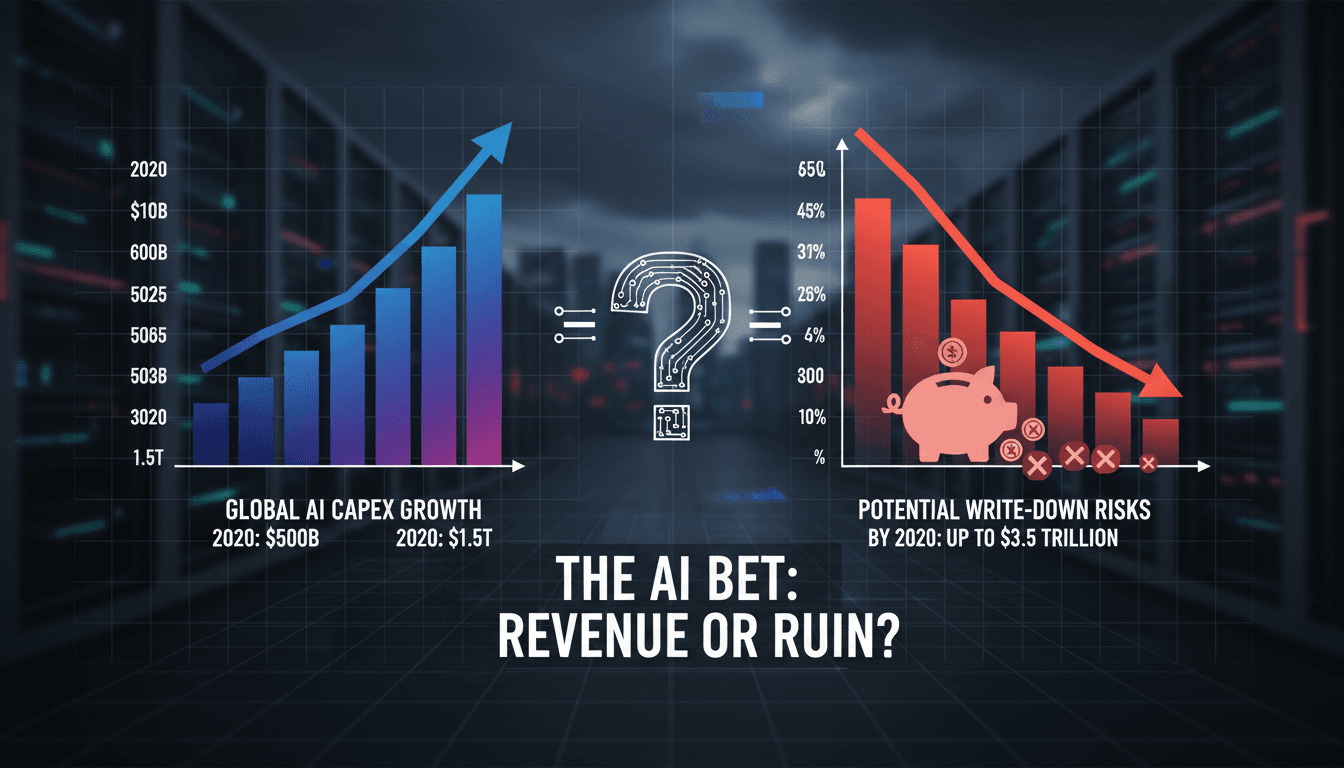
- Gartner's analysis suggests a potential $3.5 trillion write-down risk by 2030, raising alarms about the viability of these investments.
What's really happening
The AI capital expenditure boom is driven by a race among tech giants to secure a competitive edge in an increasingly data-driven world. Companies are investing heavily in infrastructure—data centers, chips, and energy resources—to support AI applications. This surge in spending, however, is not without its risks. Broadcom's CEO's casino analogy underscores the speculative nature of these investments, suggesting that while the potential for high returns exists, the likelihood of significant losses is equally present.
As hyperscalers ramp up their spending, they face mounting pressure to justify these investments with corresponding revenue growth. Analysts are scrutinizing the balance sheets of these companies, questioning whether the projected revenues from AI applications will materialize in a timely manner. The tech sector's recent sell-off reflects this uncertainty, as investors weigh the long-term viability of these capital outlays against the backdrop of immediate financial performance.
The context of this debate is further complicated by the broader economic landscape. With rising interest rates and inflationary pressures, the cost of capital is increasing, making it more challenging for companies to sustain high levels of investment without clear revenue pathways. The potential for overinvestment looms large, as companies may find themselves with excess capacity and insufficient demand, leading to write-downs that could impact their financial health.
Moreover, the global nature of this investment trend means that its effects will ripple through various markets, influencing everything from energy prices to labor dynamics. As companies invest in AI infrastructure, they will also need to consider the sustainability of their energy sources, particularly in light of growing environmental concerns. This adds another layer of complexity to the decision-making process, as firms must balance the pursuit of technological advancement with the need for responsible investment practices.
In summary, the AI capex boom represents a high-stakes gamble for tech companies. While the potential rewards are significant, the risks associated with overinvestment and the need for revenue justification create a precarious situation for investors and executives alike.
Who feels it first (and how)
- Tech executives: They face pressure to deliver on ambitious capex plans while managing investor expectations.
- Investors: They must navigate the volatility of tech stocks and assess the long-term viability of AI investments.
- Energy sector: Increased demand for energy to power AI infrastructure could lead to shifts in energy markets and pricing.
- Labor market: As companies invest in AI, there may be changes in workforce requirements, impacting job availability and skill demands.
What to watch next
- Earnings reports: Keep an eye on upcoming earnings from major tech firms to gauge revenue growth against capex levels.
- Market sentiment: Watch for shifts in investor confidence regarding tech stocks, which could signal broader market trends.
- Regulatory developments: Monitor any changes in regulations related to AI and tech investments, as these could impact future spending.
The AI infrastructure buildout is accelerating, with significant investments from hyperscalers.
Increased scrutiny of tech companies' balance sheets and capex guidance will continue as investors seek clarity on revenue projections.
The long-term sustainability of these investments remains uncertain, particularly in light of potential economic headwinds.
Frequently Asked Questions
- Why it matters?
- The ongoing debate over AI capital expenditure (capex) could reshape investment strategies and market stability in the tech sector.
- What happened (in 30 seconds)?
- Broadcom's CEO likened the AI market to a casino, raising concerns about the sustainability of current investments. ASML and TSMC reported strong earnings but could not prevent a decline in tech stocks, indicating market unease. Analysts are questioning whether the surge in hyperscaler spending will yield sufficient returns or lead to significant write-downs.
- What's really happening?
- The AI capital expenditure boom is driven by a race among tech giants to secure a competitive edge in an increasingly data-driven world. Companies are investing heavily in infrastructure—data centers, chips, and energy resources—to support AI applications. This surge in spending, however, is not without its risks. Broadcom's CEO's casino analogy underscores the speculative nature of these investments, suggesting that while the potential for high returns exists, the likelihood of significant loss
- Who feels it first (and how)?
- Tech executives: They face pressure to deliver on ambitious capex plans while managing investor expectations. Investors: They must navigate the volatility of tech stocks and assess the long-term viability of AI investments. Energy sector: Increased demand for energy to power AI infrastructure could lead to shifts in energy markets and pricing. Labor market: As companies invest in AI, there may be changes in workforce requirements, impacting job availability and skill demands.
- What to watch next?
- Earnings reports: Keep an eye on upcoming earnings from major tech firms to gauge revenue growth against capex levels. Market sentiment: Watch for shifts in investor confidence regarding tech stocks, which could signal broader market trends. Regulatory developments: Monitor any changes in regulations related to AI and tech investments, as these could impact future spending.
Technology business and AI-related headlines.
"Data-driven tech newsroom with global scope."
— A47 Editor
AI Capex, Gamble or Jackpot?: Market Snapshot
The artificial intelligence market has been likened to a 'casino' by Broadcom's CEO, highlighting the increasing risks associated with investments in this sector. This statement coincided with strong earnings reports from ASML and a positive outlook ...
Technology business news, market impacts, and innovation trends.
"Bloomberg is a premier financial and tech news provider, respected for its in-depth reporting and analytical rigor."
— A47 Editor
AI Capex, Gamble or Jackpot?: Market Snapshot
The artificial intelligence market has been likened to a 'casino' by Broadcom's CEO, highlighting the increasing risks associated with investments in this sector. This statement coincided with strong earnings reports from ASML and a positive outlook ...
Editor-curated FT homepage stories spanning markets, business, world, and opinion.
"The Financial Times is a globally respected business publication with a centrist/center-left tone and strong markets focus."
— A47 Editor
Chip stocks slide after Broadcom boss warns of ‘casino’ mentality in AI investing
Chip stocks, particularly those of Samsung and SK Hynix, have experienced significant declines, contributing to a sharp drop in Korea's Kospi index. This downturn follows warnings from Broadcom's CEO about a 'casino' mentality in AI investing, raisin...
News and features on AI from The Guardian.
"Progressive-leaning international outlet with critical AI coverage."
— A47 Editor
Chip stocks slide after Broadcom boss likens AI investing to ‘casino’
Shares in semiconductor companies, particularly in South Korea, fell sharply after Broadcom's CEO compared AI investing to gambling, leading to a significant drop in the Kospi index by 6.25%. This decline was exacerbated by CXMT's announcement of adv...
UK and international business news, economics, and corporate coverage.
"The Guardian’s business section covers finance and markets with a progressive editorial tone."
— A47 Editor
Chip stocks slide after Broadcom boss likens AI investing to ‘casino’
Shares in semiconductor companies, particularly in South Korea, fell sharply after Broadcom's CEO compared AI investing to gambling, leading to a significant drop in the Kospi index by 6.25%. This decline was exacerbated by CXMT's announcement of adv...
Tech culture, product news, and critical takes on the tech industry's social impact.
"The Guardian's tech coverage blends mainstream news, critical analysis, and cultural commentary on emerging technologies and digital trends."
— A47 Editor
Chip stocks slide after Broadcom boss likens AI investing to ‘casino’
Shares in semiconductor companies, particularly in South Korea, fell sharply after Broadcom's CEO compared AI investing to gambling, leading to a significant drop in the Kospi index by 6.25%. This decline was exacerbated by CXMT's announcement of adv...