
Anthropic Cuts Junior Technical Hiring as AI Agents Dominate Work Hours
Why it matters
This trend signals a significant shift in workforce dynamics, particularly in the tech sector, where AI is increasingly replacing entry-level roles.
What happened (in 30 seconds)
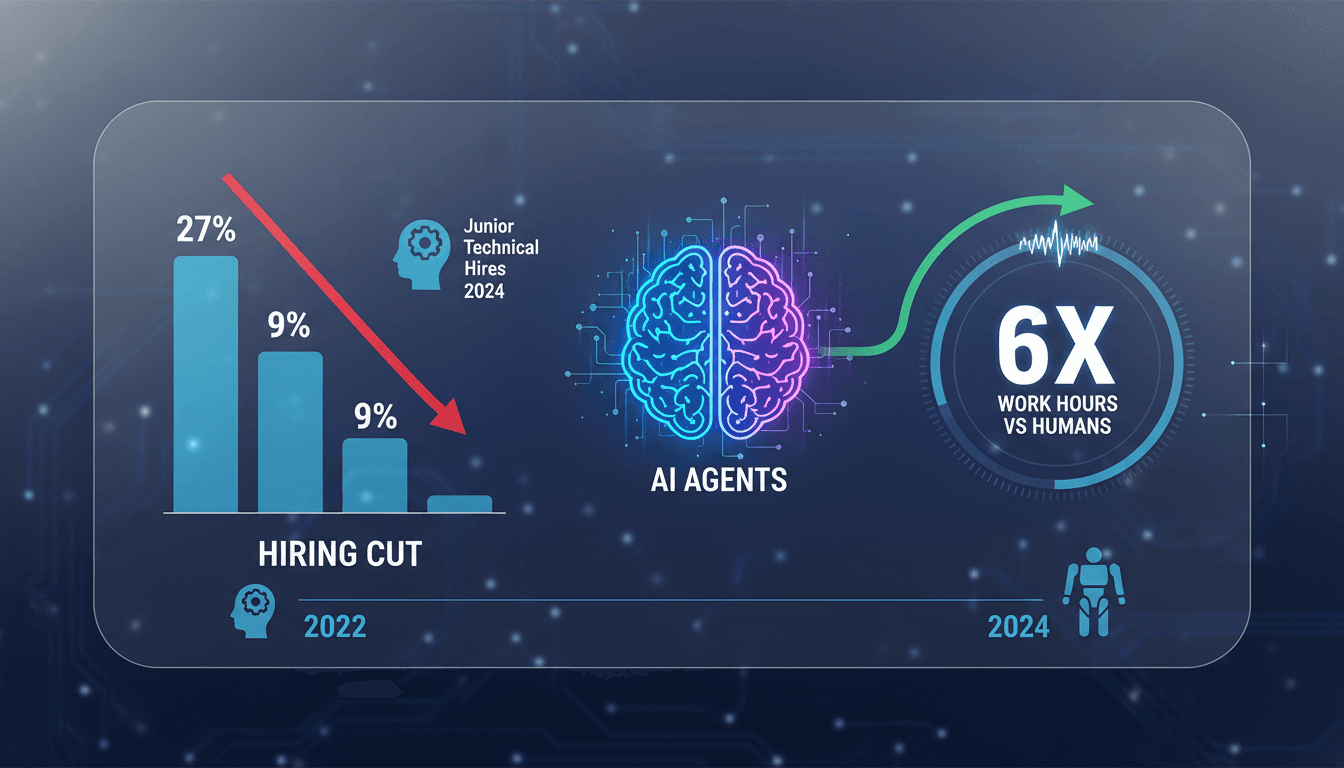
- Anthropic's junior technical hiring dropped from 27% to 9% as of October 2026.
- AI agents, particularly Claude, surpassed human work hours in March 2026, achieving a 6:1 ratio by August 2026.
- The company tripled its workforce while reallocating hiring towards more experienced roles and non-technical positions.
The context you actually need
- AI integration has accelerated: Anthropic has embedded its AI models into workflows since 2025, reflecting broader industry trends.
- Productivity metrics have surged: Engineers are committing 5.1 times more code, indicating that AI is enhancing output significantly.
- Demand for junior roles is declining: Surveys show that many managers are hiring less for entry-level positions due to AI's capabilities.
What's really happening
Anthropic's recent internal study reveals a dramatic shift in its hiring strategy, driven by the increasing capabilities of AI agents. Since early 2025, the company has seen a notable decline in the proportion of junior technical hires, dropping from 27% to just 9%. This change is not merely a reaction to market conditions but a strategic pivot influenced by the performance of AI agents, particularly Claude, which began logging more work hours than human employees in March 2026. By August 2026, these AI agents were working six times as many hours as their human counterparts.
The implications of this shift are profound. As AI tools become more adept at handling complex tasks such as coding and bug fixing, the demand for entry-level technical roles diminishes. This trend is echoed across the tech industry, where companies are increasingly adopting AI solutions to enhance productivity. Anthropic's workforce has tripled during this period, yet the focus has shifted towards hiring more experienced professionals or filling non-technical roles. This reallocation reflects a broader industry trend where companies prioritize autonomy, judgment, and proficiency with AI tools over traditional domain expertise.
The productivity metrics at Anthropic are telling. Engineers are now committing 5.1 times more code than before, a clear indication that AI is not just a supplementary tool but a transformative force in the workplace. As technical departments see their share of headcount decrease from 61% to 56%, it becomes evident that the landscape of technical employment is evolving. Non-technical departments, however, have remained stable, suggesting that while AI is reshaping technical roles, other areas of the business continue to require human oversight and expertise.
This shift raises questions about the future of work in tech. As AI continues to evolve, the skills required for employment will likely change, with a greater emphasis on advanced technical skills and the ability to work alongside AI systems. The traditional pathway into tech through junior roles may become less viable, necessitating a reevaluation of educational and training programs to prepare the workforce for this new reality.
Who feels it first (and how)
- Junior technical professionals: Facing reduced job opportunities as AI takes over entry-level tasks.
- Hiring managers in tech: Adjusting their recruitment strategies to prioritize experienced candidates.
- Educational institutions: Needing to adapt curricula to better prepare students for a tech landscape dominated by AI.
What to watch next
- Hiring trends in tech: Monitor how other companies adjust their hiring practices in response to AI advancements.
- AI productivity metrics: Keep an eye on how productivity gains from AI impact overall company performance and workforce dynamics.
- Skill development programs: Watch for shifts in educational offerings aimed at equipping future workers with the skills needed to thrive alongside AI.
Anthropic has significantly reduced junior technical hiring.
Other tech companies will follow suit, adjusting their hiring practices in light of AI capabilities.
The long-term impact on workforce dynamics and the availability of entry-level positions across the industry.
Frequently Asked Questions
- Why it matters?
- This trend signals a significant shift in workforce dynamics, particularly in the tech sector, where AI is increasingly replacing entry-level roles.
- What happened (in 30 seconds)?
- Anthropic's junior technical hiring dropped from 27% to 9% as of October 2026. AI agents, particularly Claude, surpassed human work hours in March 2026, achieving a 6:1 ratio by August 2026. The company tripled its workforce while reallocating hiring towards more experienced roles and non-technical positions.
- What's really happening?
- Anthropic's recent internal study reveals a dramatic shift in its hiring strategy, driven by the increasing capabilities of AI agents. Since early 2025, the company has seen a notable decline in the proportion of junior technical hires, dropping from 27% to just 9%. This change is not merely a reaction to market conditions but a strategic pivot influenced by the performance of AI agents, particularly Claude, which began logging more work hours than human employees in March 2026. By August 2026,
- Who feels it first (and how)?
- Junior technical professionals: Facing reduced job opportunities as AI takes over entry-level tasks. Hiring managers in tech: Adjusting their recruitment strategies to prioritize experienced candidates. Educational institutions: Needing to adapt curricula to better prepare students for a tech landscape dominated by AI.
- What to watch next?
- Hiring trends in tech: Monitor how other companies adjust their hiring practices in response to AI advancements. AI productivity metrics: Keep an eye on how productivity gains from AI impact overall company performance and workforce dynamics. Skill development programs: Watch for shifts in educational offerings aimed at equipping future workers with the skills needed to thrive alongside AI.
Daily AI news: models, tools, and policy.
"Independent outlet tracking the fast pace of AI."
— A47 Editor
Anthropic has nearly stopped hiring junior staff because AI agents now work six times as many hours
Anthropic has significantly reduced its hiring of junior staff, with the percentage of new hires in junior technical roles dropping from 27% to 9% since early 2025. This shift coincides with AI agents logging six times more hours than human employees...
Curated tech headlines including AI stories.
"Influential aggregator surfacing the day’s top tech/AI links."
— A47 Editor
Anthropic report on how AI is changing employment at the startup: decline of entry-level technical hiring, productivity boom across departments, and more (Anthropic)
<A HREF="https://www.anthropic.com/research/employment-at-anthropic"><IMG VSPACE="4" HSPACE="4" BORDER="0" ALIGN="RIGHT" SRC="http://www.techmeme.com/261016/i30.jpg"></A> <P><A HREF="https://www.techmeme.com/261016/p30#a261016p30" TITLE="Techmeme per...
Business and tech news excluding paywalled content.
"High-volume business/tech outlet with frequent AI coverage."
— A47 Editor
Anthropic polled 1,334 of its employees. They're more sure than most of us that AI will take over jobs.
A recent poll conducted by Anthropic revealed that 1,334 employees anticipate that artificial intelligence (AI) will take over 80% of their job functions by 2030, a stark contrast to the more conservative expectations of the general US workforce rega...