
Google Introduces Agent Compute Engine for AI Agent MicroVMs
Why it matters
The launch of Google's Agent Compute Engine signals a significant shift in how AI workloads will be managed, impacting efficiency and security across industries.
What happened (in 30 seconds)
- Google announced the Agent Compute Engine on October 22, 2026, at AGNTCon + MCPCon in San Jose.
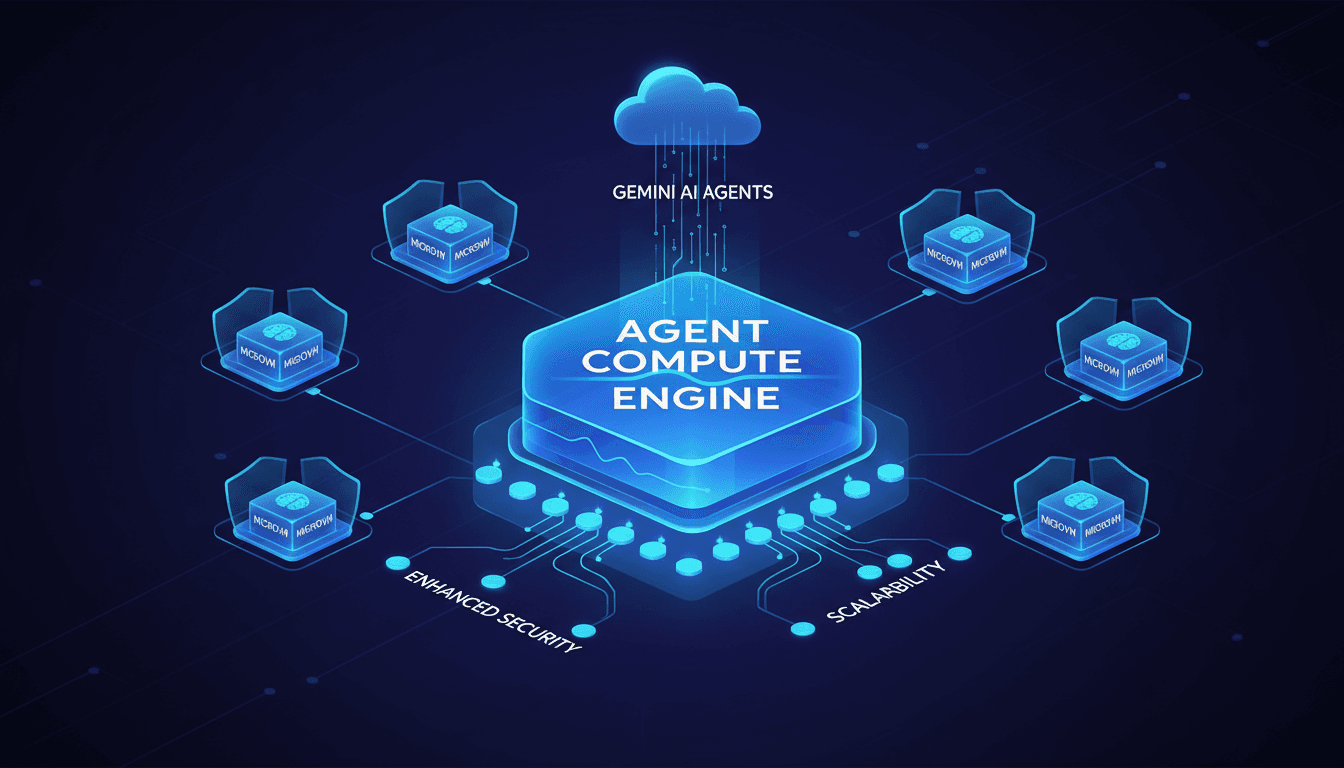
- Each Gemini AI agent will operate within its own hardware-isolated micro virtual machine (microVM), enhancing security and efficiency.
- The service is currently in internal production use, with a customer preview expected in the coming months.
The context you actually need
- Traditional computing methods have struggled to support the demands of planet-scale AI workloads, necessitating a new approach.
- Agent Compute Engine utilizes Google's Titanium chip for hardware isolation, ensuring secure execution of untrusted code.
- Key features include rapid boot times, automatic pausing of idle VMs, and copy-on-write memory sharing, allowing for up to 10x agent density per server.
What's really happening
Google's Agent Compute Engine represents a fundamental rethinking of how AI agents are deployed and managed. Traditional virtual machines (VMs) and containers have proven inadequate for the dynamic and high-churn nature of modern AI workloads, which can involve hundreds of millions of sessions. This inadequacy has prompted Google to develop a purpose-built platform that addresses the unique challenges posed by agentic AI systems.
At the core of this innovation is the concept of hardware-isolated microVMs. Each Gemini AI agent is assigned its own microVM, complete with a dedicated guest kernel and root access. This isolation is enforced through Google's Cloud Hypervisor and the Titanium IPU, which provides a silicon-rooted security layer. Such architecture not only enhances security but also allows for rapid start, pause, and resume cycles—critical for managing the fluctuating demands of AI workloads.
One of the standout features of the Agent Compute Engine is its ability to automatically pause idle VMs, which significantly reduces resource consumption. This is coupled with a fast checkpoint and restore capability, achieving under 500 milliseconds, which is essential for maintaining operational efficiency. Additionally, the implementation of copy-on-write memory sharing allows for a tenfold increase in agent density per server, optimizing resource utilization and cost efficiency.
The launch also includes governance enhancements, such as token tracking and support for third-party identity providers, which are crucial for managing access and ensuring compliance in increasingly complex AI environments. Accompanying the Agent Compute Engine is an open-sourced Kubernetes runtime called Agent Substrate, which will facilitate the deployment and management of these microVMs.
As Google rolls out this service, it is already powering internal workloads for its Gemini AI and other evaluation pipelines. The implications for businesses are profound, as this infrastructure could redefine how companies leverage AI, making it more accessible and efficient.
Who feels it first (and how)
- Tech companies: They will need to adapt their AI strategies to leverage the new infrastructure.
- Cloud service providers: Increased competition as Google enhances its offerings.
- AI developers: They will benefit from improved performance and security in deploying AI applications.
- Enterprises: Businesses relying on AI for operations will see changes in cost structures and efficiency.
What to watch next
- Customer preview rollout: The response from early adopters will provide insights into the platform's effectiveness and potential market shifts.
- Adoption rates: Monitoring how quickly businesses integrate the Agent Compute Engine into their operations will indicate its impact on the industry.
- Security implications: As more companies adopt this technology, understanding its security features will be crucial for compliance and risk management.
Google has launched the Agent Compute Engine and is currently in internal production use.
The service will gain traction among businesses looking to enhance their AI capabilities.
The long-term market impact and how competitors will respond to this new infrastructure.
Frequently Asked Questions
- Why it matters?
- The launch of Google's Agent Compute Engine signals a significant shift in how AI workloads will be managed, impacting efficiency and security across industries.
- What happened (in 30 seconds)?
- Google announced the Agent Compute Engine on October 22, 2026, at AGNTCon + MCPCon in San Jose. Each Gemini AI agent will operate within its own hardware-isolated micro virtual machine (microVM), enhancing security and efficiency. The service is currently in internal production use, with a customer preview expected in the coming months.
- What's really happening?
- Google's Agent Compute Engine represents a fundamental rethinking of how AI agents are deployed and managed. Traditional virtual machines (VMs) and containers have proven inadequate for the dynamic and high-churn nature of modern AI workloads, which can involve hundreds of millions of sessions. This inadequacy has prompted Google to develop a purpose-built platform that addresses the unique challenges posed by agentic AI systems. At the core of this innovation is the concept of hardware-isolate
- Who feels it first (and how)?
- Tech companies: They will need to adapt their AI strategies to leverage the new infrastructure. Cloud service providers: Increased competition as Google enhances its offerings. AI developers: They will benefit from improved performance and security in deploying AI applications. Enterprises: Businesses relying on AI for operations will see changes in cost structures and efficiency.
- What to watch next?
- Customer preview rollout: The response from early adopters will provide insights into the platform's effectiveness and potential market shifts. Adoption rates: Monitoring how quickly businesses integrate the Agent Compute Engine into their operations will indicate its impact on the industry. Security implications: As more companies adopt this technology, understanding its security features will be crucial for compliance and risk management.
Daily AI news: models, tools, and policy.
"Independent outlet tracking the fast pace of AI."
— A47 Editor
Google's Agent Compute Engine gives every Gemini agent its own hardware-isolated micro virtual machine
Google has launched the Agent Compute Engine, a dedicated runtime environment for AI agents, which provides each Gemini agent with its own hardware-isolated micro virtual machine. This innovation enhances the governance capabilities for managing AI a...
Policy and strategy for digital leaders, including AI.
"Analyzes AI in the context of enterprise strategy."
— A47 Editor
Cognizant launches dedicated Gemini group to scale agentic AI
Cognizant, in collaboration with Google Cloud, has launched the Gemini Frontier Capability Group to enhance the adoption of agentic AI across enterprises. This initiative aims to provide businesses with advanced AI tools and capabilities, facilitatin...
Consumer tech and culture with frequent AI coverage.
"Influential tech outlet covering AI products and policy."
— A47 Editor
Google’s more personalized Gemini AI is heading to your car
Google is enhancing its Gemini AI by integrating Personal Intelligence into vehicles equipped with Android Auto and Google built-in, allowing users to access personalized information from various Google apps while driving. This update enables functio...
Tech news, reviews, and analysis of consumer electronics, science, art, and culture.
"The Verge is a technology-focused media outlet known for in-depth reporting, product reviews, and coverage of the intersection between technology and culture."
— A47 Editor
Google’s more personalized Gemini AI is heading to your car
Google is enhancing its Gemini AI by integrating Personal Intelligence into vehicles equipped with Android Auto and Google built-in, allowing users to access personalized information from various Google apps while driving. This update enables functio...
Startup news with frequent AI coverage.
"Covers launches, funding, and product updates in AI."
— A47 Editor
Google is bringing a more personal version of its Gemini AI assistant to your car
Google is set to enhance its Gemini AI assistant by integrating a more personalized version into vehicles, allowing it to utilize data from services like Gmail, Calendar, Maps, and YouTube to provide tailored responses while driving. This feature aim...