
Tech Giants Block eMudhra Certificates Due to Critical Key Flaw
Why it matters
This incident underscores vulnerabilities in digital certificate authorities, impacting trust in online security.
What happened (in 30 seconds)
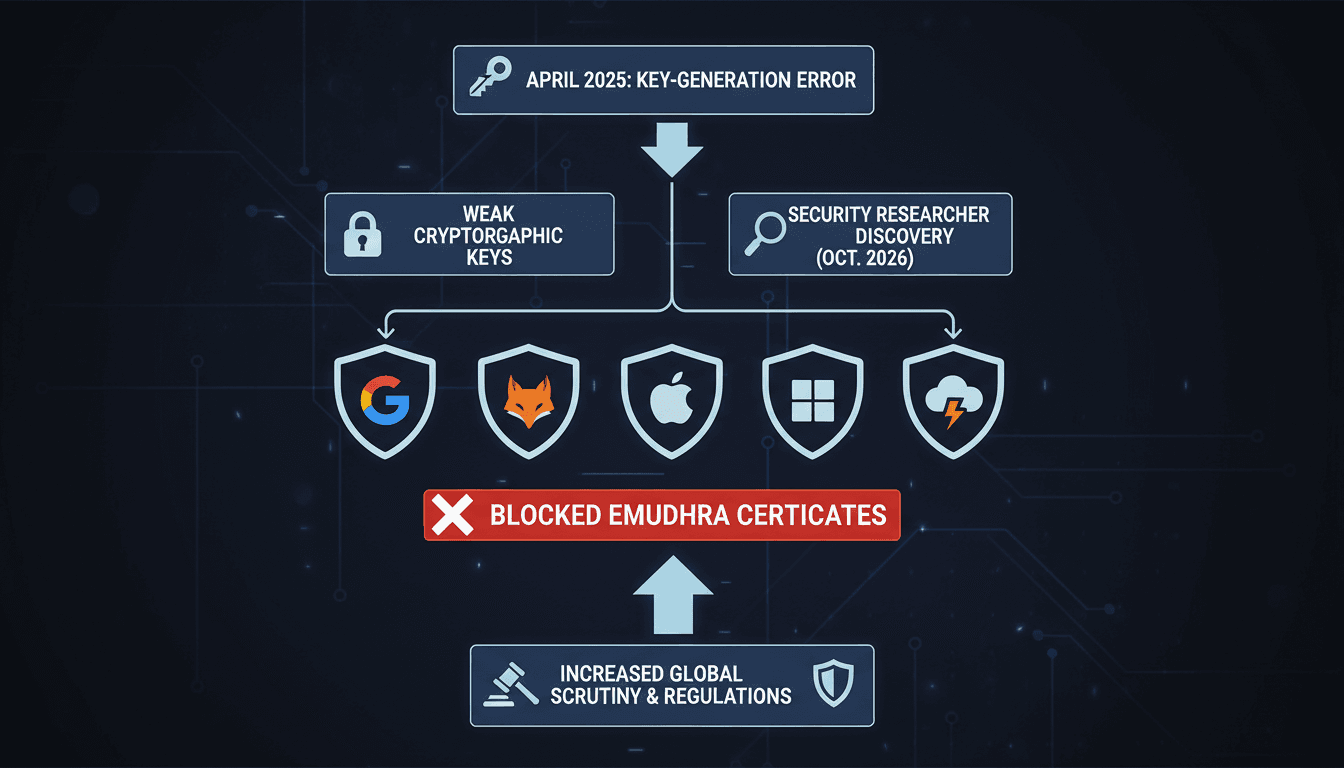
- On October 17, 2026, researcher Wayne disclosed a flaw in eight eMudhra intermediate certificates, revealing weak private keys.
- Major tech companies including Google, Mozilla, Apple, and Microsoft quickly blocked these certificates to prevent potential website impersonation.
- eMudhra revoked the compromised certificates, and no confirmed exploitation has been found in Certificate Transparency logs.
The context you actually need
- eMudhra Limited, founded in 2008, issues digital certificates under its emSign brand, crucial for secure online communications.
- A key-generation error during an April 2025 ceremony produced weak private keys, which went undetected until October 2026.
- The incident has prompted a global reassessment of certificate authority practices, emphasizing the need for stringent security measures.
What's really happening
The recent blocking of eMudhra's intermediate certificates by major tech companies reveals a critical flaw in the digital certificate ecosystem. On October 17, 2026, security researcher Wayne reported that eight intermediate certificates issued by eMudhra Limited contained weak private keys, which could be trivially recovered. This vulnerability stemmed from a key-generation error during a ceremony on April 30, 2025, where the keys produced had only 3–8 bits of entropy instead of the required 384 bits for P-384 curves.
The immediate response from tech giants was swift. Google and Mozilla implemented blocks on the same day of the disclosure, while Apple and Microsoft followed suit shortly after. This rapid action reflects a growing awareness of the risks associated with weak cryptographic practices and the potential for widespread exploitation. Although no confirmed exploitation has been detected in Certificate Transparency logs, the incident has raised alarms about the integrity of digital certificates, which are foundational to secure online transactions.
The implications of this incident extend beyond eMudhra and its certificates. It highlights systemic vulnerabilities within the digital certificate authority landscape, where a single error can compromise the trustworthiness of numerous websites and applications. As a result, there is likely to be increased scrutiny of certificate authorities globally, with calls for more rigorous key-generation practices and enhanced oversight.
Furthermore, the incident has prompted India's CERT-In to issue advisories on the risks of website impersonation, indicating a heightened awareness of cybersecurity threats. The Indian government has also ordered a probe into the incident, reflecting the seriousness with which such vulnerabilities are now treated. eMudhra has stated that its infrastructure was not breached and that no end-entity certificates were issued under the affected intermediates, but the damage to its reputation may linger.
As browser vendors continue to remove the compromised root certificates from their trust stores, non-browser clients and applications will require manual updates. This situation serves as a reminder of the fragility of digital trust and the ongoing need for vigilance in cybersecurity practices.
Who feels it first (and how)
- Website operators relying on eMudhra certificates for secure transactions may face disruptions.
- Consumers using affected websites could experience security warnings or access issues.
- Cybersecurity professionals will need to reassess their strategies and tools in light of this incident.
- Regulatory bodies may increase scrutiny on certificate authorities, impacting compliance requirements.
What to watch next
- Increased scrutiny of certificate authorities: Expect more rigorous audits and standards for key-generation practices to prevent similar incidents.
- Potential regulatory changes: Watch for new regulations or guidelines from cybersecurity authorities aimed at enhancing digital certificate security.
- Market shifts in digital certificates: The incident may lead to a consolidation of trust in established certificate authorities, impacting smaller players in the market.
eMudhra's certificates have been revoked, and major tech companies have deployed blocks.
There will be increased scrutiny and potential regulatory changes regarding certificate authority practices.
The long-term impact on eMudhra's reputation and business operations remains uncertain.
Frequently Asked Questions
- Why it matters?
- This incident underscores vulnerabilities in digital certificate authorities, impacting trust in online security.
- What happened (in 30 seconds)?
- On October 17, 2026, researcher Wayne disclosed a flaw in eight eMudhra intermediate certificates, revealing weak private keys. Major tech companies including Google, Mozilla, Apple, and Microsoft quickly blocked these certificates to prevent potential website impersonation. eMudhra revoked the compromised certificates, and no confirmed exploitation has been found in Certificate Transparency logs.
- What's really happening?
- The recent blocking of eMudhra's intermediate certificates by major tech companies reveals a critical flaw in the digital certificate ecosystem. On October 17, 2026, security researcher Wayne reported that eight intermediate certificates issued by eMudhra Limited contained weak private keys, which could be trivially recovered. This vulnerability stemmed from a key-generation error during a ceremony on April 30, 2025, where the keys produced had only 3–8 bits of entropy instead of the required 38
- Who feels it first (and how)?
- Website operators relying on eMudhra certificates for secure transactions may face disruptions. Consumers using affected websites could experience security warnings or access issues. Cybersecurity professionals will need to reassess their strategies and tools in light of this incident. Regulatory bodies may increase scrutiny on certificate authorities, impacting compliance requirements.
- What to watch next?
- Increased scrutiny of certificate authorities: Expect more rigorous audits and standards for key-generation practices to prevent similar incidents. Potential regulatory changes: Watch for new regulations or guidelines from cybersecurity authorities aimed at enhancing digital certificate security. Market shifts in digital certificates: The incident may lead to a consolidation of trust in established certificate authorities, impacting smaller players in the market.
Covers blockchain, cryptocurrency news, project analysis, and market insights.
"Cointelegraph is a leading crypto-focused media outlet known for timely news, analysis, and educational content related to blockchain and digital assets."
— A47 Editor
Tech giants rush to block 8 eMudhra certs that could enable fake sites
Tech giants are taking swift action to block eight eMudhra certificates that were found to have a private key generation flaw, which could allow malicious actors to forge HTTPS certificates for any website. This vulnerability poses a significant risk...
Notes on data tools, LLMs, and open-source projects.
"Developer blog with deep dives on LLM tooling."
— A47 Editor
eMudhra Intermediate CA Compromise
The private keys of eight eMudhra intermediate CA certificates have been compromised, impacting trust chains recognized by major tech companies including Mozilla, Microsoft, Apple, and Chrome. This breach necessitates immediate updates to software th...
Curated tech headlines including AI stories.
"Influential aggregator surfacing the day’s top tech/AI links."
— A47 Editor
Eight intermediate TLS certificates from eMudhra with private key sizes of just 3 to 8 bits were compromised; browser makers and major apps have blocked them (Dan Goodin/Ars Technica)
Security experts are on high alert following the compromise of eight intermediate TLS certificates from eMudhra, with private key sizes alarmingly ranging from just 3 to 8 bits. This breach has led to immediate actions by major browser makers and app...