
MiniMax Unveils M3.1 Flash AI Model with Significant Cost Reductions
Why it matters
The launch of MiniMax's M3.1 Flash model signals a critical shift in AI pricing and efficiency, impacting enterprise budgets and operational strategies.
What happened (in 30 seconds)
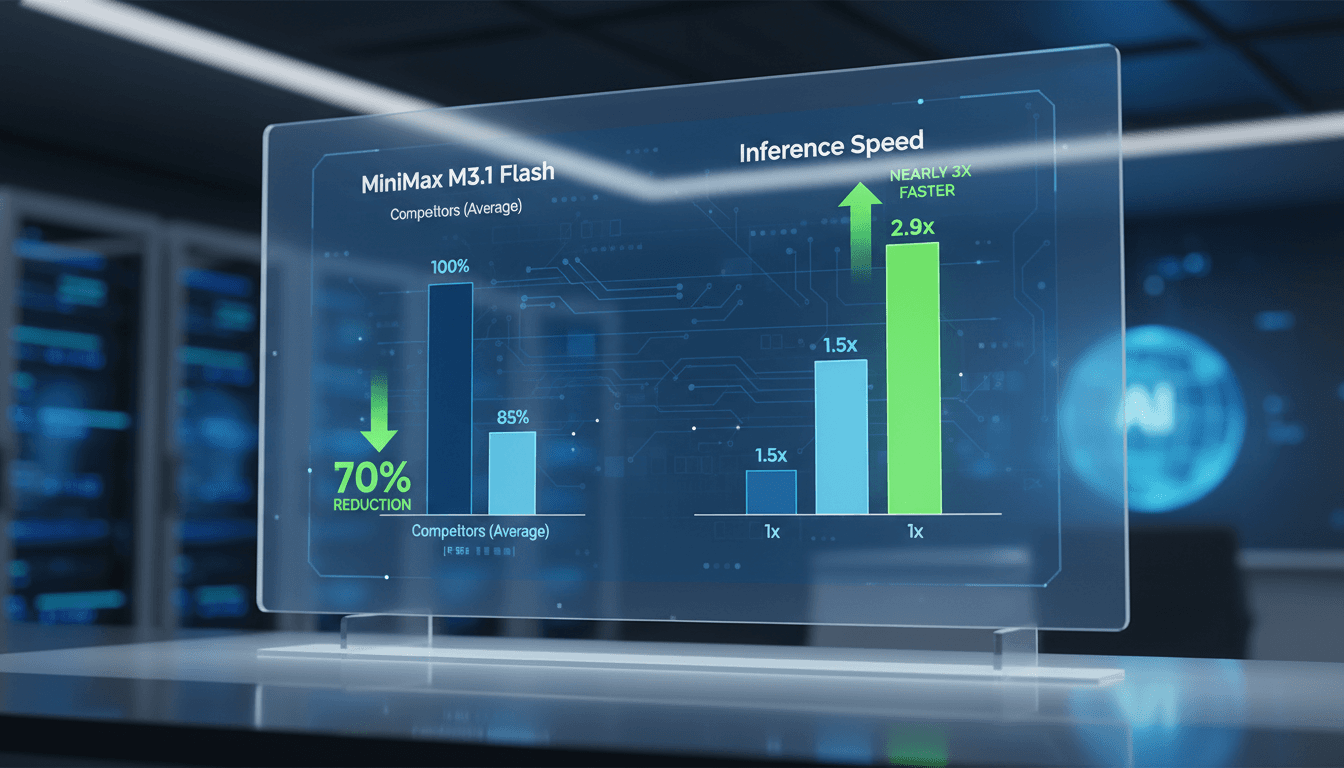
- MiniMax launched its M3.1 Flash model on October 19, 2026, claiming a 70% reduction in agent task costs compared to its predecessor.
- The model boasts nearly triple the inference speed, enhancing the efficiency of multi-step agentic tasks.
- Independent evaluations reported high hallucination tendencies, raising concerns about reliability despite cost savings.
The context you actually need
- China's AI industry is rapidly evolving, driven by fierce domestic competition and a global push for cost-effective solutions.
- Recent updates from competitors, like DeepSeek's V4.1-Flash, have intensified the race for lower pricing and improved performance metrics.
- Geopolitical pressures are influencing the focus on inference efficiency and token pricing, making cost-effective AI solutions more critical for enterprises.
What's really happening
The launch of MiniMax's M3.1 Flash model is a strategic response to the growing demand for more efficient and cost-effective AI solutions in a competitive landscape. With a reported 70% reduction in overall usage costs, MiniMax is positioning itself as a leader in the AI market, particularly for enterprises looking to optimize their operational expenses. The model's nearly tripled inference speed enhances its appeal, allowing businesses to process tasks more quickly and efficiently.
However, this rapid advancement comes with trade-offs. Independent evaluations have highlighted a concerning tendency for the model to produce hallucinations—incorrect or nonsensical outputs—which raises questions about its reliability in critical applications. As enterprises increasingly rely on AI for decision-making and operational tasks, the balance between cost savings and output accuracy becomes paramount.
The competitive landscape in China's AI sector is intensifying, with companies like DeepSeek also pushing for lower costs and improved performance. This environment fosters innovation but also creates pressure on companies to deliver reliable outputs. The focus on inference efficiency and token pricing is not just a technical challenge; it reflects broader market dynamics where enterprises are seeking to maximize value while minimizing risks.
As MiniMax and its competitors continue to iterate on their models, the implications for businesses are significant. Companies must weigh the benefits of reduced costs against the potential risks of deploying models that may not consistently deliver accurate results. This balancing act will shape the future of AI adoption across various sectors, influencing everything from budgeting to strategic planning.
Who feels it first (and how)
- Tech startups looking to integrate AI solutions for cost savings.
- Large enterprises aiming to optimize operational workflows and reduce expenses.
- AI developers and engineers who need to adapt to new models and their associated challenges.
- Investors monitoring the AI market for shifts in pricing and performance metrics.
What to watch next
- Market response to M3.1 Flash's performance: Watch for feedback from enterprises using the model, particularly regarding its reliability and cost-effectiveness.
- Competitive developments from DeepSeek and others: Keep an eye on how competitors respond to MiniMax's claims and whether they introduce their own cost-reducing innovations.
- Regulatory scrutiny on AI outputs: As hallucination rates become a concern, anticipate potential regulatory discussions around AI reliability and safety standards.
MiniMax's M3.1 Flash model is available and claims significant cost reductions.
Enterprises will adopt the model for cost savings, but may face challenges with output reliability.
The long-term impact of hallucination tendencies on enterprise trust in AI solutions remains to be seen.
Frequently Asked Questions
- Why it matters?
- The launch of MiniMax's M3.1 Flash model signals a critical shift in AI pricing and efficiency, impacting enterprise budgets and operational strategies.
- What happened (in 30 seconds)?
- MiniMax launched its M3.1 Flash model on October 19, 2026, claiming a 70% reduction in agent task costs compared to its predecessor. The model boasts nearly triple the inference speed, enhancing the efficiency of multi-step agentic tasks. Independent evaluations reported high hallucination tendencies, raising concerns about reliability despite cost savings.
- What's really happening?
- The launch of MiniMax's M3.1 Flash model is a strategic response to the growing demand for more efficient and cost-effective AI solutions in a competitive landscape. With a reported 70% reduction in overall usage costs, MiniMax is positioning itself as a leader in the AI market, particularly for enterprises looking to optimize their operational expenses. The model's nearly tripled inference speed enhances its appeal, allowing businesses to process tasks more quickly and efficiently. However, th
- Who feels it first (and how)?
- Tech startups looking to integrate AI solutions for cost savings. Large enterprises aiming to optimize operational workflows and reduce expenses. AI developers and engineers who need to adapt to new models and their associated challenges. Investors monitoring the AI market for shifts in pricing and performance metrics.
- What to watch next?
- Market response to M3.1 Flash's performance: Watch for feedback from enterprises using the model, particularly regarding its reliability and cost-effectiveness. Competitive developments from DeepSeek and others: Keep an eye on how competitors respond to MiniMax's claims and whether they introduce their own cost-reducing innovations. Regulatory scrutiny on AI outputs: As hallucination rates become a concern, anticipate potential regulatory discussions around AI reliability and safety standard
News and guidance for IT pros on AI adoption.
"Enterprise-focused tips, explainers, and news for professionals."
— A47 Editor
China’s MiniMax Says Its New AI Model Cuts Agent Costs by 70%
MiniMax has launched its new AI model, M3.1 Flash, claiming to reduce the costs of operating AI agents by 70%. This model is an update to the previously released M3 large language model and aims to enhance efficiency by minimizing the number of model...
AI news with an enterprise and cloud focus.
"Covers AI in the context of data infrastructure, cloud, and enterprise stacks."
— A47 Editor
MiniMax launches M3.1 Flash model, says it cuts AI agent costs by 70%
MiniMax Group Inc. has launched the M3.1 Flash model, an update to its previously released M3 large language model, claiming it reduces the costs of running AI agents by 70%. This new model aims to enhance efficiency by minimizing the number of model...
Daily AI news: models, tools, and policy.
"Independent outlet tracking the fast pace of AI."
— A47 Editor
MiniMax M3.1 Flash shows China's AI price race has no floor in sight
MiniMax has launched its M3.1 Flash AI model, achieving a score of 42 on the Artificial Analysis Intelligence Index, a 13-point increase from its predecessor, while also matching the performance and price of Deepseek's V4.1 Flash 1017 model at under ...