
Japanese Banks and Airlines Suspend Digital Services Due to PHP Vulnerabilities
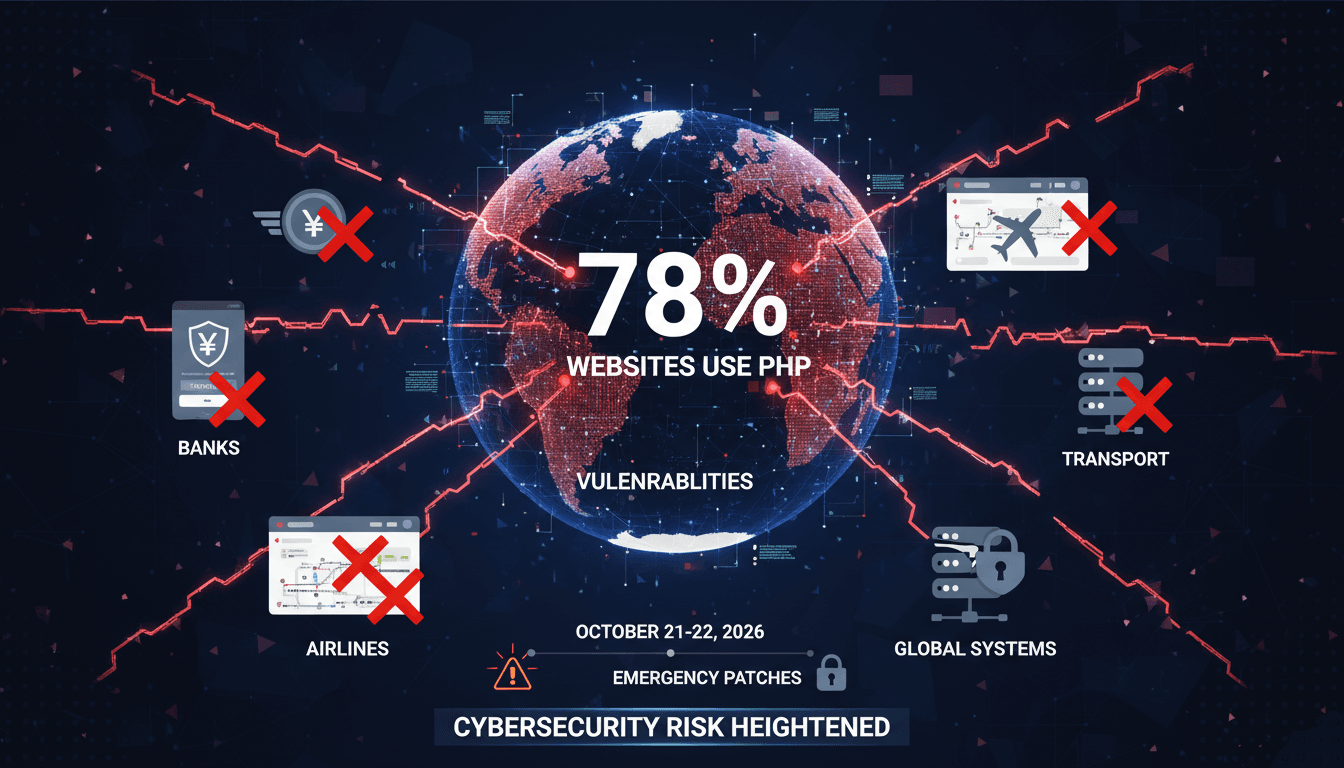
Why it matters
This incident highlights the vulnerabilities in widely-used programming languages and the immediate impact on critical services.
What happened (in 30 seconds)
- On October 21-22, 2026, Japanese banks and airlines suspended online services due to critical PHP vulnerabilities.
- Affected entities included major banks like MUFG and airlines such as All Nippon Airways, impacting internet banking and travel apps.
- No confirmed cyberattacks occurred; the actions were precautionary, following international alerts about potential exploitation.
The context you actually need
- PHP is prevalent, powering approximately 69.3% of identifiable websites globally, making it a critical component of many online services.
- The vulnerabilities (CVE-2026-109618 and CVE-2026-109619) were identified with AI assistance, emphasizing the need for robust cybersecurity measures.
- Global coordination among cybersecurity agencies prompted swift action from Japanese companies to mitigate risks before any exploitation occurred.
What's really happening
On October 21, 2026, PHP developers released security advisories and patches for two critical vulnerabilities that could allow remote code execution. These vulnerabilities were identified through advanced AI techniques, underscoring the evolving landscape of cybersecurity threats. In response, Japanese banks and airlines acted swiftly to suspend select online services, prioritizing the safety of their customers and the integrity of their systems.
Shizuoka Bank and 77 Bank were among the first to disable internet banking services, while All Nippon Airways (ANA) took down its Pocket app and Apple Wallet boarding passes. Japan Airlines (JAL) and other operators followed suit, performing maintenance on their reservation systems. By October 22, additional institutions, including MUFG and Mizuho, implemented restrictions to safeguard their operations.
Prime Minister Sanae Takaichi publicly urged rapid patching, reflecting the government's commitment to cybersecurity. The Japanese Bankers Association confirmed that core settlement systems remained unaffected, indicating that the financial infrastructure was resilient despite the disruptions. This incident serves as a reminder of the interconnectedness of digital services and the potential risks posed by vulnerabilities in widely-used programming languages.
International cybersecurity agencies, including CERT-EU and NCSC, had issued warnings about the vulnerabilities, prompting a coordinated response from Japanese entities. The emphasis was on prioritizing internet-facing installations, which are particularly susceptible to exploitation. As services began to resume progressively after the application of emergency patches, the incident highlighted the importance of proactive cybersecurity measures in an increasingly digital world.
The aftermath reactions included directives for prompt updates and temporary suspensions where patching was delayed. Japan's Information-technology Promotion Agency (IPA) issued urgent advisories, reinforcing the need for vigilance in cybersecurity practices. While no market shifts or regulatory changes were reported, the incident has heightened awareness of the risks associated with PHP-dependent web infrastructure.
Who feels it first (and how)
- Consumers using online banking and travel services in Japan will experience service disruptions.
- IT professionals in Japan will face increased pressure to implement security patches and enhance cybersecurity protocols.
- Expatriates in Dubai who rely on Japanese services may also experience indirect impacts due to heightened security measures.
What to watch next
- Service Restoration Rates: Monitor how quickly affected companies restore services and the effectiveness of the applied patches.
- Cybersecurity Policy Changes: Watch for potential shifts in cybersecurity regulations or practices in Japan and globally as a response to this incident.
- Public Awareness Campaigns: Look for increased efforts from companies to educate consumers about cybersecurity risks and best practices.
The vulnerabilities were identified and patched; no confirmed exploitation occurred.
Increased scrutiny on PHP and similar technologies in cybersecurity discussions.
The long-term impact on consumer trust in digital services following these disruptions.
Frequently Asked Questions
- Why it matters?
- This incident highlights the vulnerabilities in widely-used programming languages and the immediate impact on critical services.
- What happened (in 30 seconds)?
- On October 21-22, 2026, Japanese banks and airlines suspended online services due to critical PHP vulnerabilities. Affected entities included major banks like MUFG and airlines such as All Nippon Airways, impacting internet banking and travel apps. No confirmed cyberattacks occurred; the actions were precautionary, following international alerts about potential exploitation.
- What's really happening?
- On October 21, 2026, PHP developers released security advisories and patches for two critical vulnerabilities that could allow remote code execution. These vulnerabilities were identified through advanced AI techniques, underscoring the evolving landscape of cybersecurity threats. In response, Japanese banks and airlines acted swiftly to suspend select online services, prioritizing the safety of their customers and the integrity of their systems. Shizuoka Bank and 77 Bank were among the first t
- Who feels it first (and how)?
- Consumers using online banking and travel services in Japan will experience service disruptions. IT professionals in Japan will face increased pressure to implement security patches and enhance cybersecurity protocols. Expatriates in Dubai who rely on Japanese services may also experience indirect impacts due to heightened security measures.
- What to watch next?
- Service Restoration Rates: Monitor how quickly affected companies restore services and the effectiveness of the applied patches. Cybersecurity Policy Changes: Watch for potential shifts in cybersecurity regulations or practices in Japan and globally as a response to this incident. Public Awareness Campaigns: Look for increased efforts from companies to educate consumers about cybersecurity risks and best practices.
English-language digital publication covering business, politics, technology, and current affairs.
"The Arabian Post mixes original and syndicated-style coverage with a broad regional and global business-news orientation."
— A47 Editor
Japanese banks and airlines suspend services over PHP vulnerabilities
Japanese banks and airlines have suspended services due to critical vulnerabilities identified in the PHP programming language, which is widely used across the internet. This decision reflects the urgency of addressing security flaws that could poten...
English-language digital publication covering business, politics, technology, and current affairs.
"The Arabian Post mixes original and syndicated-style coverage with a broad regional and global business-news orientation."
— A47 Editor
PHP issues emergency fixes after critical vulnerability leak
PHP developers have issued emergency security updates to address two critical vulnerabilities, CVE-2026-109618 and CVE-2026-109619, after details of these flaws were leaked online. This has prompted global cybersecurity authorities to alert organizat...
UAE-based English-language newspaper covering regional politics, economics, and global affairs.
"The National reflects Emirati policy perspectives while maintaining international editorial standards."
— A47 Editor
PHP security flaw: Websites taken down as OpenAI spots issue with backbone of internet
A significant security flaw in the PHP programming language, which underpins over 70% of global websites, has been identified by OpenAI, leading to the shutdown of numerous websites. This vulnerability has raised alarms across the internet, prompting...
International coverage of politics, security, and social issues.
"Global News is a mainstream Canadian outlet with a centrist editorial stance, focusing on factual reporting."
— A47 Editor
Ottawa taking down some federal websites over critical global vulnerability
Ottawa is taking down some federal websites due to critical vulnerabilities identified in the PHP programming language. Developers have urged users to update their sites promptly following the release of a fix.