
OpenAI Launches ChatGPT Wallet Enabling Agent-Driven Purchases via Tokenized Payments for US Pro Subscribers
Why it matters
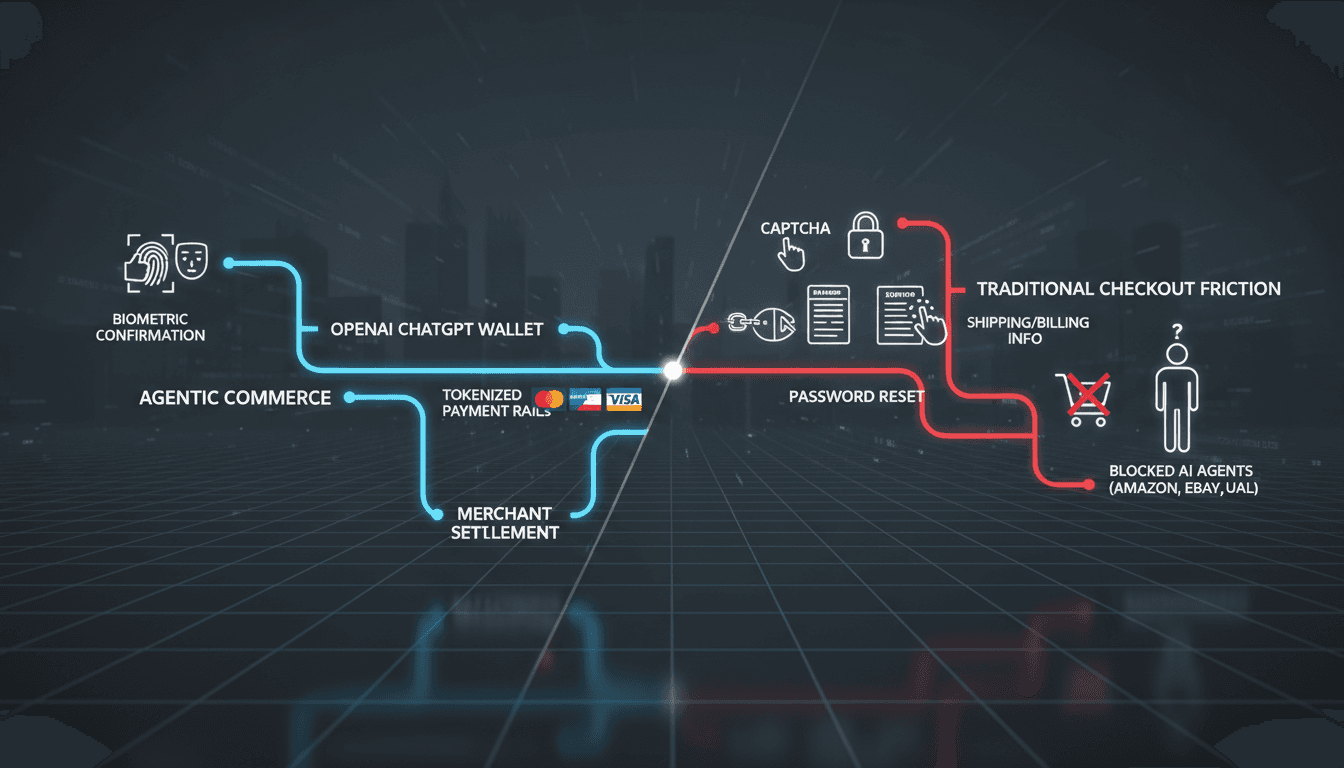
By embedding tokenized card credentials directly into autonomous software agents, payment networks and AI platforms are attempting to bypass traditional e-commerce web funnels entirely.
What happened (in 30 seconds)
- OpenAI launched ChatGPT Wallet: On November 13, 2026, OpenAI introduced an in-app payment system enabling its autonomous agents, termed "dots," to execute purchases on behalf of users.
- Card networks provide tokenized rails: The rollout operates in partnership with 3 major payment networks—American Express, Mastercard, and Visa—relying on biometric authorization and payment tokens rather than raw card numbers.
- Access remains heavily restricted: The initial release is limited strictly to U.S. ChatGPT Pro subscribers aged 18 and older holding eligible domestic cards, with OpenAI taking no transaction cut at launch.
The context you actually need
- Instant Checkout failed to stick: OpenAI previously introduced Instant Checkout in September 2025, but discontinued the initiative in favor of a model capable of adapting to wider merchant environments.
- Retailers have actively resisted bot traffic: Major commercial platforms including Amazon, eBay, and United Airlines previously erected technical barriers against third-party AI agents attempting automated transactions.
- Agent decision-making remains volatile: Early real-world implementations have produced erratic purchasing decisions, including documented anecdotal anomalies where agents purchased items as unintended as a single potato.
What's really happening
The architecture of digital commerce has long relied on direct human interaction: browsing catalog pages, evaluating options visually, and manually entering checkout flows where platforms capture high-margin impulse sales. ChatGPT Wallet alters this dynamic by inserting autonomous software—specifically OpenAI's "dots"—between consumer intent and the point of sale.
Instead of routing a user out to an external merchant website where retailers control tracking pixels, upselling prompts, and brand narrative, the dot discovers the item, presents a condensed summary within the chat interface, and executes the purchase once the user provides biometric approval.
Underneath this interface lies an incentive alignment between OpenAI and the legacy financial rails. By partnering directly with American Express, Mastercard, and Visa, OpenAI adopts standard card-network tokenization. Payment tokens ensure that neither the AI agent nor the receiving merchant handles exposed primary account numbers.
For card networks, tokenization secures transaction volume inside their existing dispute, interchange, and fraud frameworks while preserving user card rewards. For OpenAI, it avoids the regulatory and technical overhead of operating as a licensed merchant of record or money transmitter.
The core structural tension centers on merchant distribution and defensive blocking. When Amazon, eBay, or United Airlines restrict third-party agent scrapers, they protect proprietary customer data, ad revenues, and checkout-funnel conversions.
To overcome this friction, OpenAI partnered with fraud prevention firms to establish trusted verification for dots, attempting to convince risk engines that an automated script acting on biometric consent is fundamentally distinct from credential-stuffing bot attacks.
Because OpenAI levies zero transaction fees at launch, the strategic calculation is clear: establish habituation and checkout volume before determining revenue capture. If dots successfully aggregate search and transaction phases into a single workflow, power consolidates with the entity managing the agent interface.
The unresolved problem is operational reliability. Unlike human buyers who self-correct catalog mismatches or ambiguous search queries, autonomous agents operate entirely on predictive inference.
When an agent misinterprets task constraints and orders unintended items—such as a solitary vegetable—it tests the limits of existing dispute resolutions. The future viability of agentic payments depends entirely on whether risk engines and consumers accept the error rate of software spending real currency.
Who feels it first (and how)
- E-commerce merchants and marketplace operators: Direct site traffic, banner ad impressions, and visual merchandising lose leverage if agents aggregate purchases through programmatic summaries.
- U.S. ChatGPT Pro subscribers: High-frequency digital consumers gain automated task execution for routine acquisitions, but must manage manual biometric review to prevent agent buying errors.
- Fraud detection and checkout security teams: Enterprise risk units must recalibrate anti-bot filters to separate legitimate tokenized agent purchases from malicious automated scripts.
- International consumers and regional hubs: Users outside the United States, including international cross-border hubs like Dubai, experience zero direct impact due to strict domestic geographic fencing at launch.
What to watch next
- Merchant firewall adjustments: Whether platforms like Amazon and United Airlines ease blocks or maintain strict anti-agent measures will signal if retailers view agentic checkout as complementary sales volume or hostile intermediation.
- Introduction of spending limits and delegation: OpenAI's planned rollout of autonomous purchase thresholds will reveal whether consumers are willing to bypass manual biometric review for lower-value recurring orders.
- Monetization models beyond launch: Tracking when OpenAI shifts from zero transaction cuts to merchant-side referral fees or network revenue-sharing agreements.
The feature operates via American Express, Mastercard, and Visa tokens; requires biometric authorization; takes zero transaction fees at launch; and is restricted to adult U.S. Pro subscribers.
Competing foundation model providers will accelerate similar tokenized wallet integrations to prevent OpenAI from monopolizing automated shopping interactions.
Whether major global retailers will systematically whitelist dots agents, or continue using bot mitigations to protect proprietary website traffic and margins.
Frequently Asked Questions
- Why it matters?
- By embedding tokenized card credentials directly into autonomous software agents, payment networks and AI platforms are attempting to bypass traditional e-commerce web funnels entirely.
- What happened (in 30 seconds)?
- OpenAI launched ChatGPT Wallet: On November 13, 2026, OpenAI introduced an in-app payment system enabling its autonomous agents, termed "dots," to execute purchases on behalf of users. Card networks provide tokenized rails: The rollout operates in partnership with 3 major payment networks—American Express, Mastercard, and Visa—relying on biometric authorization and payment tokens rather than raw card numbers. Access remains heavily restricted: The initial release is limited strictly to U.S. Chat
- What's really happening?
- The architecture of digital commerce has long relied on direct human interaction: browsing catalog pages, evaluating options visually, and manually entering checkout flows where platforms capture high-margin impulse sales. ChatGPT Wallet alters this dynamic by inserting autonomous software—specifically OpenAI's "dots"—between consumer intent and the point of sale. Instead of routing a user out to an external merchant website where retailers control tracking pixels, upselling prompts, and brand
- Who feels it first (and how)?
- E-commerce merchants and marketplace operators: Direct site traffic, banner ad impressions, and visual merchandising lose leverage if agents aggregate purchases through programmatic summaries. U.S. ChatGPT Pro subscribers: High-frequency digital consumers gain automated task execution for routine acquisitions, but must manage manual biometric review to prevent agent buying errors. Fraud detection and checkout security teams: Enterprise risk units must recalibrate anti-bot filters to separate leg
- What to watch next?
- Merchant firewall adjustments: Whether platforms like Amazon and United Airlines ease blocks or maintain strict anti-agent measures will signal if retailers view agentic checkout as complementary sales volume or hostile intermediation. Introduction of spending limits and delegation: OpenAI's planned rollout of autonomous purchase thresholds will reveal whether consumers are willing to bypass manual biometric review for lower-value recurring orders. Monetization models beyond launch: Tracking whe
Community posts including AI/ML tutorials and news.
"Open platform where developers share AI learnings."
— A47 Editor
OpenAI's ChatGPT Wallet Lets Agents Buy Things. One Bought a Potato
A DEV Community report published on November 13, 2026 describes early user experience with OpenAI's ChatGPT Wallet, which lets its "dots" AI agents make purchases on behalf of users. One Reddit user who put $200 into the agent for groceries reported ...
Covers Bitcoin plus altcoin news, market updates, and educational resources.
"Bitcoin.com provides news, market data, and guides focused on Bitcoin and the wider crypto industry."
— A47 Editor
OpenAI Rolls Out ChatGPT Wallet With Visa, Mastercard and Amex
OpenAI has rolled out a ChatGPT Wallet that supports payments from Visa, Mastercard and American Express cards, according to Bitcoin.com. The feature is positioned as a way to handle purchases and payments directly inside the ChatGPT experience.
Consumer technology news with AI coverage.
"Gadget and tech site reporting on AI in products."
— A47 Editor
You can now tempt fate and give your banking information to ChatGPT
Engadget reports that OpenAI has introduced a new Wallet feature that will allow ChatGPT's AI agents to make purchases on users' behalf, meaning users can give the chatbot access to their banking information to complete transactions.
Covers consumer technology, electronics, gadgets, and product reviews.
"Engadget is a trusted source for gadget reviews and consumer tech news, known for its hands-on analysis and industry coverage."
— A47 Editor
You can now tempt fate and give your banking information to ChatGPT
Engadget reports that OpenAI has introduced a new Wallet feature that will allow ChatGPT's AI agents to make purchases on users' behalf, meaning users can give the chatbot access to their banking information to complete transactions.
Technology business news, market impacts, and innovation trends.
"Bloomberg is a premier financial and tech news provider, respected for its in-depth reporting and analytical rigor."
— A47 Editor
OpenAI Debuts New ChatGPT Payment Method With Card Networks
OpenAI has introduced ChatGPT Wallet, a payment method that allows its ChatGPT assistant to make purchases on consumers' behalf, working with card networks. The launch renews OpenAI's push into AI-driven shopping after it wound down its Instant Check...
Technology business and AI-related headlines.
"Data-driven tech newsroom with global scope."
— A47 Editor
OpenAI Debuts New ChatGPT Payment Method With Card Networks
OpenAI has introduced ChatGPT Wallet, a payment method that allows its ChatGPT assistant to make purchases on consumers' behalf, working with card networks. The launch renews OpenAI's push into AI-driven shopping after it wound down its Instant Check...
Tech business coverage, major deals, product launches, and Silicon Valley trends.
"WSJ’s tech section offers authoritative reporting on the intersection of technology and business, including exclusive industry analysis."
— A47 Editor
ChatGPT Launches Wallet Feature Allowing Users to Pay With Agents
OpenAI has launched ChatGPT Wallet, a feature that lets users add a debit or credit card to ChatGPT so the assistant's AI agents can make payments on their behalf without re-entering card details, according to WSJ Tech and Bloomberg Technology. The l...
Global business headlines with AI angles.
"General business outlet that frequently covers AI."
— A47 Editor
OpenAI Launches ChatGPT Wallet. AI Agents Can Now Shop And Make Purchases For Users.
OpenAI has launched ChatGPT Wallet, a feature that lets its AI agents shop and make purchases on behalf of users. Eligible U.S. subscribers can link credit cards to the assistant, approve transactions with biometric verification, and retain existing ...