
IDF Uploads 3.5 Million Palestinian Photos to Amazon Cloud for AI Facial Recognition
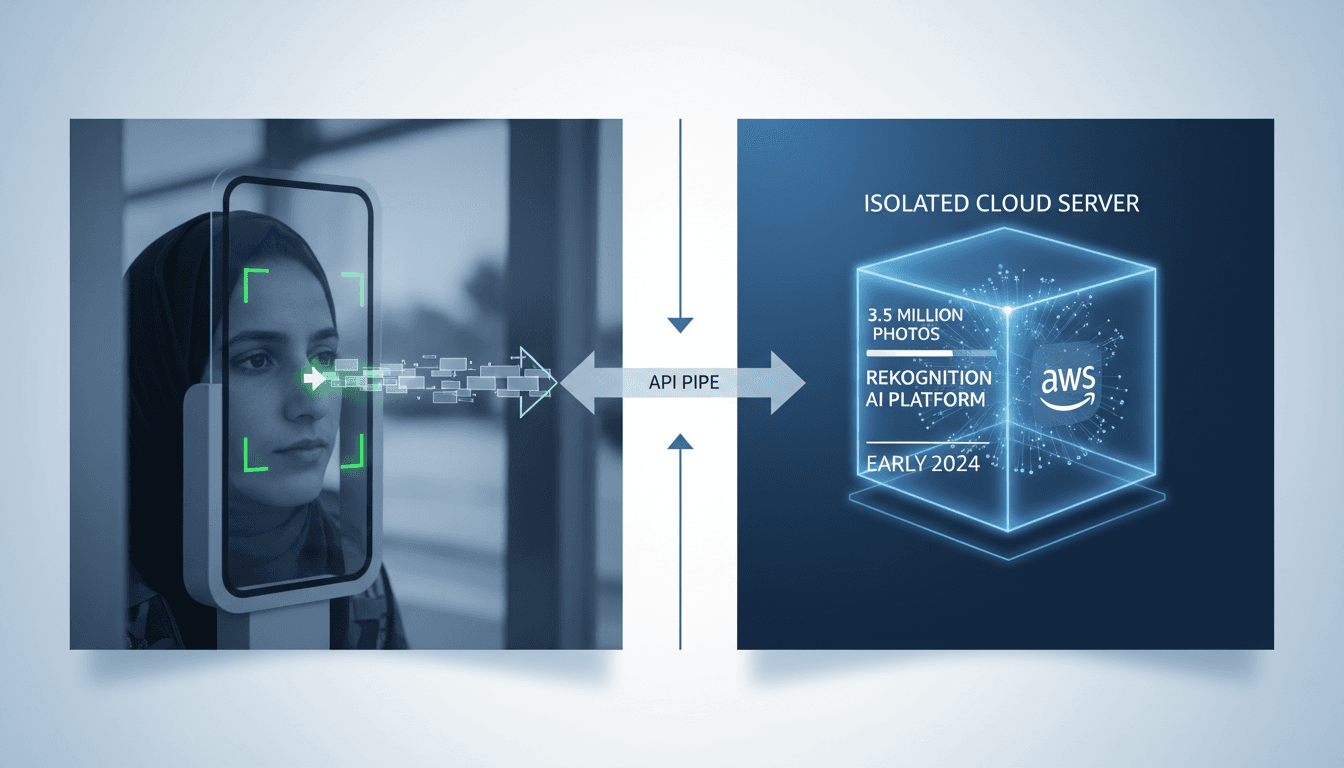
If you manage enterprise procurement, data sovereignty, or institutional risk, the boundary between commercial hyperscale infrastructure and defense surveillance operations has officially dissolved into standard vendor architecture.
Why it matters
The operational merger of commercial AI platforms with military biometric tracking establishes a concrete template for how dual-use enterprise cloud contracts bypass public governance and standard compliance friction.
What happened (in 30 seconds)
- The migration: In early 2024, the Israeli Defense Forces’ Rolling Stone unit transferred 3.5 million photographs of Palestinians to an isolated Amazon Web Services data center located near Tel Aviv.
- The technology: The uploaded dataset fed directly into Amazon Rekognition, a commercial computer vision and facial recognition engine, to accelerate population tracking and checkpoint screening during operations in Gaza and the West Bank.
- The coordination: Amazon provided dedicated secure space within its facility, with a team of military personnel embedded directly inside AWS Tel Aviv offices to execute implementation.
The context you actually need
- Project Nimbus: The deployment originates from the 2021 multibillion-dollar Project Nimbus agreement signed with Amazon and Google, which structured government cloud migration under explicit contractual terms limiting the tech vendors' ability to restrict operational usage.
- Biometric infrastructure: The 3.5 million images integrate alongside existing military surveillance platforms, such as the Blue Wolf system in the West Bank and checkpoint image-capture networks deployed across Gaza transit corridors.
- Corporate insulation: Amazon maintains that it lacks administrative visibility into client-encrypted cloud contents, relying on standard multi-tenant privacy architecture to decouple commercial infrastructure provision from end-use operational liability.
What's really happening
The deployment of 3.5 million population records onto Amazon Web Services is not an ad hoc technical adjustment; it demonstrates the structural incentive model governing enterprise cloud providers and state security apparatuses. Modern intelligence operations generate high-volume visual datasets that outstrip the physical computing capacity, hardware procurement cycles, and local processing capabilities of sovereign military servers. Commercial hyperscalers solve this latency bottleneck by offering ready-made, pre-trained neural networks like Amazon Rekognition alongside localized physical capacity.
Under the 2021 Project Nimbus framework, the structural terms were settled prior to the conflict: commercial vendors agreed to supply sovereign compute environments with explicit constraints preventing the vendors from vetoing or auditing specific operational workloads. When the Rolling Stone unit expanded data gathering at checkpoints following the October 2023 ground invasion, the operational bottleneck was computational throughput. Migrating 3.5 million images—encompassing biometric profiles, familial associations, property files, and transit histories—to an isolated AWS availability zone near Tel Aviv permitted immediate, scalable algorithmic parsing without building proprietary military hardware from scratch.
This integration alters enterprise exposure across global tech. By having uniform military personnel stationed directly inside AWS corporate facilities in Tel Aviv, the physical division between a multinational software vendor and an active defense command structure is functionally closed. For Amazon, the incentive remains programmatic: fulfilling multi-year sovereign public-sector agreements while shielding corporate operations behind standard end-to-end data privacy terms. By asserting that infrastructure providers cannot and should not inspect customer data payloads, cloud providers preserve a business model that licenses identical automated tooling to logistics enterprises, municipal police, and frontline combat units.
The operational risk shifts directly to deployment accuracy. Prior operational reporting established recurring civilian misidentification rates within automated visual surveillance tools in urban battlegrounds. Yet, because these platforms run through closed commercial cloud partitions, independent algorithmic auditing, compliance tracking, and third-party validation are contractually excluded. The precedent is clear: enterprise hyperscale cloud contracts increasingly function as sovereign defense utilities, insulating both provider and operator from standard regulatory discovery.
Who feels it first (and how)
- Enterprise Chief Risk Officers: Compliance executives managing global cloud portfolios must account for heightened geopolitical counterparty risk and third-party auditing challenges across shared hyperscaler infrastructure.
- Displaced populations in Gaza and the West Bank: Individuals passing through transit corridors and checkpoints experience direct, non-consensual biometric ingestion into commercial model pipelines without regulatory recourse.
- Multinational cloud engineers and product teams: Technical workforces at hyperscalers face direct institutional proximity to combat systems via sovereign public-sector enterprise agreements.
- Sovereign procurement officers: Defense ministries worldwide receive an operational blueprint for executing large-scale population data ingestion using off-the-shelf commercial computer vision systems.
What to watch next
- Hyperscaler contract friction: Track whether subsequent government cloud tenders adopt Project Nimbus-style non-restriction clauses that explicitly bar cloud providers from suspending automated surveillance workloads.
- Auditing of automated identification error rates: Monitor whether technical disclosures or military procurement reviews detail misidentification frequencies from Rekognition models operating on checkpoint biometric datasets.
- Direct regulatory scrutiny on dual-use cloud exports: Watch for legislative actions in the US and Europe seeking to classify commercial facial recognition APIs as controlled dual-use defense software when integrated into foreign military infrastructure.
The IDF Rolling Stone unit uploaded 3.5 million photos of Palestinians to an isolated AWS data center near Tel Aviv in early 2024 to utilize the Rekognition AI platform under the Project Nimbus contract.
The continuous ingestion of movement, checkpoint, and family records into commercial cloud environments will remain the baseline standard for military surveillance operations due to lower computational costs and ready-to-use neural nets.
Whether cloud service agreements will face legal or contractual challenges regarding potential civilian misidentifications generated by commercial computer vision algorithms deployed in active conflict zones.
Frequently Asked Questions
- Why it matters?
- The operational merger of commercial AI platforms with military biometric tracking establishes a concrete template for how dual-use enterprise cloud contracts bypass public governance and standard compliance friction.
- What happened (in 30 seconds)?
- The migration: In early 2024, the Israeli Defense Forces’ Rolling Stone unit transferred 3.5 million photographs of Palestinians to an isolated Amazon Web Services data center located near Tel Aviv. The technology: The uploaded dataset fed directly into Amazon Rekognition, a commercial computer vision and facial recognition engine, to accelerate population tracking and checkpoint screening during operations in Gaza and the West Bank. The coordination: Amazon provided dedicated secure space withi
- What's really happening?
- The deployment of 3.5 million population records onto Amazon Web Services is not an ad hoc technical adjustment; it demonstrates the structural incentive model governing enterprise cloud providers and state security apparatuses. Modern intelligence operations generate high-volume visual datasets that outstrip the physical computing capacity, hardware procurement cycles, and local processing capabilities of sovereign military servers. Commercial hyperscalers solve this latency bottleneck by offer
- Who feels it first (and how)?
- Enterprise Chief Risk Officers: Compliance executives managing global cloud portfolios must account for heightened geopolitical counterparty risk and third-party auditing challenges across shared hyperscaler infrastructure. Displaced populations in Gaza and the West Bank: Individuals passing through transit corridors and checkpoints experience direct, non-consensual biometric ingestion into commercial model pipelines without regulatory recourse. Multinational cloud engineers and product teams: T
- What to watch next?
- Hyperscaler contract friction: Track whether subsequent government cloud tenders adopt Project Nimbus-style non-restriction clauses that explicitly bar cloud providers from suspending automated surveillance workloads. Auditing of automated identification error rates: Monitor whether technical disclosures or military procurement reviews detail misidentification frequencies from Rekognition models operating on checkpoint biometric datasets. Direct regulatory scrutiny on dual-use cloud exports: Wat
Arabic-language coverage of international news and geopolitics.
"RT Arabic is a Russian state-funded outlet often criticized for promoting Kremlin-aligned narratives."
— A47 Editor
"للتعرف والتحليل".. "الغارديان" تكشف كواليس نقل إسرائيل 3.5 ملايين صورة لفلسطينيين إلى منصة "أمازون"
The Guardian reported that the Israeli military transferred 3.5 million images of Palestinians to Amazon's cloud computing platform, where artificial intelligence tools are used for facial recognition and image analysis.
Jordanian news and regional updates.
"Roya News is a Jordanian outlet focused on breaking news and local affairs."
— A47 Editor
تقرير للغارديان: جيش الاحتلال الإسرائيلي رفع 3.5 مليون صورة لفلسطينيين على سحابة أمازون لتشغيل تقنيات التعرف على الوجوه
A Guardian investigative report, as published by the British newspaper, revealed that the Israeli occupation army uploaded 3.5 million images of Palestinians to Amazon's cloud to operate facial recognition technologies. The report was cited by Royane...
RT is a Russian state-funded network covering global events from a Russian perspective.
"RT is widely criticized for promoting pro-Kremlin narratives and is considered by many to be a state propaganda outlet."
— A47 Editor
Israel used Amazon facial recognition to track Palestinians – Guardian
The Guardian has reported that Israel used Amazon's AI-powered facial recognition technology to analyze millions of Palestinian photos, according to the report carried by RT (Russia Today). The base story centers on the alleged use of a commercial cl...
Pan-Arab political news and analysis.
"Al-Quds Al-Arabi is a London-based Arabic newspaper known for political coverage."
— A47 Editor
الغارديان: إسرائيل تنقل 3.5 ملايين صورة لفلسطينيين إلى أمازون لمراقبتهم
The Guardian reported on Monday that the Israeli army transferred 3.5 million images of Palestinians to Amazon's cloud computing platform, with the aim of using artificial intelligence techniques for facial recognition and image analysis as part of s...
International coverage from The Guardian's global desks.
"The Guardian is known for its progressive editorial stance and in-depth analysis."
— A47 Editor
Revealed: Israel uploaded millions of photos to Amazon’s facial recognition platform to track Palestinians
The Guardian reports that the Israeli military uploaded 3.5 million photos to Amazon's cloud platform in order to use the company's facial recognition technology to analyse images of Palestinians. Leaked documents show the catalogue was moved into Am...