
Euclid Telescope Identifies Quasar Dún Aonghasa 630 Million Years After the Big Bang Setting New Early-Universe Distance Record
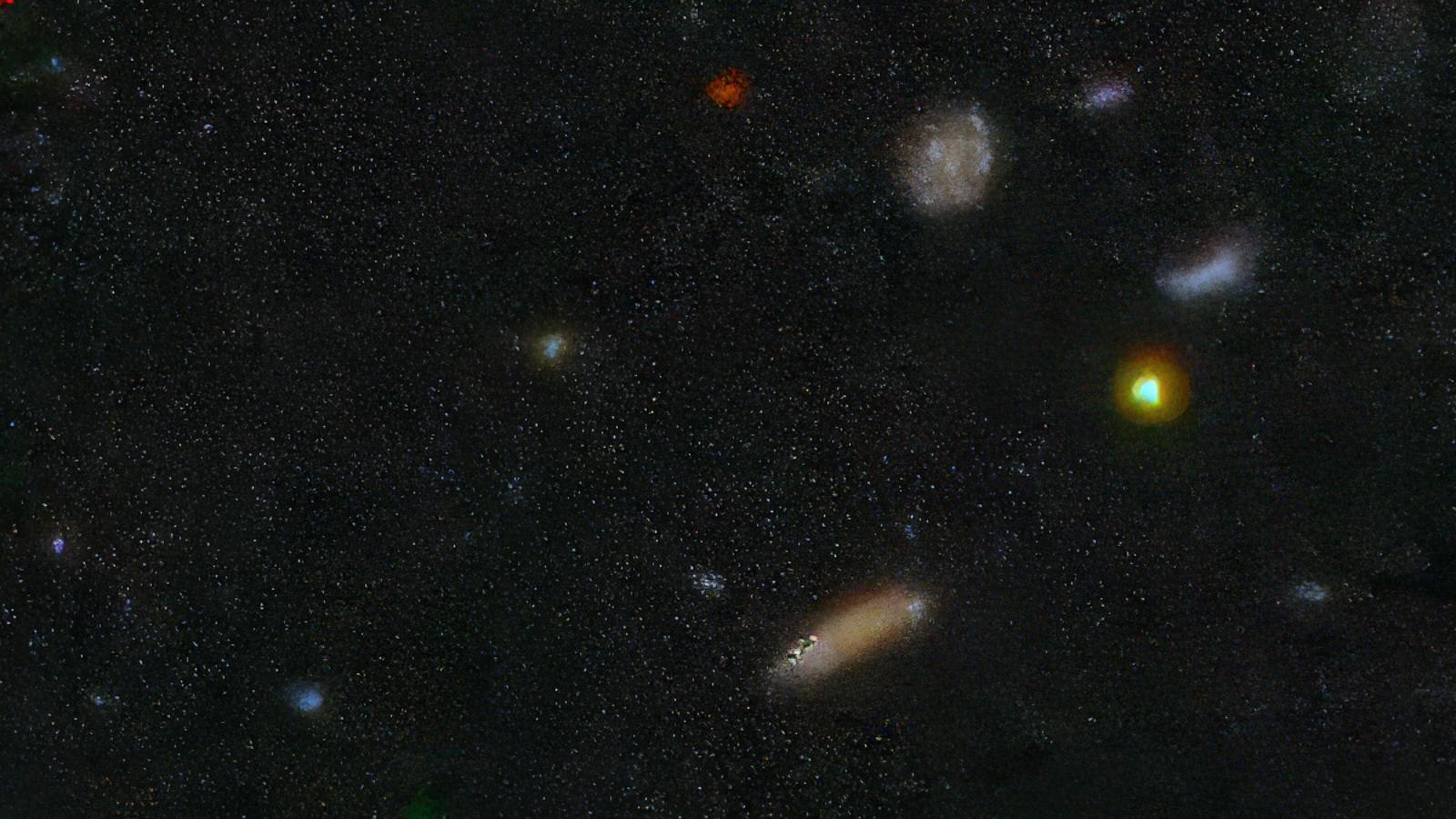
What happened
An international research team detected the earliest known quasar, named Dún Aonghasa, which formed just 630 million years after the Big Bang.
The Context
* A collaborative hardware pipeline: The European Space Agency’s Euclid telescope first surfaced the object 13.1 billion light-years away, with follow-up validation conducted by both the Hubble and James Webb space telescopes. * Timeline recalibration: The observation pushes the frontier of known early cosmic structure formation back by nearly 40 million years, exceeding previous benchmarks that rarely advanced by more than 15 million years at a time. * Theoretical constraints: Published in *Astronomy & Astrophysics*, the findings challenge current astrophysics models explaining how supermassive black holes could accumulate scale in an infant universe.
The Number
— the solar masses contained within the quasar's central engine, demonstrating that high-scale gravitational systems matured far faster than baseline growth algorithms predicted.
Takeaway
Ongoing wide-field surveys from Euclid will likely produce more anomalous early-universe signatures, accelerating the revision of foundational cosmological physics over the next two years.
Technology innovations, startups, and trends.
"ABC News delivers broad national coverage with a mainstream editorial stance, focusing on accessibility and balanced reporting."
— A47 Editor
Scientists discover quasar formed within 630 million years of the Big Bang
Scientists have discovered the most distant quasar yet, a luminous object that formed within 630 million years of the Big Bang, according to a report from ABC News Technology.
Breaking news, politics, business, and entertainment from the U.S. and around the world.
"The New York Post is a tabloid-format newspaper known for its sensationalist headlines and conservative-leaning editorial tone."
— A47 Editor
Scientists discover quasar formed within a mere 630 million years of the Big Bang, setting a record
Scientists have discovered the most distant quasar yet, the core of a galaxy whose central black hole is slowly consuming matter, dating back to within roughly 630 million years of the Big Bang, according to a New York Post report.
News in science and technology, with a focus on consumer and innovation stories.
"Popular Science simplifies complex scientific topics for general audiences and celebrates innovation."
— A47 Editor
Oldest known quasar formed 630 million years after the big bang
The Euclid space telescope has identified what is described as the oldest known quasar, which formed about 630 million years after the Big Bang, according to a Popular Science report. The discovery extends a record the same telescope had previously s...