
NASA launches rescue mission for Swift Observatory threatened by solar storms
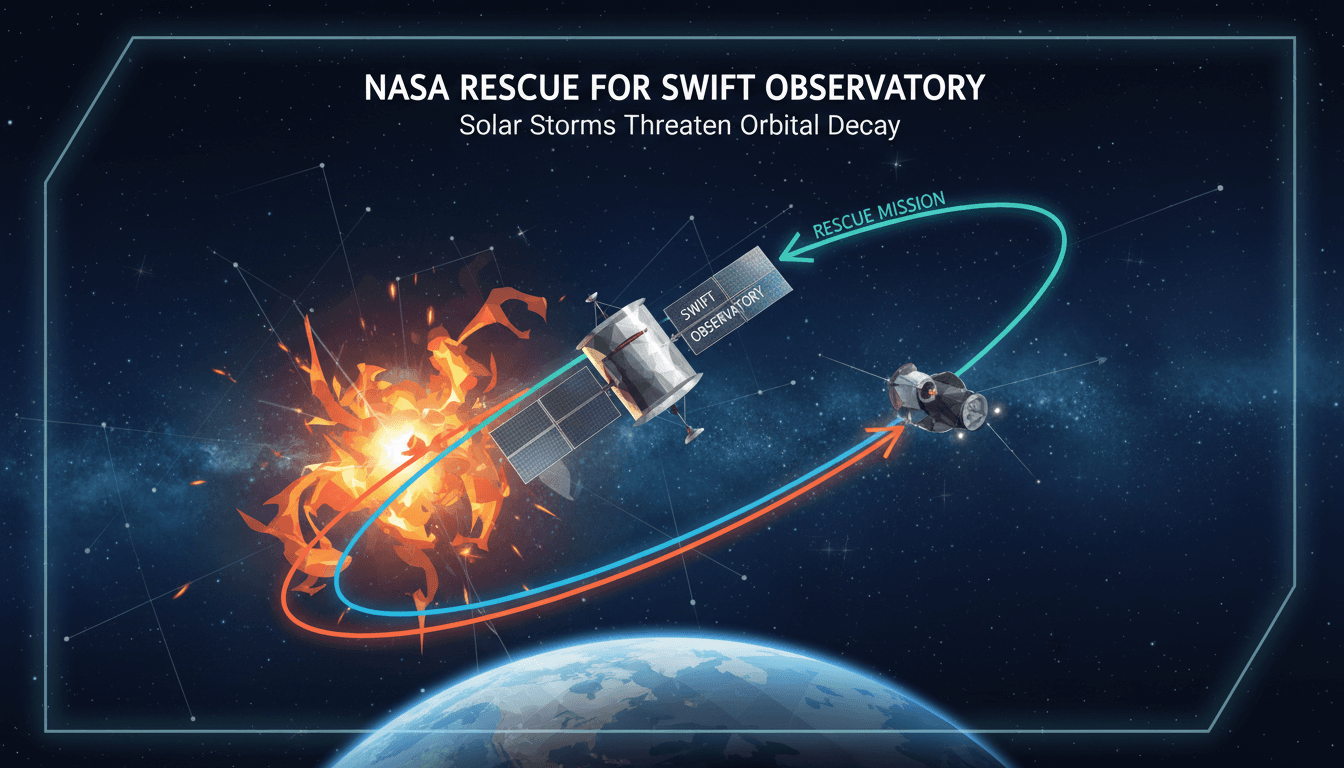
Here's what it means for you.
NASA's recent initiative to rescue the Swift Observatory highlights the increasing challenges posed by space debris and solar activity on satellite operations. This mission not only aims to save a vital scientific asset but also sets a precedent for future interventions in space. As the agency collaborates with Katalyst Space Technologies, the implications for managing aging satellites and mitigating risks associated with space debris become increasingly significant. The success of this mission could influence policy decisions regarding the maintenance and protection of scientific instruments in orbit. It emphasizes the need for innovative solutions to safeguard our technological investments in space.
What happened
NASA has launched a spacecraft to rescue the Swift Observatory, which is at risk of crashing back to Earth due to a decline in its orbit caused by recent solar storms. The mission involves a robotic spacecraft developed by Katalyst Space Technologies, designed to intercept the telescope before it burns up in the atmosphere. This urgent intervention is necessary to stabilize the observatory's trajectory and prevent its destruction.
The Swift Observatory, operational since its launch in 2004, has been a crucial asset for astronomical research. However, the recent solar storms have negatively impacted its orbit, putting it in imminent danger. The rescue mission aims to address these challenges and preserve the observatory's functionality.
The Context
The Swift Observatory has been operational for nearly two decades, making its current predicament particularly urgent. Launched in 2004, it has contributed significantly to our understanding of the universe. The recent solar storms have created a precarious situation, necessitating immediate action to prevent the loss of this valuable scientific instrument.
NASA's collaboration with Katalyst Space Technologies marks a novel approach to addressing the risks associated with aging satellites. The mission's timing is critical, as the observatory could face catastrophic failure as soon as this year. This situation underscores the broader implications of space debris and the need for effective management strategies.
Takeaway
The outcome of this mission will not only determine the fate of the Swift Observatory but may also influence future strategies for managing aging satellites. As NASA works to stabilize the observatory's trajectory, updates on the mission's progress and any challenges faced will be closely monitored. The success of this endeavor could pave the way for similar interventions in the future.
Future plans for the Swift Observatory after the rescue attempt will also be of interest, as they may shape the direction of astronomical research. The mission serves as a reminder of the importance of safeguarding our scientific assets in an increasingly crowded orbital environment.
Consumer tech and culture with frequent AI coverage.
"Influential tech outlet covering AI products and policy."
— A47 Editor
NASA launched an emergency mission to stop the Swift Observatory from crashing to Earth
NASA has launched an emergency mission to prevent the Swift Observatory from crashing to Earth, following a decline in its orbit due to recent solar storms. The agency has partnered with Katalyst Space Technologies, whose Link spacecraft was launched...
Tech news, reviews, and analysis of consumer electronics, science, art, and culture.
"The Verge is a technology-focused media outlet known for in-depth reporting, product reviews, and coverage of the intersection between technology and culture."
— A47 Editor
NASA launched an emergency mission to stop the Swift Observatory from crashing to Earth
NASA has launched an emergency mission to prevent the Swift Observatory from crashing to Earth, following a decline in its orbit due to recent solar storms. The agency has partnered with Katalyst Space Technologies, whose Link spacecraft was launched...
Conservative-leaning political and national coverage.
"The Washington Times is a conservative-leaning newspaper known for its political coverage and advocacy of right-of-center viewpoints."
— A47 Editor
Rescue mission launches to save NASA telescope that's falling back to Earth
A three-armed spacecraft named Link was launched into orbit to rescue NASA's Swift Observatory, which is at risk of crashing back to Earth. The launch occurred on July 3, 2026, marking a critical step in efforts to preserve this vital scientific inst...
English-language news from Qatar covering domestic and regional affairs.
"Gulf Times reflects Qatari perspectives on regional developments."
— A47 Editor
Nasa launches robotic mission to save space telescope
NASA launched a robotic mission to prevent the Neil Gehrels Swift Observatory, an aging space telescope, from re-entering Earth's atmosphere. This complex operation aims to catch, dock, and elevate the telescope into a higher orbit, ensuring its cont...