
NASA's Psyche spacecraft captures images of Mars during flyby en route to asteroid
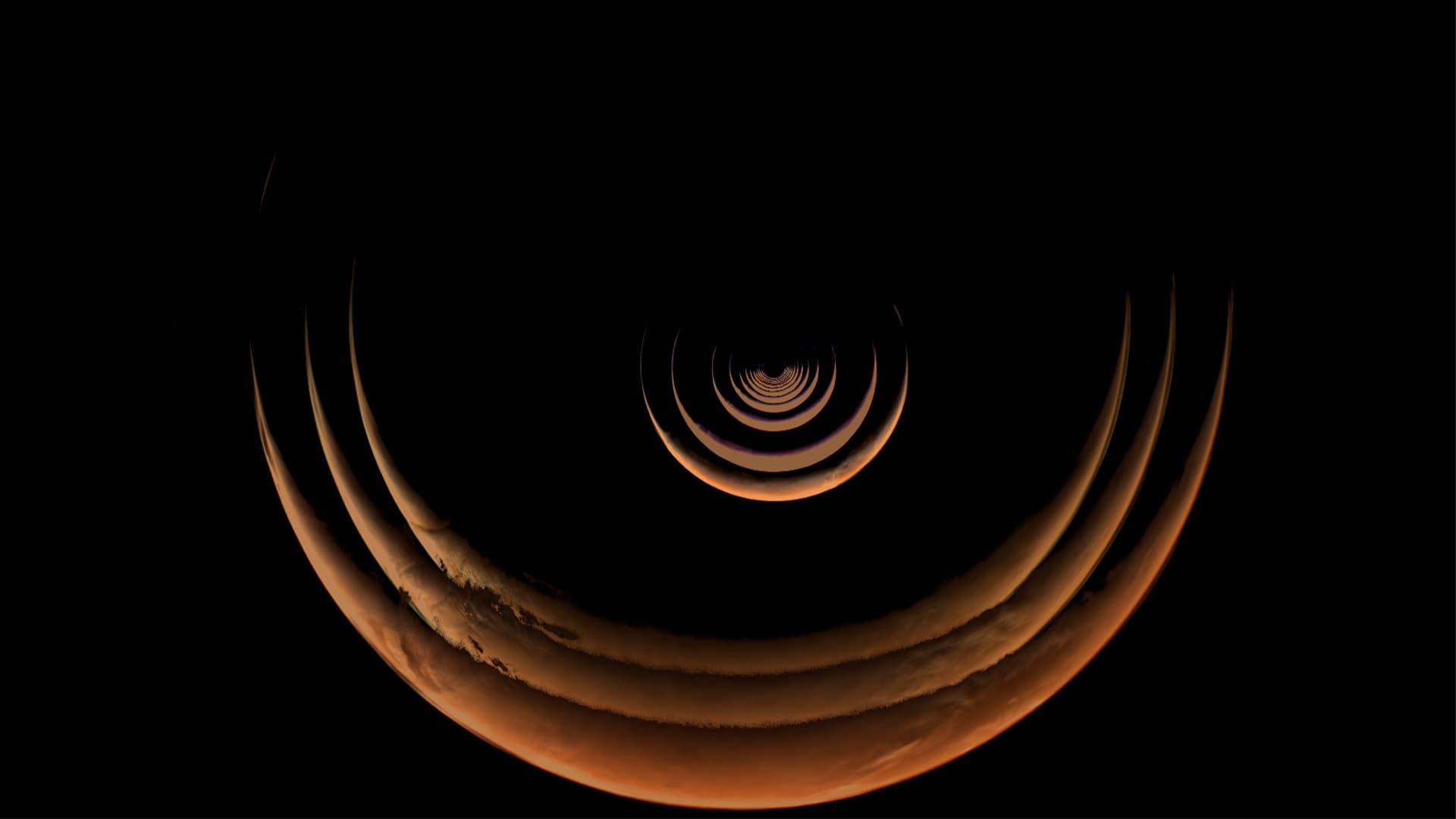
Here's what it means for you.
The successful flyby of Mars by NASA's Psyche spacecraft marks a significant milestone in space exploration. This event not only enhances our understanding of Mars but also prepares the spacecraft for its primary mission to study a metal-rich asteroid. The data collected during this flyby will provide insights into the early solar system's formation, which could have implications for future planetary science and exploration. As researchers analyze the images captured during the flyby, the findings may influence ongoing and future missions to Mars and beyond. The successful testing of the spacecraft's instruments also underscores the importance of rigorous preparation in space missions.
What happened
NASA's Psyche spacecraft recently completed a flyby of Mars, capturing several photographs of the planet's surface. This event is part of its mission to explore a unique metal-rich asteroid believed to be a remnant from the solar system's formation. During the flyby, the spacecraft tested its instruments to ensure they are functioning properly for the upcoming asteroid mission.
The images taken include notable features such as craters, polar ice caps, and deserts on Mars. This successful flyby represents the first significant encounter with Mars for the Psyche spacecraft on its journey to the asteroid.
The Context
The Psyche mission is focused on exploring a metal-rich asteroid, which is expected to provide valuable insights into the building blocks of planet formation. The spacecraft's flyby of Mars serves a dual purpose: it allows for the collection of data about the Martian surface while also testing the spacecraft's instruments in a real-world environment.
This mission is part of NASA's broader efforts to deepen our understanding of planetary bodies within our solar system. The timing of this flyby is crucial as it sets the stage for future analysis and prepares the Psyche spacecraft for its primary objective.
Takeaway
Looking ahead, NASA researchers will analyze the images captured during the Mars flyby to extract valuable data. This analysis will not only enhance our understanding of Mars but also inform the ongoing preparations for the Psyche spacecraft's journey to the asteroid.
As the mission progresses, updates on the Psyche spacecraft's journey and findings will be closely monitored by the scientific community and space enthusiasts alike. The successful flyby is a promising step toward unlocking the mysteries of both Mars and the early solar system.
Capitol Hill news, legislation, and policy insight.
"The Hill specializes in U.S. politics and policy, with a focus on Capitol Hill developments and a reputation for insider reporting."
— A47 Editor
NASA's Psyche probe snaps new Mars photos on its way to asteroid
NASA's Psyche spacecraft has snapped a new set of Mars photos.
Latest tech news, product reviews, and analysis for consumers and professionals.
"CNET delivers accessible and detailed technology reporting, including trusted product reviews and how-to guides."
— A47 Editor
NASA’s Psyche Spacecraft Sent Back Some Awesome Photos of Mars
NASA's Psyche spacecraft has successfully transmitted stunning images of Mars, showcasing the planet from a unique perspective as it approaches the red planet for a gravity assist maneuver. This event is part of its mission to study the asteroid Psyc...
Science and technology stories including AI.
"Longstanding science magazine with thoughtful AI coverage."
— A47 Editor
Mesmerizing NASA time-lapse reveals Mars’s craters, polar ice caps and deserts
NASA's Psyche spacecraft has successfully captured a stunning month-long timelapse of Mars, showcasing its craters, polar ice caps, and deserts, during its close approach to the planet in May. This impressive feat was achieved as part of its mission ...
Scientific research, technology, environment, and society.
"Scientific American is one of the oldest and most authoritative science magazines, known for deep dives into science, technology, and society."
— A47 Editor
Mesmerizing NASA time-lapse reveals Mars’s craters, polar ice caps and deserts
NASA's Psyche spacecraft has successfully captured a stunning month-long timelapse of Mars, showcasing its craters, polar ice caps, and deserts, during its close approach to the planet in May. This impressive feat was achieved as part of its mission ...