
Asteroid impact created enduring underground ecosystem for microbial life
Here's what it means for you.
The recent findings regarding the Chicxulub asteroid impact reveal a dual narrative of destruction and creation, highlighting the resilience of life in extreme conditions. This research not only enhances our understanding of Earth's history but also has implications for astrobiology, particularly in the search for life on other planets. As scientists explore hydrothermal environments, the insights gained could inform future missions to extraterrestrial bodies where similar conditions may exist.
What happened
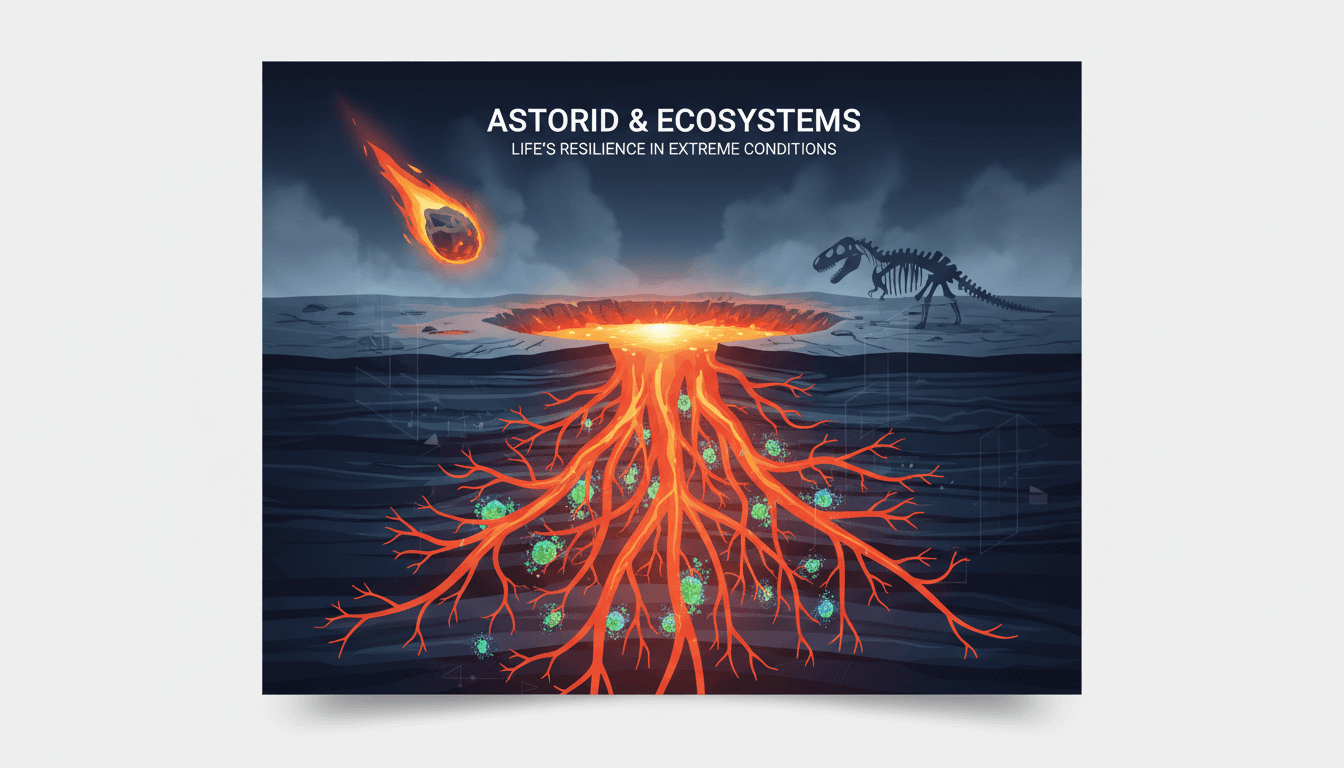
The Chicxulub asteroid impact, which occurred approximately 66 million years ago, is widely known for causing the extinction of the dinosaurs. However, recent studies indicate that this catastrophic event also led to the formation of a vast underground ecosystem that thrived for about 8 million years. Evidence from drill cores at the impact site shows sustained high temperatures and the presence of microbial life in hydrothermal vent systems.
This discovery underscores the complex interplay between destruction and creation in Earth's history. The hydrothermal systems established by the impact provided a unique habitat that allowed microbial life to flourish in the aftermath of the event.
The Context
The Chicxulub impact serves as a pivotal moment in Earth's geological and biological timeline, marking both an end and a new beginning. The research sheds light on how life can adapt and survive in extreme environments, which is crucial for understanding the resilience of ecosystems following catastrophic events. The implications of this study extend beyond our planet, offering insights that could inform the search for life in similar conditions elsewhere in the universe.
As scientists continue to investigate extremophiles in hydrothermal environments, the findings from the Chicxulub impact will likely influence future studies on the long-term ecological impacts of asteroid collisions. Understanding these dynamics is essential for both ecological research and astrobiological exploration.
Takeaway
The implications of this research are significant, particularly in the context of astrobiology and the search for extraterrestrial life. Future studies will likely focus on extremophiles in hydrothermal environments, which could provide further insights into life's adaptability. Additionally, ongoing research into the long-term ecological impacts of asteroid impacts will enhance our understanding of how life can emerge and thrive in the wake of catastrophic events.
As we look ahead, the findings from the Chicxulub impact will serve as a foundation for exploring similar environments on other planets. This research not only enriches our knowledge of Earth's history but also opens new avenues for understanding life's potential beyond our planet.
Space science news, astronomy updates, and spaceflight developments.
"Space.com delivers space science news, astronomy updates, and spaceflight developments with engaging coverage."
— A47 Editor
The asteroid that wiped out the dinosaurs may have created a vast underground habitat for life that lasted 8 million years
The asteroid impact that led to the extinction of the dinosaurs approximately 66 million years ago may have also created a significant underground habitat that supported life for up to 8 million years. This finding suggests that the aftermath of such...
Discoveries, research, environment, and health innovations.
"New Scientist is a well-respected publication offering accessible science news, commentary, and expert analysis."
— A47 Editor
Dinosaur-killing asteroid impact site stayed hot for millions of years
Recent studies of drill cores from the Chicxulub impact site reveal that the asteroid collision, which is believed to have contributed to the extinction of the dinosaurs, resulted in a vast underground ecosystem that remained hot for millions of year...
Science and technology stories including AI.
"Longstanding science magazine with thoughtful AI coverage."
— A47 Editor
The asteroid that killed the dinosaurs may have sparked millions of years of hydrothermal life
The asteroid that is believed to have caused the extinction of the dinosaurs may have also led to the creation of hydrothermal vent systems on Earth. These vents are formed when asteroids impact the planet, potentially providing a unique environment ...
Scientific research, technology, environment, and society.
"Scientific American is one of the oldest and most authoritative science magazines, known for deep dives into science, technology, and society."
— A47 Editor
The asteroid that killed the dinosaurs may have sparked millions of years of hydrothermal life
The asteroid that is believed to have caused the extinction of the dinosaurs may have also led to the creation of hydrothermal vent systems on Earth. These vents are formed when asteroids impact the planet, potentially providing a unique environment ...