
Vessel Crossings in Strait of Hormuz Decline Amid U.S.-Iran Tensions
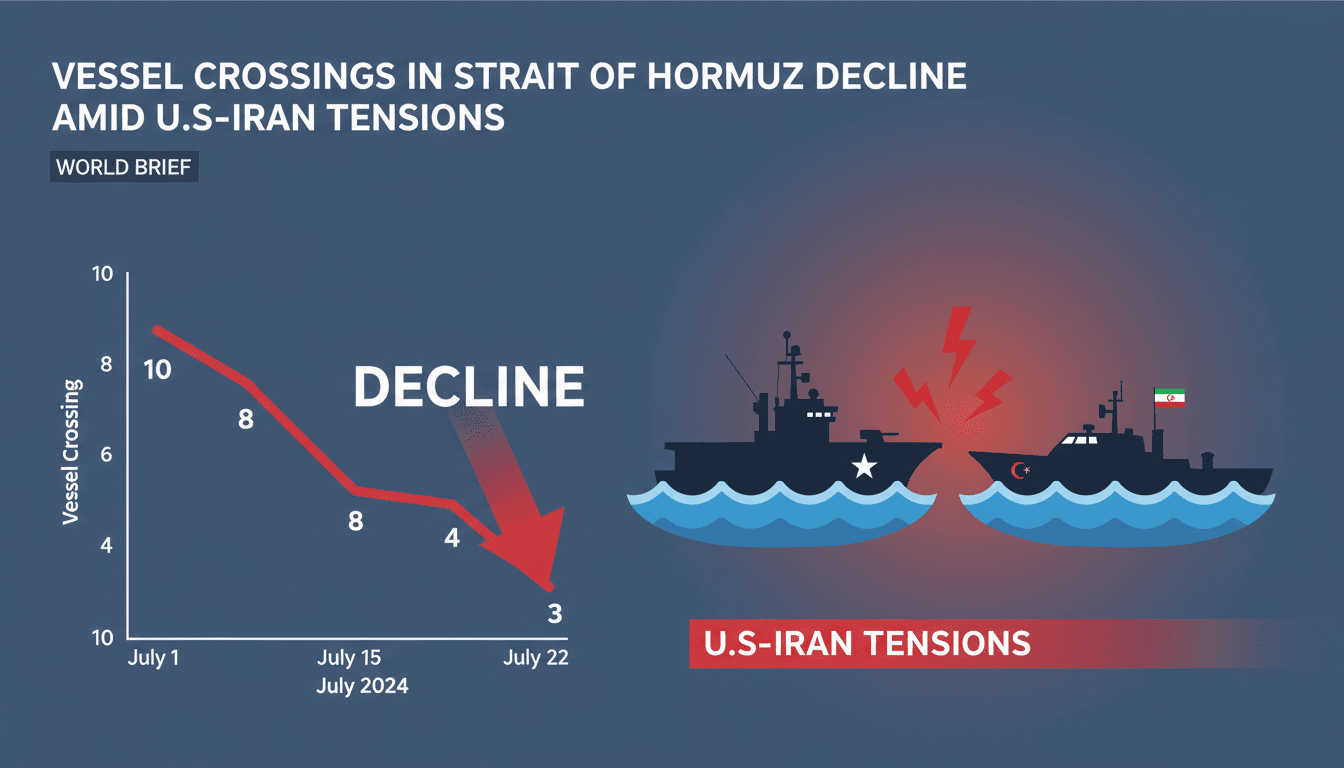
Here's what it means for you.
The decline in vessel crossings through the Strait of Hormuz signals growing caution among shipping companies due to escalating U.S.-Iran tensions. This trend could have significant implications for global oil supply chains and maritime security. Stakeholders in the shipping industry should prepare for potential disruptions as the situation evolves. As the number of vessels decreases, market participants may need to reassess their logistics and supply strategies. The ongoing conflict could lead to increased shipping costs and delays, impacting overall trade dynamics.
What happened
On July 22, the number of vessels crossing the Strait of Hormuz fell to three, a notable decrease from four the previous day. This decline reflects heightened security concerns stemming from ongoing military tensions between the United States and Iran. The reduced maritime activity indicates a trend that could have broader implications for global shipping.
Shipping data from Kpler highlights this significant drop in vessel traffic in recent days. The general cargo ship Kaiser exited the strait loaded with cargo, while the dry bulk carrier H7 Smb8 entered in ballast. These movements underscore the cautious approach taken by shipping companies amid rising security fears.
The Context
The Strait of Hormuz is a critical maritime route for global oil shipments, making its security paramount for international trade. Ongoing military tensions between the U.S. and Iran have raised alarms among shipping companies, prompting them to limit their operations in the region. The situation is further complicated by the geopolitical landscape, which continues to evolve.
As tensions persist, the potential for further reductions in maritime traffic looms large. This could lead to significant disruptions in oil supply chains, affecting markets worldwide. Stakeholders must remain vigilant as they navigate these uncertain waters.
Takeaway
If the current tensions between the U.S. and Iran continue, further declines in vessel traffic through the Strait of Hormuz are likely. This could have lasting effects on global shipping and oil markets, necessitating close monitoring of the situation. Shipping companies may need to adapt their strategies to mitigate risks associated with these developments.
Industry observers should keep an eye on U.S.-Iran relations and their impact on maritime security. Additionally, the shipping industry's response to declining traffic will be crucial in determining how the situation unfolds.
Pan-Arab news coverage spanning politics, business, sports, and regional affairs.
"Asharq Al-Awsat reflects a broad Arab editorial perspective with strong attention to regional geopolitics."
— A47 Editor
عدد السفن المبحرة عبر مضيق هرمز يتراجع أكثر مع استمرار الحرب
Recent shipping data indicates a further decline in the number of vessels transiting the Strait of Hormuz, attributed to ongoing security concerns amid continuous hostilities between the United States and Iran.
Pan-Arab political news and analysis.
"Al-Quds Al-Arabi is a London-based Arabic newspaper known for political coverage."
— A47 Editor
عدد السفن المبحرة عبر مضيق هرمز يتراجع أكثر مع استمرار الحرب
Recent shipping data indicates a further decline in the number of vessels transiting through the Strait of Hormuz, attributed to ongoing security concerns amid continuous hostilities between the United States and Iran.
Regional coverage and analysis focused on politics, diplomacy, and business across the Middle East.
"Al-Monitor is known for analytical reporting on Middle East politics and policy developments."
— A47 Editor
Hormuz vessel crossings fall further as security concerns linger
Vessel crossings through the Strait of Hormuz have decreased further, with only three commodity vessels reported on July 22, down from four the previous day, amid ongoing security concerns stemming from escalating tensions between the United States a...