
Iran experiences first night without U.S. strikes in two weeks amid ongoing tensions
What happened
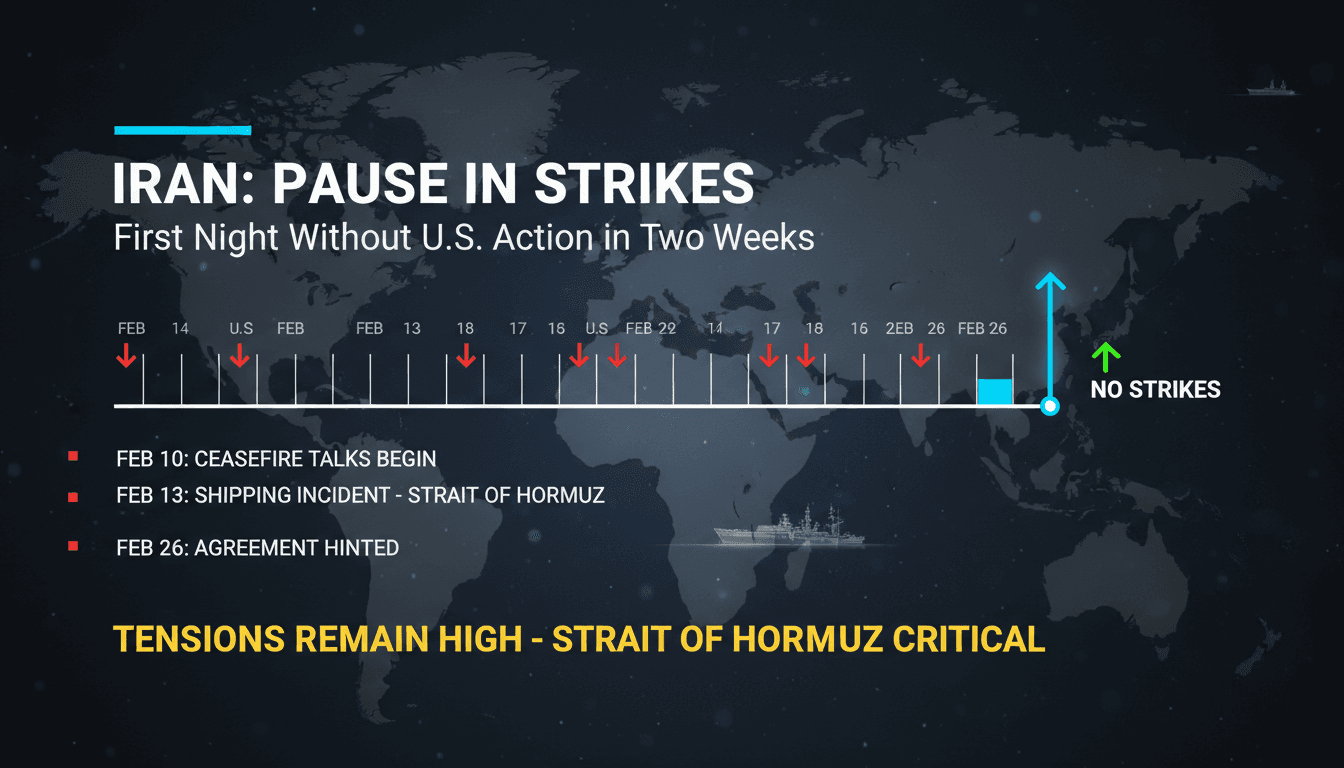
Iran reported no new U.S. strikes overnight into Saturday, marking the first night without military action after 13 consecutive nights of attacks. This pause follows a period of heightened military exchanges that have strained the ceasefire agreement established last month. The absence of strikes indicates a potential shift in the immediate conflict dynamics between the two nations.
Despite this temporary respite, both countries remain on high alert, particularly concerning the strategic Strait of Hormuz, a vital maritime route for global oil shipments. The situation remains fluid, with ongoing discussions between U.S. and Iranian officials suggesting that both sides are seeking to manage tensions.
The Context
The recent military actions have escalated tensions between the U.S. and Iran, particularly over violations of the ceasefire agreement. The Strait of Hormuz is a critical chokepoint for oil transportation, making any conflict in the region particularly impactful on global energy markets. As both nations engage in talks, the stakes remain high, with the potential for renewed military action always looming.
The backdrop of these events includes a complex history of U.S.-Iran relations, characterized by mutual distrust and strategic maneuvering. The recent escalation has drawn international attention, as stakeholders assess the implications for regional stability and security.
Takeaway
While the cessation of U.S. strikes may offer a temporary pause, the potential for renewed conflict remains significant. Observers should keep an eye on developments in U.S.-Iran negotiations, particularly regarding the Strait of Hormuz, as these discussions could shape future military and diplomatic actions. Any signs of renewed military engagement from either side could quickly alter the current landscape.
The situation remains precarious, with both nations likely to continue their military posturing while seeking diplomatic solutions to avoid further escalation. Stakeholders should prepare for a range of outcomes as the dynamics evolve.
Capitol Hill news, legislation, and policy insight.
"The Hill specializes in U.S. politics and policy, with a focus on Capitol Hill developments and a reputation for insider reporting."
— A47 Editor
Iran marks first night without US strikes in two weeks as tensions persist
Iran experienced its first night without U.S. military strikes in two weeks, marking a significant pause in hostilities that had seen 13 consecutive days of retaliatory attacks. The Iranian health ministry confirmed the absence of new strikes in a so...
Global news coverage with extensive reporting on Middle Eastern conflicts and geopolitics.
"Al Jazeera is a Qatar-based broadcaster known for wide regional coverage and alternative perspectives."
— A47 Editor
Iran blames US for Hormuz dispute as both sides confirm ongoing talks
Iran has accused the United States of escalating tensions in the Strait of Hormuz, as both nations confirm ongoing discussions to address the maritime dispute. Notably, Iran reported no new U.S. airstrikes overnight, marking a potential pause in host...
Comprehensive coverage of Middle Eastern and global issues.
"Al Jazeera is a prominent voice from the Global South, especially the Middle East, with an emphasis on underreported stories."
— A47 Editor
Iran blames US for Hormuz dispute as both sides confirm ongoing talks
Iran has accused the United States of escalating tensions in the Strait of Hormuz, as both nations confirm ongoing discussions to address the maritime dispute. Notably, Iran reported no new U.S. airstrikes overnight, marking a potential pause in host...
Conservative-leaning political and national coverage.
"The Washington Times is a conservative-leaning newspaper known for its political coverage and advocacy of right-of-center viewpoints."
— A47 Editor
Iran reports no new U.S. strikes as tensions remain high
Iran reported no new U.S. strikes as of Saturday, marking a pause in nearly two weeks of continuous military actions by the United States against Iranian targets. This development follows heightened tensions over control of the strategic Strait of Ho...
UAE-based English-language newspaper covering regional politics, economics, and global affairs.
"The National reflects Emirati policy perspectives while maintaining international editorial standards."
— A47 Editor
Iran war latest: No US strikes reported on Iran after 13 consecutive nights of attacks
The United States has completed its 13th consecutive night of airstrikes against Iranian targets, marking a significant escalation in military tensions between the two nations. This ongoing campaign follows a series of Iranian missile attacks that ha...
UAE-based English-language newspaper covering regional politics, economics, and global affairs.
"The National reflects Emirati policy perspectives while maintaining international editorial standards."
— A47 Editor
No US strikes reported on Iran after 13 consecutive nights of attacks
The United States has refrained from conducting airstrikes on Iran after a series of 13 consecutive nights of attacks, marking a significant pause in military operations. This development follows escalating tensions between the two nations, which hav...