
U.S. funding cuts threaten global HIV response efforts
What happened
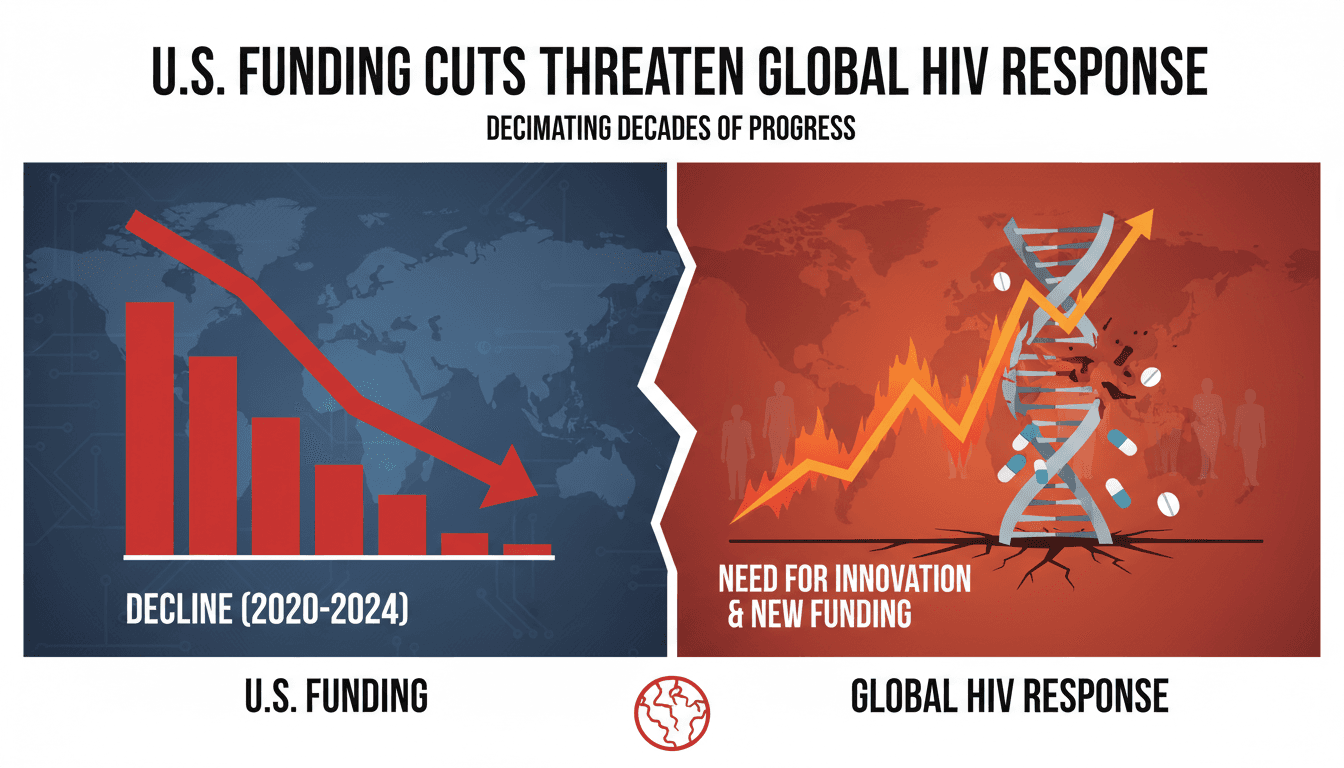
U.S. funding for HIV/AIDS initiatives has drastically decreased, jeopardizing decades of progress in combating the virus. Reports indicate that this funding drop occurred in 2025, raising alarms about the future of treatment and prevention efforts. The decline has been a focal point at the ongoing 26th International AIDS Conference, where experts are discussing the ramifications of reduced financial support.
The International AIDS Society has expressed concerns regarding the impact of these funding cuts on scientific advancements in HIV treatment. Despite the challenges posed by the funding reductions, there are still promising new treatment options being developed.
The Context
The significant decline in U.S. funding for HIV response is critical for global health efforts, particularly as it coincides with the 2025 timeline. The International AIDS Conference serves as a platform for stakeholders to address these pressing issues and explore potential solutions. Experts like Dr. Kenneth Ngure have emphasized the need for continued support, even in light of scientific advancements.
The implications of these funding cuts extend beyond immediate treatment access; they threaten to reverse decades of progress made in combating HIV. As discussions unfold, the urgency to secure alternative funding sources becomes increasingly apparent.
Takeaway
The ongoing discussions at the International AIDS Conference may lead to renewed efforts to secure funding and support for HIV initiatives. However, the immediate future remains uncertain without significant financial commitments. Stakeholders are encouraged to monitor developments in HIV treatment research and potential policy changes regarding U.S. funding for global health initiatives.
The future of HIV treatment and prevention may hinge on the ability to adapt and innovate in response to these funding challenges. As the landscape evolves, the focus will be on finding sustainable solutions to maintain progress against the virus.
Medical reporting with scientific depth and public service tone.
"NPR is a nonprofit media organization offering thoughtful, in-depth journalism and storytelling, often with a liberal or progressive slant."
— A47 Editor
New HIV treatment options offer some hope amid U.S. funding cuts
The 26th International AIDS conference is taking place this week, highlighting new HIV treatment options that offer hope despite significant delays and cuts in U.S. funding for HIV/AIDS initiatives.
Medical reporting with scientific depth and public service tone.
"NPR is a nonprofit media organization offering thoughtful, in-depth journalism and storytelling, often with a liberal or progressive slant."
— A47 Editor
Amid U.S. funding cuts, the International AIDS Conference faces an uncertain future
The International AIDS Conference is facing an uncertain future due to significant funding cuts from the U.S., as highlighted by Dr. Kenneth Ngure, president-elect of the International AIDS Society. He noted that while there have been substantial sci...
Capitol Hill news, legislation, and policy insight.
"The Hill specializes in U.S. politics and policy, with a focus on Capitol Hill developments and a reputation for insider reporting."
— A47 Editor
Trump aid cuts put HIV response at risk, reports show
Reports from KFF and the Joint United Nations Programme on HIV/AIDS (UNAIDS) indicate that funding for the global HIV response fell sharply in 2025, primarily due to significant cuts in U.S. support. This decline was highlighted during the Internatio...