
U.S. military conducts airstrikes against Iranian Revolutionary Guard Corps in response to missile attacks
What happened
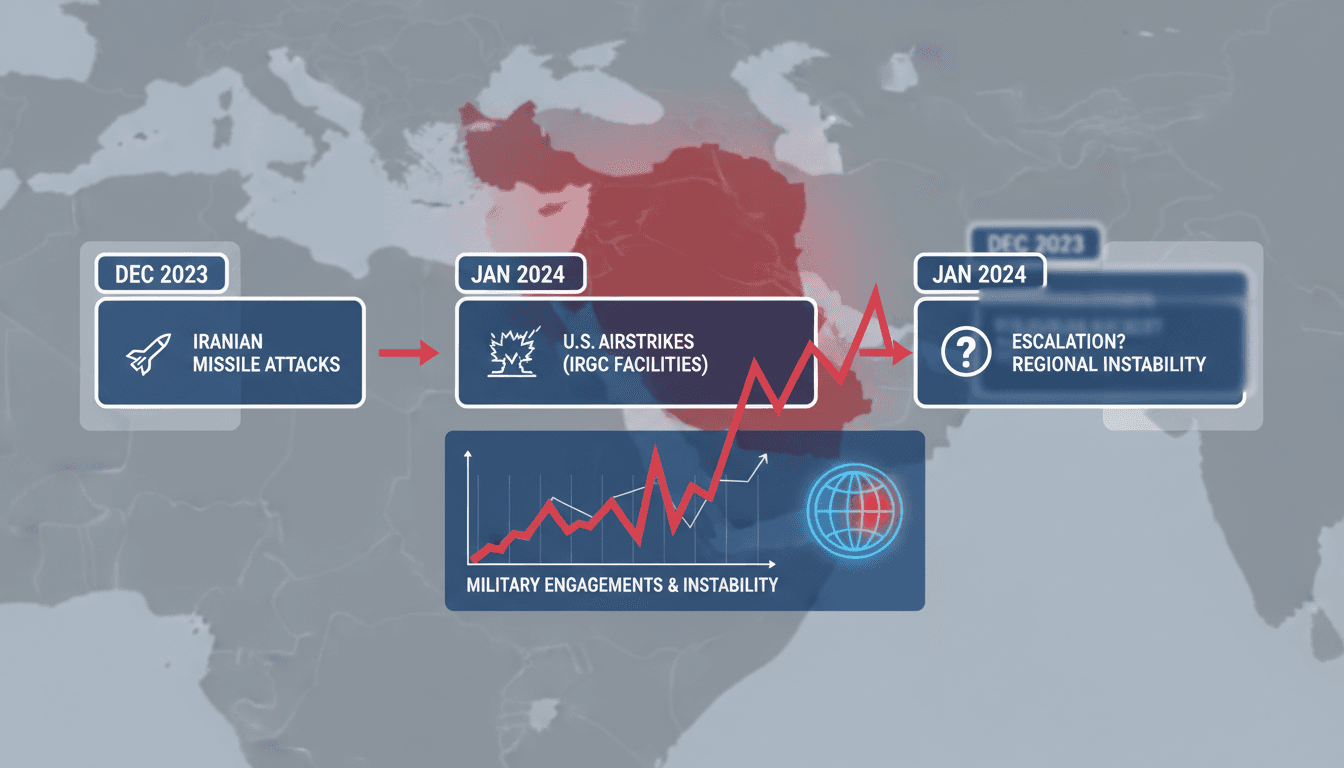
The U.S. military launched a series of airstrikes targeting facilities of the Iranian Revolutionary Guard Corps in Iran. This operation, which lasted two hours, was a direct response to missile attacks from Iran that occurred on July 29, 2026. U.S. Central Command (CENTCOM) confirmed the strikes, which targeted dozens of sites, indicating a significant military response.
The airstrikes took place early on July 30, 2026, as part of a broader military strategy by the U.S. in the region. This action underscores the escalating tensions between the two nations, reflecting a fragile state of relations.
The Context
The airstrikes come amid ongoing hostilities between the U.S. and Iran, with both nations engaged in a series of provocations. The Iranian Revolutionary Guard Corps has been a focal point of U.S. military concerns, particularly regarding missile threats. The timing of the strikes is critical, as they follow a direct attack from Iran, marking a pivotal moment in U.S.-Iran relations.
This escalation highlights the complex geopolitical landscape in the Middle East, where various stakeholders are involved. The U.S. aims to deter further aggression from Iran while maintaining its strategic interests in the region.
Takeaway
As tensions rise, the potential for Iranian retaliation to the U.S. strikes looms large. Observers should watch for further developments in U.S.-Iran relations, as both nations may engage in additional military actions. The situation could significantly impact regional stability and international diplomatic efforts.
The ongoing conflict may also influence global markets, particularly in energy sectors, as stakeholders assess the risks associated with heightened military engagements.
Arabic-language reporting on global and regional news.
"BBC Arabic is part of the BBC, generally regarded for editorial standards and broad international coverage."
— A47 Editor
وزير الخارجية الإيراني يتهم إسرائيل بالوقوف وراء هجوم دمياط
The Iranian Foreign Minister has accused Israel of being behind the recent attack in Damietta, coinciding with Saudi Arabia's announcement of an international maritime defense alliance aimed at enhancing maritime security and protecting freedom of na...
Pan-Arab news coverage spanning politics, business, sports, and regional affairs.
"Asharq Al-Awsat reflects a broad Arab editorial perspective with strong attention to regional geopolitics."
— A47 Editor
غارات أميركية تضرب منشآت «الحرس الثوري»
The U.S. military launched a series of intensive airstrikes early Thursday, targeting dozens of sites associated with the Islamic Revolutionary Guard Corps (IRGC) within Iran, in response to missile launches from Tehran. The operation lasted for two ...
Arabic-language coverage of Saudi, regional, and international affairs.
"Al Bilad offers mainstream Saudi newspaper coverage across domestic and broader Arab topics."
— A47 Editor
الجيش الأميركي يقصف عشرات الأهداف التابعة للحرس الثوري في إيران
The U.S. military announced that it has completed a recent round of strikes against Iran, targeting dozens of facilities associated with the Islamic Revolutionary Guard Corps (IRGC). The Central Command (CENTCOM) confirmed that these intensive strike...