
Iran's IRGC Attacks Two Oil Tankers Under U.S. Military Escort in Strait of Hormuz
What happened
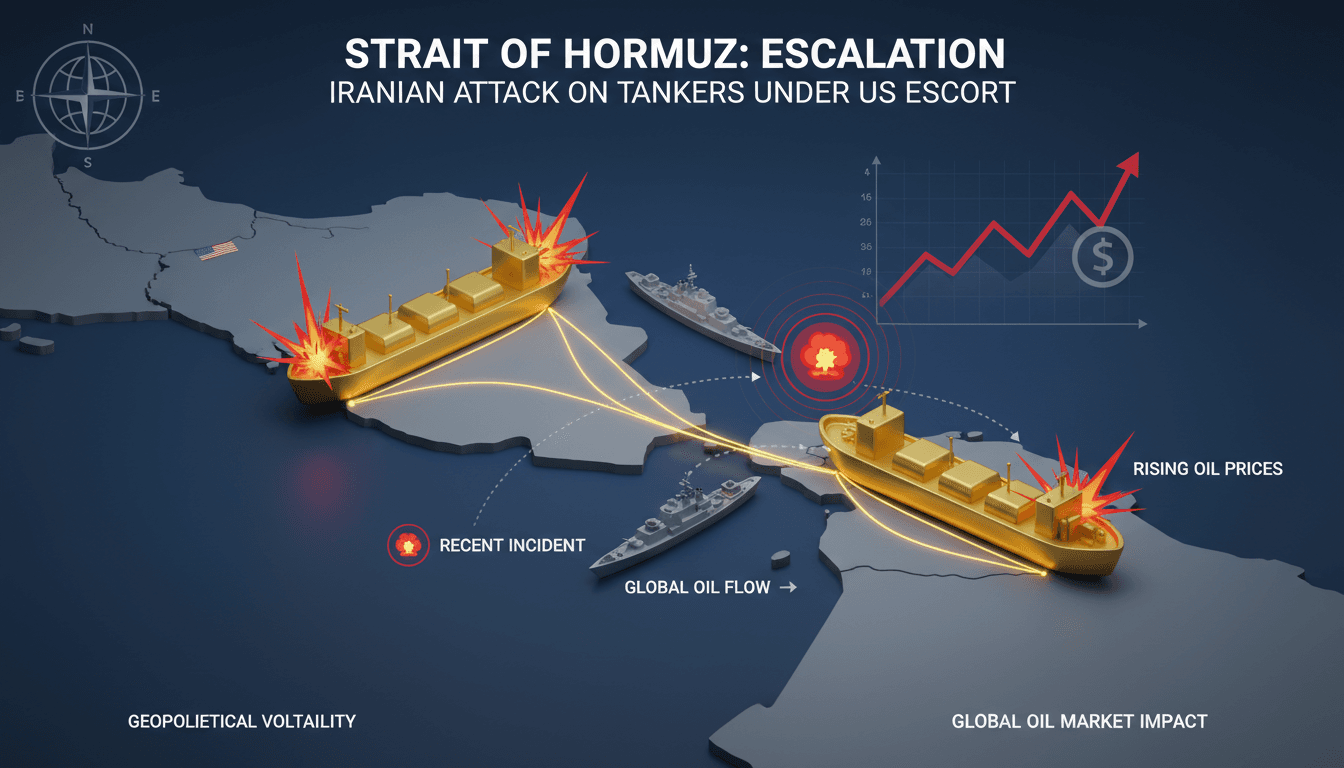
Iran's IRGC has launched an attack on two oil tankers in the Strait of Hormuz, which were under the protection of U.S. military forces. This aggressive move marks a direct confrontation between Iranian forces and U.S. military interests in the region. The incident has prompted several other tankers to alter their courses in response to the heightened risks.
The IRGC has claimed responsibility for the attacks, further escalating tensions in an already volatile area. As a result, oil prices have surged, reflecting the immediate impact of the conflict on global markets.
The Context
The Strait of Hormuz is a vital corridor for global oil shipments, making any disruption a matter of international concern. Tensions between the U.S. and Iran have been escalating, particularly as discussions about military strategy intensify within the U.S. government. The timing of this incident is critical, coinciding with the approach of midterm elections, which may influence U.S. foreign policy decisions.
The ongoing conflict has significant implications for oil prices and global economic stability. As the situation develops, stakeholders from various sectors will be watching closely to gauge the potential fallout from these hostilities.
Takeaway
The situation in the Strait of Hormuz is poised to remain volatile, with potential ramifications for both military engagements and global oil markets. Observers should watch for a possible U.S. military response to Iranian aggression, which could further escalate tensions. Additionally, the impact of rising oil prices on global economies will be a key factor in the coming weeks.
As the U.S. government navigates this complex landscape, the implications for foreign policy and market stability will be critical to monitor. The evolving dynamics in the region will likely shape discussions around military strategy and economic policy.
News from the United States including domestic politics, society, and culture.
"The Guardian is known for its progressive editorial stance and in-depth analysis, often advocating for social justice, environmental issues, and liberal values."
— A47 Editor
Iran strikes tankers under US escort in Hormuz strait as Trump gathers cabinet to discuss war
Iran's Islamic Revolutionary Guard Corps announced it struck two oil tankers in the Strait of Hormuz that were under U.S. military escort, leading to heightened tensions and rerouting of other vessels. This incident follows a series of military actio...
International coverage from The Guardian's global desks.
"The Guardian is known for its progressive editorial stance and in-depth analysis."
— A47 Editor
Iran strikes tankers under US escort in Hormuz strait as Trump gathers cabinet to discuss war
Iran's Islamic Revolutionary Guard Corps announced it struck two oil tankers in the Strait of Hormuz that were under U.S. military escort, leading to heightened tensions and rerouting of other vessels. This incident follows a series of military actio...
Global business headlines with AI angles.
"General business outlet that frequently covers AI."
— A47 Editor
Clashes Between The U.S. And Iran Continue Around The Strait Of Hormuz. Oil Is Climbing Again
Clashes between the U.S. and Iran continue to escalate around the Strait of Hormuz, leading to a rise in oil prices. This situation has been exacerbated by recent Iranian attacks on commercial vessels, prompting military exchanges and heightened tens...
Conservative-leaning political and national coverage.
"The Washington Times is a conservative-leaning newspaper known for its political coverage and advocacy of right-of-center viewpoints."
— A47 Editor
IRGC says it struck two tankers in the Strait of Hormuz that were escorted by U.S. military
The Islamic Revolutionary Guard Corps (IRGC) announced that it struck two oil tankers in the Strait of Hormuz, which were reportedly under U.S. military escort, leading to the rerouting of several other vessels. This incident underscores the ongoing ...